
The Monday Launch That Never Happened

At 9:12 AM, a performance marketing team at a mid-sized SaaS company is ready to launch what should be a routine Facebook ads campaign. Creative has been signed off, budgets approved, and audience segments validated. Everything appears ready.
But nothing goes live.
The team assumes Meta review is responsible. In reality, the largest delay happened before the campaign ever reached Meta. According to the Meta Business Help Center, approximately 80% of ads are reviewed within 24 hours, meaning most launch delays originate from internal workflows rather than platform review itself.
Inside the organization, ownership is unclear. Legal believes brand already approved the copy. Brand assumes growth marketing finalized the assets. Growth waits for confirmation that never arrives.
Another cost appears quietly in the background. Meta Marketing Science research and multiple industry studies have consistently shown that creative fatigue can reduce click-through rate by roughly 20% to 60% as audiences repeatedly see the same assets. Slow approval cycles reduce testing frequency, making it harder to replace declining creatives before performance falls.
Research from the Project Management Institute has also shown that poor communication is a significant contributor to project failure across organizations, reinforcing why approval bottlenecks are often operational rather than technical.
The campaign eventually launches—but the intended testing window has already passed.
Mini Breakdown: Where Approval Time Actually Disappears
Teams investigating Facebook ads creative approval delays often discover dozens of small delays instead of one major problem.
Copy revisions happen inside chat threads while designers work from outdated documents.
Creative exports are regenerated because dimensions or file naming conventions changed after approval.
Legal comments arrive after media buyers have already prepared campaigns.
Landing page owners update messaging after creative has supposedly been finalized.
Every delay seems harmless by itself. Combined, they create days of unnecessary waiting.
The common mistake is assuming Meta review is unpredictable when the submission itself is constantly changing.
Why Meta Review Is Only One Step in the Process
Meta evaluates submitted ads against advertising policies, technical requirements, and automated review systems.
Internal organizations, however, must coordinate messaging, compliance, design, creative strategy, localization, tracking parameters, campaign naming, and asset versioning before submission.
Without documented ownership, every approval becomes subjective.
Instead of asking whether an ad is approved, high-performing teams ask whether every dependency required for launch has been validated.
That distinction dramatically reduces Facebook ads creative approval delays.
Operational Checklist Before You Submit Facebook Ads
One way to reduce approval delays is to introduce a repeatable pre-submission checklist instead of relying on memory.
Creative validation
- Confirm every image and video matches the intended placement.
- Verify aspect ratios and export quality.
- Ensure branding remains consistent across all variants.
- Confirm filenames and version numbers follow team conventions.
Copy validation
- Review headlines and primary text against Meta advertising policies.
- Verify destination URLs.
- Confirm CTA consistency across every variation.
- Ensure disclaimers are present where required.
Campaign validation
- Verify campaign objectives.
- Confirm Pixel or Conversion API configuration.
- Double-check budget settings.
- Validate audience definitions.
- Review naming conventions.
Approval validation
- Record legal approval.
- Record brand approval.
- Record growth approval.
- Archive the final creative version.
- Lock assets before upload.
Many teams automate these checks using AI-assisted workflows and Claude Code scripts that compare campaign specifications against predefined validation rules before a Facebook ads uploader ever receives the files.
Inside the Uploader Workflow: From Approved Asset to Live Campaign
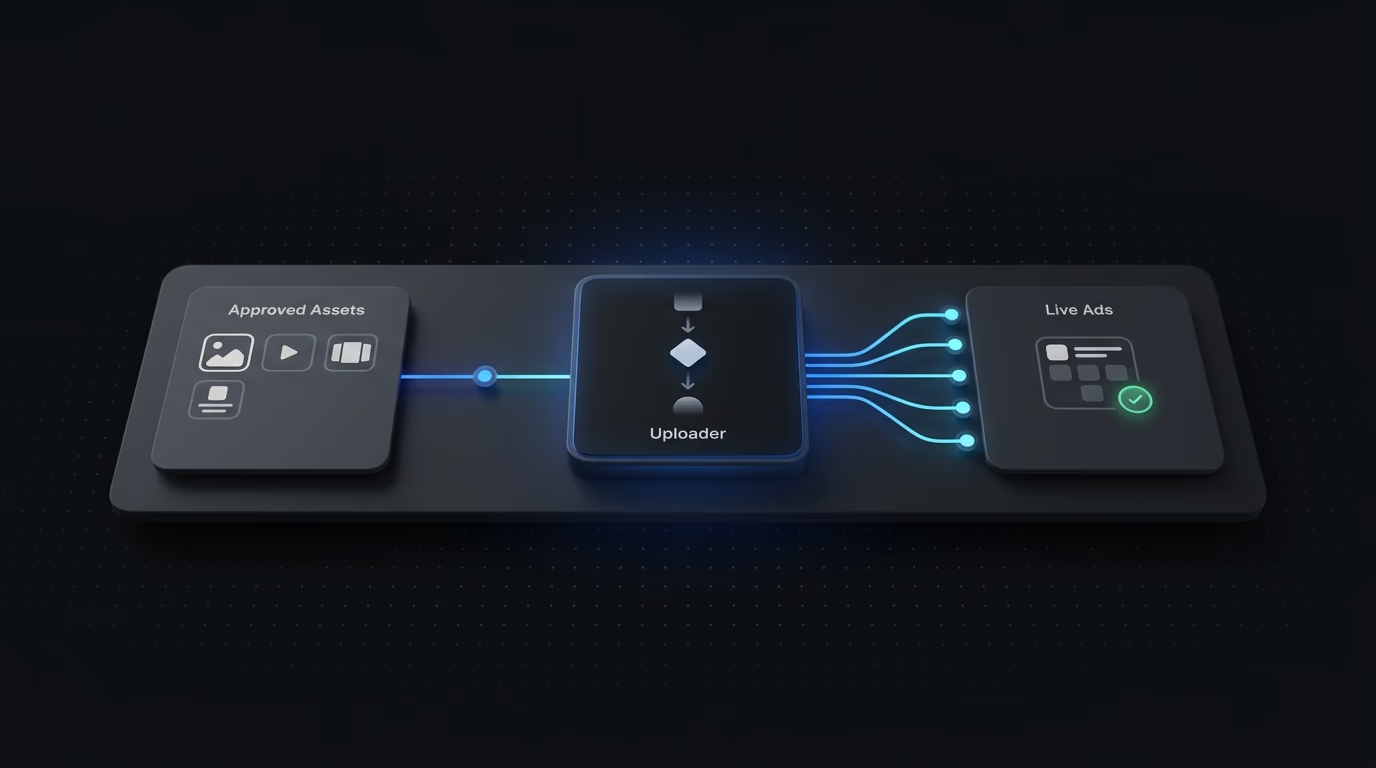
The biggest operational shift happens when Ads Manager stops being treated as the place where campaigns are built.
Instead, campaigns are assembled beforehand.
A structured Facebook ads uploader workflow validates assets, organizes creative variations, checks naming conventions, confirms campaign objectives, and prepares batch publishing before upload begins.
Platforms such as Instrumnt function as coordination layers rather than simple upload utilities. Instead of manually rebuilding campaigns every launch cycle, validated creative sets move through standardized publishing pipelines.
Compared with Ads Uploader, Hootsuite Ads, and Smartly.io, the distinguishing operational advantage comes from reducing uncertainty before upload instead of only making publishing faster.
| Phase | Manual Workflow | Structured Workflow | Benefit |
|---|---|---|---|
| Creative preparation | Multiple disconnected revisions | Single validated asset library | Fewer mistakes |
| Upload | Manual recreation | Facebook ads uploader pipeline | Faster publishing |
| Quality assurance | Corrections after upload | Validation before submission | Fewer rejections |
| Launch | Variable timing | Scheduled execution | Predictable deployment |
AI-Assisted Validation Before Submission
Modern creative operations increasingly rely on AI to eliminate repetitive review work.
Instead of manually comparing every variation, AI systems evaluate naming consistency, image dimensions, policy-sensitive copy, missing URLs, duplicate creatives, and incomplete campaign settings.
Claude Code workflows can automate repetitive verification steps by comparing structured campaign definitions against internal standards before publishing begins.
Rather than replacing human reviewers, AI removes mechanical work so reviewers spend time evaluating messaging and compliance instead of checking filenames.
Organizations using systems like Instrumnt frequently combine uploader automation with AI validation so campaigns arrive in Meta with fewer preventable errors.
This also creates reusable validation rules that improve every future launch.
How Teams Prevent Future Approval Bottlenecks
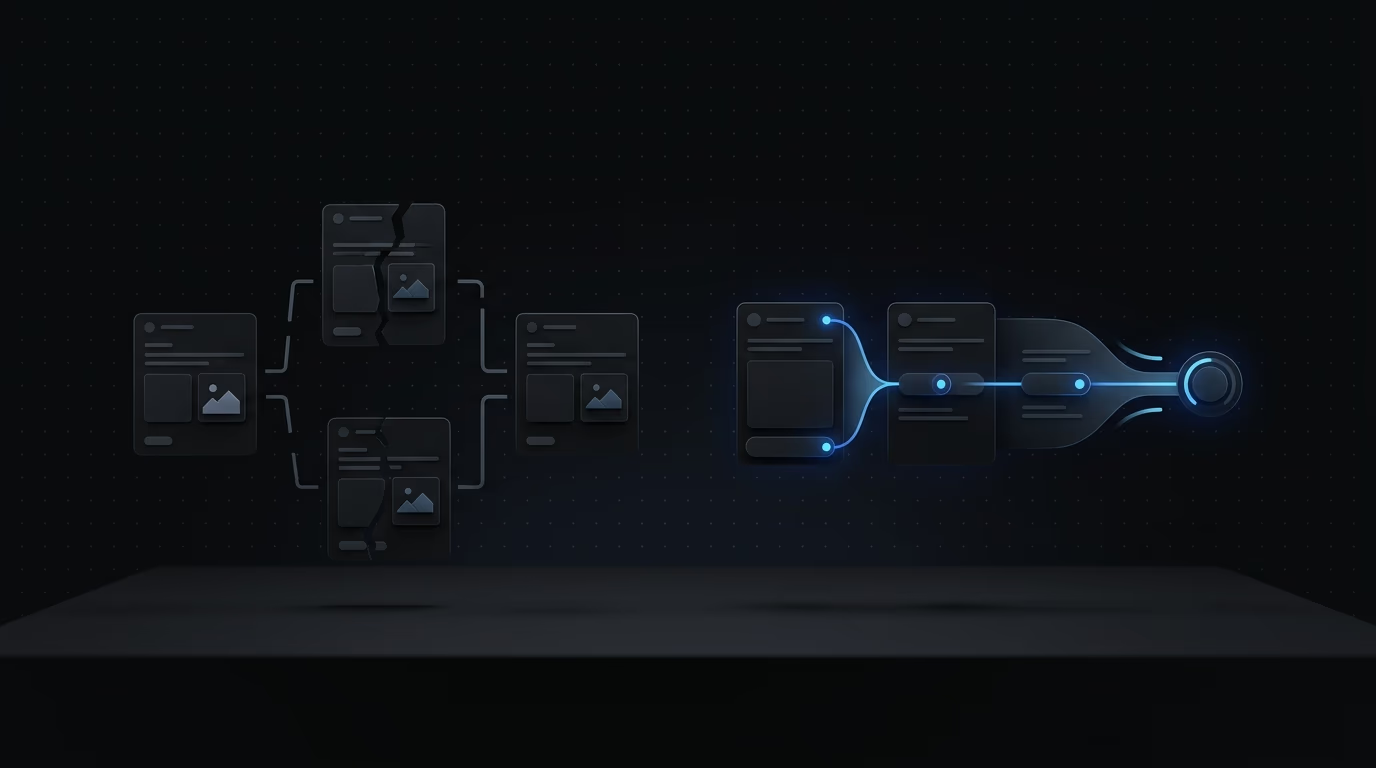
Organizations that consistently launch campaigns on schedule usually redesign the workflow instead of simply asking people to respond faster.
They establish one source of truth for creative assets.
Every approval receives a documented owner.
Version control becomes mandatory.
Creative production shifts toward batches instead of isolated advertisements.
Facebook ads uploader pipelines publish only assets that have passed structured validation.
Rejected ads are categorized so recurring issues become new validation rules instead of recurring surprises.
Many teams also schedule recurring retrospective reviews after major launches to identify unnecessary approval steps that can be removed entirely.
Building Faster Creative Operations at Scale
As campaign volume increases, human coordination becomes more expensive than media buying itself.
A team launching five campaigns each month may tolerate manual approvals. A team launching hundreds of creative variations every week cannot.
Scaling requires standardized templates, reusable campaign structures, centralized asset libraries, automated QA, and documented approval ownership.
This systems approach also complements resources like Breaking the Creative Bottleneck: How One Growth Team Scaled Facebook Ads Throughput with AI, which explores increasing creative output, and Inside a Creative Testing Loop That Doesn't Break: Uploader-Driven Iteration in Meta Ads, which focuses on sustainable testing workflows.
Teams that adopt these practices generally spend less time rebuilding campaigns and more time learning from performance data.
FAQ
What are the most common reasons Facebook ads get stuck in review?
The most common causes include inconsistent creative versions, incomplete approvals, policy-sensitive copy, missing landing page updates, and submission errors that require repeated revisions before Meta can complete review.
How can I reduce Meta ad approval time without violating advertising policies?
Introduce structured pre-submission validation, standardize creative specifications, automate repetitive quality checks with AI, document approval ownership, and use a Facebook ads uploader workflow that minimizes manual configuration.
What internal workflow changes help prevent repeated ad rejection and launch delays?
Organizations typically reduce repeated problems by centralizing approvals, creating reusable templates, introducing Claude Code validation workflows, maintaining version-controlled creative libraries, and publishing through structured systems like Instrumnt instead of rebuilding campaigns manually.
Does switching publishing software automatically solve approval delays?
Not necessarily. Publishing platforms improve operational efficiency, but they cannot compensate for unclear ownership, inconsistent creative production, or missing approval processes. Workflow design matters more than the upload interface.
Final Takeaway
Facebook ads creative approval delays rarely originate from Meta alone. They are usually symptoms of fragmented internal operations.
Organizations that reduce launch friction treat approvals as an operational system instead of an isolated review step. By combining documented ownership, AI-assisted validation, Claude Code automation, standardized Facebook ads uploader workflows, and platforms such as Instrumnt, teams can launch faster while maintaining consistency and compliance.
If you want to continue exploring related workflow improvements, see Automate Creative Testing for Meta Ads and Why Most Facebook Ads Are Created Wrong (And How AI Fixes It).
For more context, see Madgicx.
For more context, see AdEspresso.
For more context, see Revealbot.