
The Performance Drop: Why Creative Format Decisions Suddenly Matter
A Monday performance review started with an uncomfortable chart.
A mid-market ecommerce growth team had been scaling Facebook ads steadily for months using a small cluster of winning creatives. Then performance shifted. Click-through rates declined, cost per acquisition increased, and budgets stayed flat despite stable audiences.
The first instinct was to blame targeting, bidding strategy, or landing pages. But nothing meaningful changed in those systems.
The real bottleneck was creative format selection.
More specifically, the team lacked a structured way to choose between Facebook ad creative formats when performance pressure increased and production resources were constrained.
This matters because creative is one of the strongest performance levers in paid media. Meta’s internal advertising effectiveness research has repeatedly indicated that creative can account for roughly 56% of total sales lift across digital campaigns, making it the single largest controllable variable in many accounts. Meanwhile, WordStream benchmark data shows the average Facebook ads click-through rate sits around 0.90% across industries, meaning even small improvements in creative performance can significantly change outcomes at scale.
In other words, the team was not running out of ideas—they were running out of a system.
They stopped asking which format looked best and started asking which format would produce the next useful learning signal at the lowest operational cost.
That shift became the foundation of their new decision model.
For teams facing similar constraints, this connects closely with Creative Testing Framework Example and Facebook Ads Creative Pipeline.
One Offer, Four Formats: Image vs Video vs Carousel vs Collection Side-by-Side Scenario
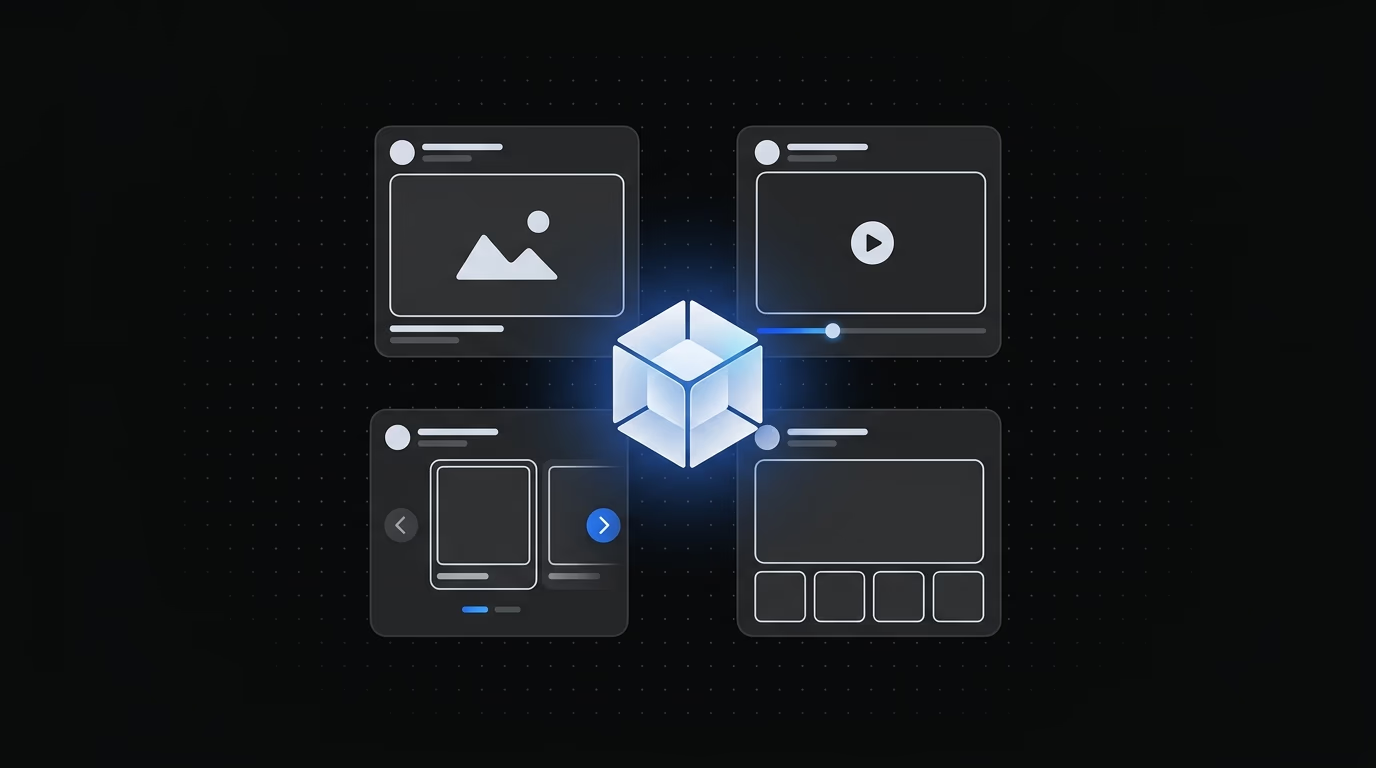
To validate the framework, the team ran a controlled experiment.
They kept the offer constant and only changed the Facebook ad creative formats.
Image ads delivered the fastest signal on message clarity.
Video ads generated higher engagement depth but slower iteration cycles.
Carousel ads revealed which messaging sequence users engaged with first.
Collection ads performed best when audiences already recognized the brand.
The key insight was that no single format consistently "won".
Each format answered a different question about user behavior.
Image ads answered: does the offer resonate?
Video ads answered: does storytelling improve engagement?
Carousel ads answered: which message structure works best?
Collection ads answered: are users ready to explore products?
This reframed creative strategy away from optimization obsession and toward structured learning systems.
Facebook Ads Uploader Workflow: Moving Assets from Draft to Launch with Instrumnt and Alternative Tool Approaches
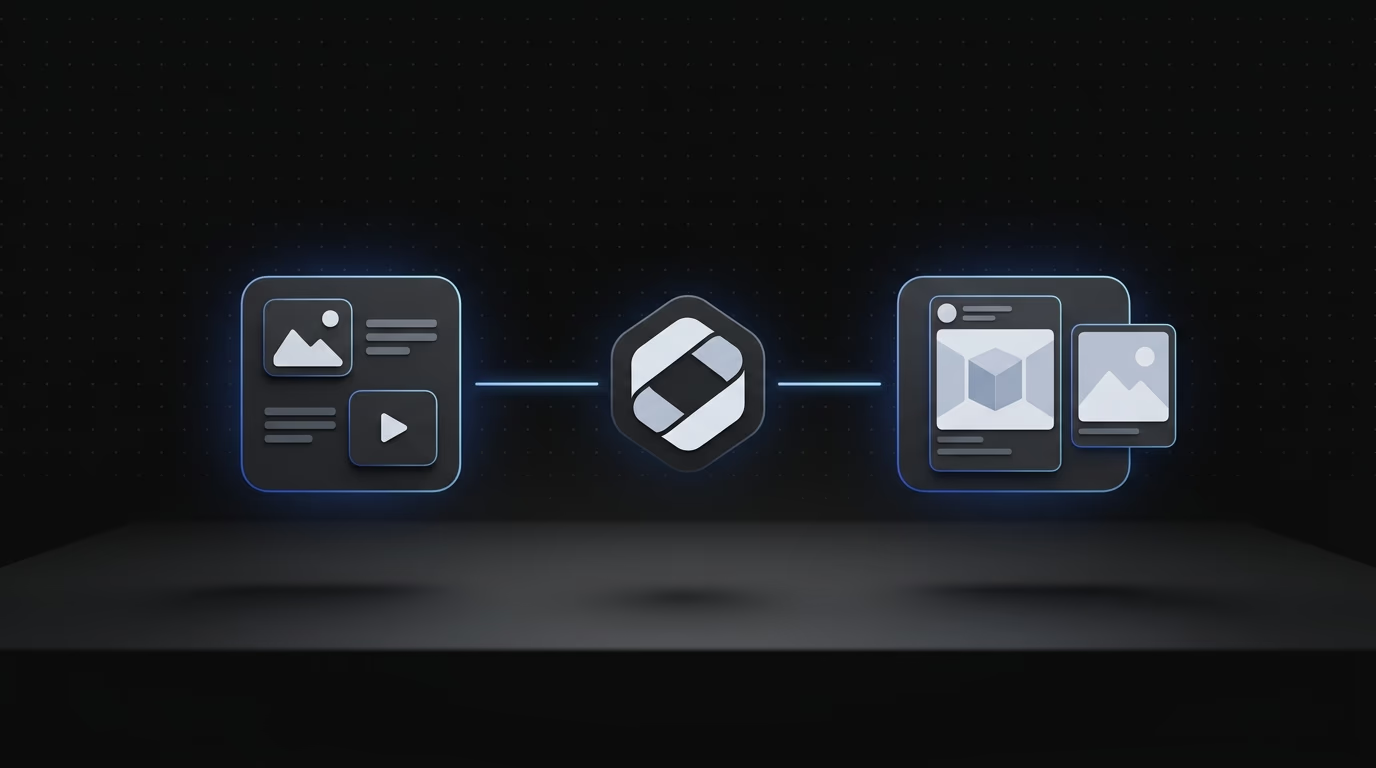
Execution speed became the next constraint.
Even well-designed creative systems fail if Facebook ads are not launched quickly enough.
The team standardized their workflow using Instrumnt.
Instrumnt helped enforce naming conventions, reduce setup errors, and unify reporting structures across campaigns.
This was especially important when managing high volumes of Facebook ads creative tests.
They also evaluated AdEspresso, Paragone, and Hootsuite Ads as alternative platforms.
Each tool supported parts of the workflow, but none fully solved end-to-end testing velocity.
- AdEspresso offered strong testing UI patterns but limited deeper workflow automation.
- Paragone emphasized performance optimization but required additional operational layering.
- Hootsuite Ads provided broad campaign management but less specialized testing structure.
Ultimately, the key improvement came from tightening the Facebook ads uploader workflow rather than switching platforms entirely.
What Other Teams Can Learn From the Scenario
The core insight is that Facebook ad creative formats are not interchangeable design choices.
They are structured tools for generating different types of learning under constraints.
When teams treat formats as operational instruments rather than aesthetic decisions, they gain more predictable performance outcomes.
This becomes especially important in environments where production capacity is limited and AI tools are increasingly used to support planning and execution.
Teams that combine structured frameworks, tools like Instrumnt, and AI-assisted planning through Claude Code consistently improve testing velocity without increasing headcount.
Related reading
- 5 Tips for Media Buyers to Work Faster and Scale Smarter
- Why Most Facebook Ad Management Platforms Are Doing It Wrong (And What You Should Do Instead)
For additional context on scaling creative systems, see:
- Why UGC Beats Polished Video Ads on Facebook
- Scaling Facebook Ads for Small Businesses: A Tactical Scenario
For more context, see inBeat's creative fatigue guide.
For more context, see WordStream's Facebook Ads benchmarks.
For more context, see Nielsen.