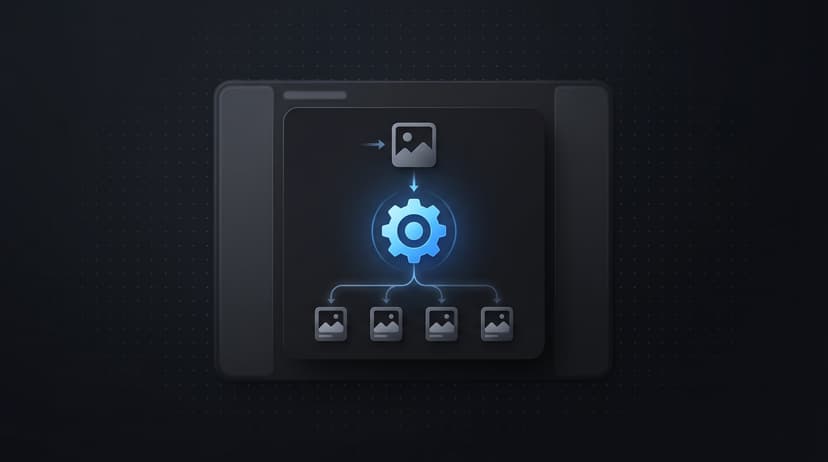
On a Tuesday morning in downtown Austin, Marcus, the Head of Growth for a mid-market financial services brand, stared at a Notion document. The page was filled with forty distinct video hooks, fifteen headline variations, and a dozen customer pain points from a recent research sprint. Each of these ideas could be the breakthrough for their Facebook ads strategy.
The issue wasn’t a lack of ideas. The real problem was Marcus only had one media buyer—and that buyer was already buried in work. Building out each of these variations inside Meta’s Ads Manager—uploading videos, pasting copy, checking tracking—was a grind. At 15-30 minutes per ad (industry benchmarks), launching the entire testing roadmap would take days.
This is the creative bottleneck most teams face. Everyone assumes the issue lies in targeting or bidding, but the true problem is throughput. Teams simply can’t get enough fresh ideas into the auction fast enough to find winners.
The Creative Bottleneck: Why Performance Slows Down Without Enough Ideas
For Marcus’s team, the stagnation was visible in the numbers. Their cost-per-acquisition (CPA) had been creeping up for three months. They were doing everything right: broad targeting, Advantage+ Shopping campaigns, and monitoring bids. But they were launching only three to five new creatives per month.
In a world where Meta's family of apps reaches 3.29 billion daily active users (Meta Q4 2024 earnings report), the algorithm is great at finding the right audiences. But it also requires a constant stream of high-quality creative to test and optimize. Without fresh creative, performance stagnates.
Research from Nielsen and Meta shows that creative quality drives up to 56% of a campaign’s ROAS variation. This means more than half of your success comes from what the user sees on their screen—not from tweaking bids or targeting. Yet many teams spend 90% of their time on technical tasks and only 10% on creative execution.
Marcus realized his team had fallen into the “static trap.” They were refining a few ads endlessly rather than testing many new ideas. Data shows that only 5-10% of creatives are real winners. If you test five ads a month, you may not find a winner for two months. Test fifty, and your chances improve dramatically. Your Facebook Ad Creative Pipeline Is Broken—and AI Can Fix It. For Marcus, the fix began with rethinking how ads were created.
Mini Example: One Product, Multiple Creative Directions
To break free from this bottleneck, Marcus decided to focus on one product: a high-yield savings account app. Instead of launching a single, standard ad, he expanded one value proposition into four distinct creative angles:
- The Logical Saver: Focused on the math, the interest rate, and the compounding growth over five years.
- The Anxious Professional: Focused on the security of the funds, FDIC insurance, and peace of mind during market volatility.
- The Goal-Oriented Millennial: Focused on saving for specific milestones, like a wedding or home down payment.
- The Comparison Shopper: Compared their interest rate against big-box banks using a simple table visual.
By diversifying the creative angles, Marcus wasn’t guessing at what would work—he was setting up a structured experiment to see which psychological trigger would resonate most with their audience. But producing four distinct angles was just the beginning. Each angle required three hooks and two different call-to-action (CTA) variations. Suddenly, one product launch became 24 distinct ads.
This is where the manual process breaks down. To handle this volume, Marcus needed a Facebook ads uploader that could bulk-create ads without a human clicking through every screen in Meta's interface.
Uploader Workflow: Automating the Creation and Testing of Multiple Variations
Marcus integrated Instrumnt into their workflow to streamline the process between brainstorming and ad launch. Instead of building ads one by one, the team switched to a batch-processing model.
The new workflow looked like this:
- Creative Generation: Using Claude Code, the team generated 20+ ad copy variations based on the four core angles.
- Asset Mapping: They organized video assets and copy into a structured format (usually CSV or direct sync).
- Bulk Upload: They used Instrumnt to push all 24 variations into Ads Manager at once.
This wasn’t just about saving time; it changed the testing process itself. Ads with 3+ variations per audience see up to 30% lower CPA (Meta advertising data). By automating their workflow, Marcus’s team could now hit those testing benchmarks weekly, instead of quarterly.
| Workflow Step | Manual Ads Manager Process | Automated Uploader Workflow (Instrumnt) |
|---|---|---|
| Creative Ideation | Manual brainstorming (2-4 hours) | AI-assisted (Claude Code) (15 mins) |
| Ad Construction | 15-30 mins per ad | Bulk generation (< 1 min per ad) |
| Launch Speed | 10 ads in 3+ hours | 10 ads in 10 minutes |
| Testing Volume | Limited by human bandwidth | Unlimited by system throughput |
| Learning Loop | Slow, intermittent feedback | Rapid, continuous data flow |
How AI Bridges the Gap Between Creative Blocks and Faster Execution
One of the biggest hurdles to scaling creative throughput is the “blank page” problem. Even with a Facebook ads uploader, you still need high-quality ideas. That’s where AI-driven Automated Facebook Ads Learning Loops with Instrumnt and Claude Code come in.
Marcus’s team used Claude Code to analyze past winning ads and identify common linguistic patterns. These insights were then fed back into the AI, which generated new hooks. This created a self-sustaining cycle: AI generates ideas, the uploader pushes them live, the Meta algorithm provides data, and the team refines the next batch based on that data.
This approach removed the emotional attachment to any single ad. When it takes 30 minutes to build an ad, you become defensive about it. But when it takes 30 seconds to launch ten ads, you focus on the data. You let the algorithm tell you what works. According to WordStream's Facebook Ads benchmarks, the average CTR across industries is 0.90%, but by increasing testing volume, Marcus’s team consistently found “outlier” creatives with CTRs above 2.5%.
Scaling Throughput: Maintaining Quality While Increasing Volume
A common fear is that increasing ad volume will hurt quality. Marcus found the opposite. By removing the time-consuming tasks in Ads Manager, the team had more mental energy to focus on the strategy behind the creative.
They weren’t just making more ads; they were making varied ads. They experimented with different video lengths, color schemes, and testimonial styles. They leveraged Meta’s AI-generated creative features, which have been shown to boost CTR by up to 11% compared to traditional ads (Meta 2025 data).
After a month with this new system, Marcus’s team launched more ads than in the past six months combined. Their CPA dropped by 22%, and their ROAS remained stable despite increased spend.
Scaling Facebook ads in 2026 isn’t about finding secret targeting hacks or obscure bidding tricks. It’s about building a system that lets your best ideas get to market without getting bogged down by manual tasks. Once you solve for throughput, performance follows. For Marcus, the combination of AI ideation and a powerful Facebook ads uploader didn’t just save time—it gave them a competitive advantage.
Common questions about facebook ads creative throughput
What is the best way to facebook ads creative throughput?
The best approach depends on your team size and launch volume. Start by structuring your workflow around batch preparation and bulk uploading, then layer in automation for the parts that don't need human judgment.
How many ad variations should I test?
Advertisers running 3 or more variations per audience consistently see lower CPAs. Aim for at least 3-5 variations per ad set as a starting point, and increase from there as your workflow allows.
Does automation replace the need for creative strategy?
No. Automation handles the operational side, like launching, duplicating, and naming ads at scale. Creative strategy, offer positioning, and audience selection still require human judgment. The goal is to free up more time for that strategic work.