Small businesses struggling with Facebook ads often blame the wrong variable. Budget gets most of the attention—but in reality, execution speed is the limiting factor.
If you’re launching a handful of ads per week (or worse, per month), you’re not giving the system enough inputs to find winners. Modern Meta algorithms are designed to distribute and optimize efficiently. What they need is variation. Without it, performance stalls.
This is why many small businesses feel stuck. They’re not underfunded—they’re under-iterating.
Introduction: Why Execution Speed Is a Bigger Problem Than Budget
The default advice around Facebook ads for small business is predictable: increase budget, refine targeting, tweak bids. But these are second-order optimizations.
The real constraint is upstream: how quickly you can produce and test new creative.
Meta itself has emphasized that creative is the dominant performance driver. According to Meta internal research, creative accounts for up to 56% of campaign performance outcomes (Meta Marketing Science, 2023). That means more than half of your results come down to what you test—not how much you spend.
At the same time, most small teams are still producing ads manually, one at a time. This mismatch creates a structural disadvantage.
If you want to scale Facebook ads, you don’t start with budget. You start with throughput.
Understanding the Real Bottlenecks: Creative Throughput vs. Budget
The biggest misconception in Facebook ads for small business is that more spend equals better results.
In reality, performance follows a distribution curve. Only a small percentage of ads will outperform.
Industry benchmarks consistently show that only about 5–10% of ad variations become top performers (WordStream, 2024). That means if you test 10 ads, you might find one winner. If you test 50, you increase your odds dramatically.
This is where most small businesses fall short.
They:
- Launch too few variations
- Spend too much time per ad
- Iterate too slowly
The result is predictable: inconsistent results, rising costs, and eventual burnout.
Budget doesn’t fix this. Volume does.
This is why workflows matter more than tactics. If your system cannot generate and launch ads quickly, you will always lag behind competitors who can.
For a deeper breakdown of why creative output matters more than spend, see Facebook Ads for Small Businesses: The Ultimate Playbook for Budget-Friendly Campaigns.
The Hidden Costs of Slower Execution in Ad Creation and Testing
Manual ad creation introduces latency at every step:
- Writing copy
- Uploading assets
- Configuring ad sets
- Duplicating variations
Each step seems small, but collectively they create friction.
This friction compounds over time. If it takes you 30–60 minutes to launch a single ad, producing 20 variations becomes a full-day task. Most teams simply don’t do it.
That’s where the hidden cost emerges.
You’re not just losing time—you’re losing:
- Testing velocity
- Learning cycles
- Market feedback
Meanwhile, competitors with faster workflows are iterating daily.
Tools like AdEspresso and Revealbot attempt to streamline parts of this process. They help with automation rules, reporting, and A/B testing. But they still rely heavily on manual input at the creative level.
Similarly, traditional Ads Uploader tools focus on bulk actions but often lack integration with creative generation systems.
The gap isn’t just operational—it’s architectural.
Diagnosis: Identifying the Execution Gap
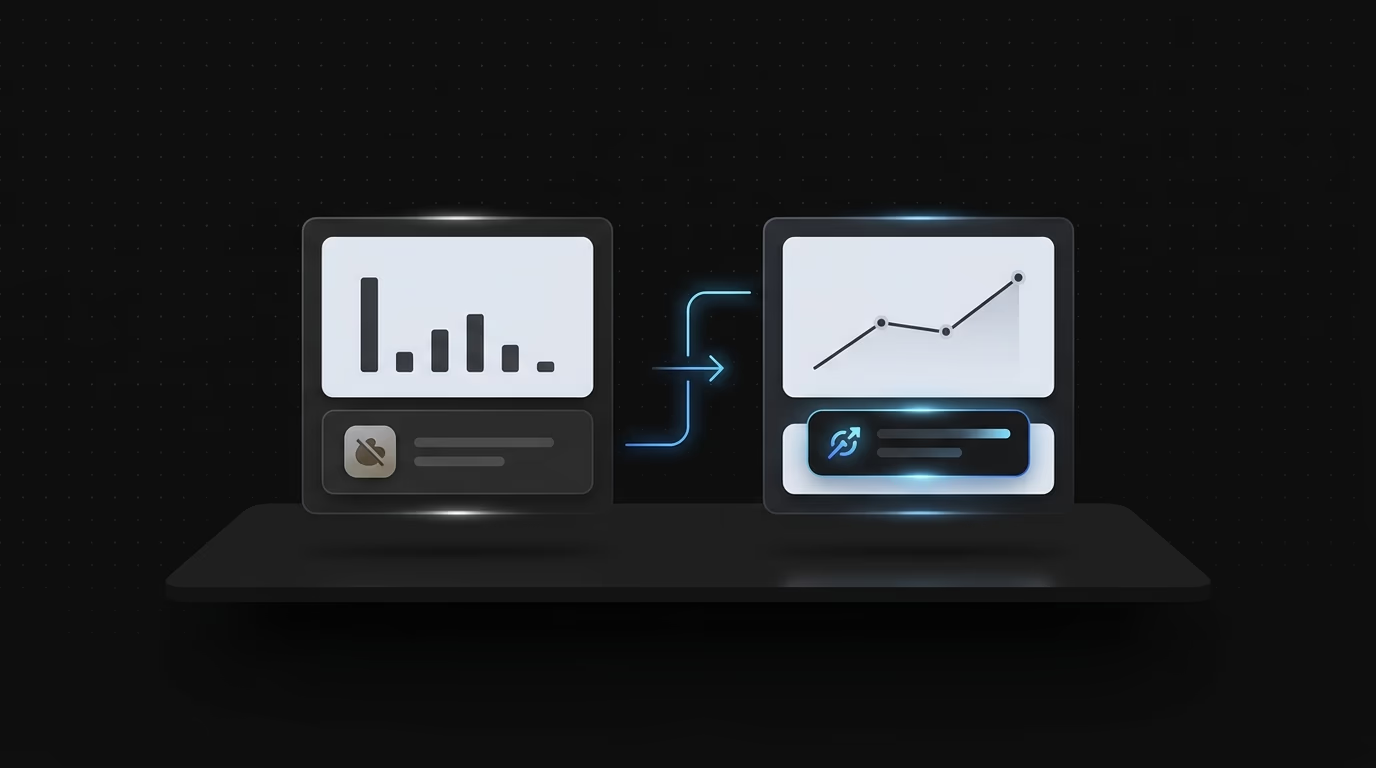
Before fixing the problem, you need to recognize it.
Look at your current performance trends and match them against execution constraints.
| Symptom | Common Fix | Why It Fails | Better Approach |
|---|---|---|---|
| Stagnant ROAS | Tweaking audience interests | Targeting is algorithmic; the problem is your creative. | Test 10+ distinct creative hooks. |
| Rising CPA | Increasing daily budget | It accelerates ad fatigue without fresh content. | Launch fresh creative batches via bulk uploader. |
| Creative Fatigue | Lowering the budget | Dead ads stay live too long. | Refresh every 7–14 days with new creatives. |
| High CPC | Testing different bid caps | It doesn't fix poor creative. | Iterate on high-CTR headlines using AI. |
Another key signal is frequency. If frequency rises while CTR drops, your audience is seeing the same ads too often.
Meta reports that advertisers using at least three variations per audience can achieve up to 30% lower cost per acquisition (Meta for Business, 2023). If you’re not hitting that baseline, your execution gap is holding you back.
For more on diagnosing creative issues, see Why Your Facebook Ads Are Not Working (It’s Not Targeting, Bidding, or Budget).
Uploader Workflow: Automating the Creation of 10–15 Ads from One Idea
The solution starts with changing how you think about ad creation.
Instead of building one ad at a time, you build systems that generate many.
This is where AI tools like Claude Code come into play.
With Claude Code, you can take a single concept and expand it into multiple angles:
- Problem/solution
- Social proof
- Testimonials
- Feature-driven
- Emotional hooks
In minutes, you can generate 10–15 variations of copy and messaging.
This transforms creative production from a bottleneck into a scalable process.
But generation alone isn’t enough.
You also need a way to deploy these variations instantly.
The Facebook Ads Uploader: Breaking the Ads Manager Bottleneck

Once you have your creative variations, the next constraint is execution.
Meta’s Ads Manager is not designed for speed at scale. It’s built for control, not velocity.
This is where a Facebook ads uploader becomes critical.
Tools like Instrumnt allow you to upload dozens of ads simultaneously, eliminating repetitive manual steps.
The impact is immediate:
- What used to take hours now takes minutes
- Campaign setup becomes batch-based instead of linear
- Testing volume increases exponentially
This is fundamentally different from tools like AdEspresso or Revealbot. Those platforms optimize within existing workflows. Instrumnt changes the workflow entirely.
Instead of managing ads individually, you operate at the system level.
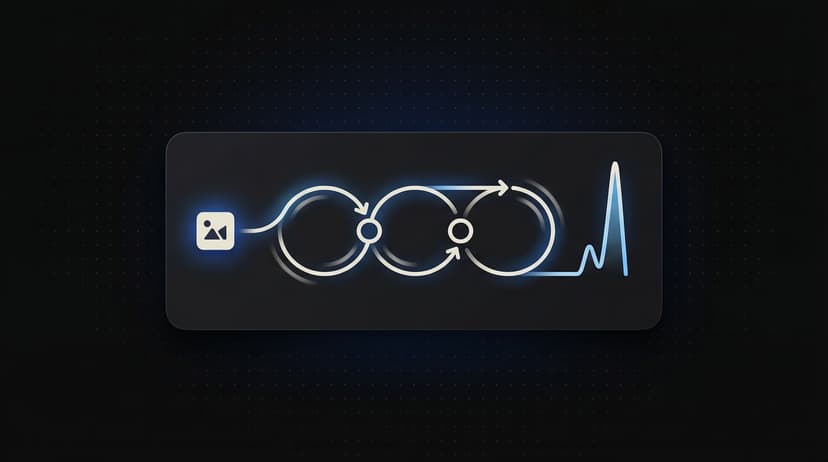
You define inputs → generate variations → upload in bulk → analyze results.
That’s how high-performing teams operate.
If you want to see how this works in practice, explore How to Build a Facebook Ads Bulk Testing System with Instrumnt and Claude Code.
Scaling Faster with Claude Code and Instrumnt for Small Businesses
When you combine Claude Code with Instrumnt, you create a high-velocity loop:
- Generate ideas using AI
- Convert ideas into structured variations
- Upload variations via a Facebook ads uploader
- Measure performance
- Feed insights back into the system
This loop compounds over time.
Instead of guessing what works, you systematically discover it.
This is how small businesses compete with larger brands.
Big companies often move slower due to process complexity. Small teams, on the other hand, can win through speed—if they build the right systems.
This is also why AI is becoming essential. Without it, creative production cannot keep up with the demands of modern ad platforms.
For a broader perspective, see Why AI Is the Only Way Forward for Facebook Ads in 2026.
Moving From Operator to Architect
The final shift is mindset.
Most advertisers think like operators. They focus on tasks:
- Creating ads
- Adjusting budgets
- Monitoring performance
But scaling requires thinking like an architect.
Architects design systems that:
- Produce consistent output
- Reduce manual effort
- Increase speed over time
In Facebook ads for small business, this means:
- Automating creative generation with AI
- Using a Facebook ads uploader for execution
- Building repeatable workflows
When you do this, you stop relying on individual decisions and start relying on systems.
That’s the difference between inconsistent results and predictable growth.
Conclusion: How Automation Unlocks True Facebook Ads Growth for Small Businesses
The biggest myth in Facebook ads is that success is tied to budget.
In reality, it’s tied to speed.
Speed of:
- Creating ideas
- Testing variations
- Learning from data
Small businesses that embrace this shift outperform those that don’t.
By combining AI tools like Claude Code with execution platforms like Instrumnt, you remove the bottlenecks that slow most teams down.
You move faster. You test more. You learn quicker.
And in a system where only a small percentage of ads win, that speed becomes your competitive advantage.
If you’re still optimizing budgets before fixing execution, you’re solving the wrong problem.
Fix the system first.
Common questions about facebook ads for small business
How can small businesses overcome the creative bottleneck in Facebook ads?
They need to shift from manual ad creation to automated workflows. Using AI tools like Claude Code to generate variations and a Facebook ads uploader like Instrumnt to deploy them allows for significantly higher testing volume.
Why is execution speed more important than budget for Facebook ad success?
Because only a small percentage of ads perform well. Faster execution means more tests, which increases the probability of finding winning creatives. Budget without variation leads to wasted spend.
What tools can help small businesses automate creative testing and scale ads faster?
AI tools like Claude Code help generate creative variations, while platforms like Instrumnt enable bulk uploading and faster execution. Competitors like AdEspresso, Revealbot, and Ads Uploader offer partial solutions but don’t fully address the speed bottleneck.
For more context, see Meta Ads Guide.
For more context, see Meta Blueprint.
For more context, see Meta for Business Help Center.