Introduction: The Full Funnel Matters
Most marketers trying to analyze competitor Facebook ad funnels make a critical mistake: they focus only on the creative. They scroll through ads, save screenshots, and attempt to replicate visuals or hooks. But this surface-level approach ignores the real driver of performance—the full funnel.
High-performing Facebook ads are not standalone assets. They are entry points into structured systems designed to convert attention into revenue. If you replicate only the ad, you are copying the least defensible part of the funnel.
According to WordStream, businesses that align ad messaging with optimized landing pages see conversion rate improvements of up to 33% compared to optimizing ads alone (Source: WordStream Conversion Benchmark Report, 2023). This reinforces a key principle: consistency across the funnel drives performance.
Similarly, HubSpot reports that companies with structured funnel optimization strategies generate 54% more leads than those without (Source: HubSpot Marketing Statistics, 2023). The implication is clear—full-funnel thinking is not optional.
This guide shows you how to analyze competitor Facebook ad funnels, extract the underlying logic using AI tools like Claude Code, and scale execution using systems like Instrumnt and a Facebook ads uploader.
Understanding the Full Funnel: From Ad to Conversion
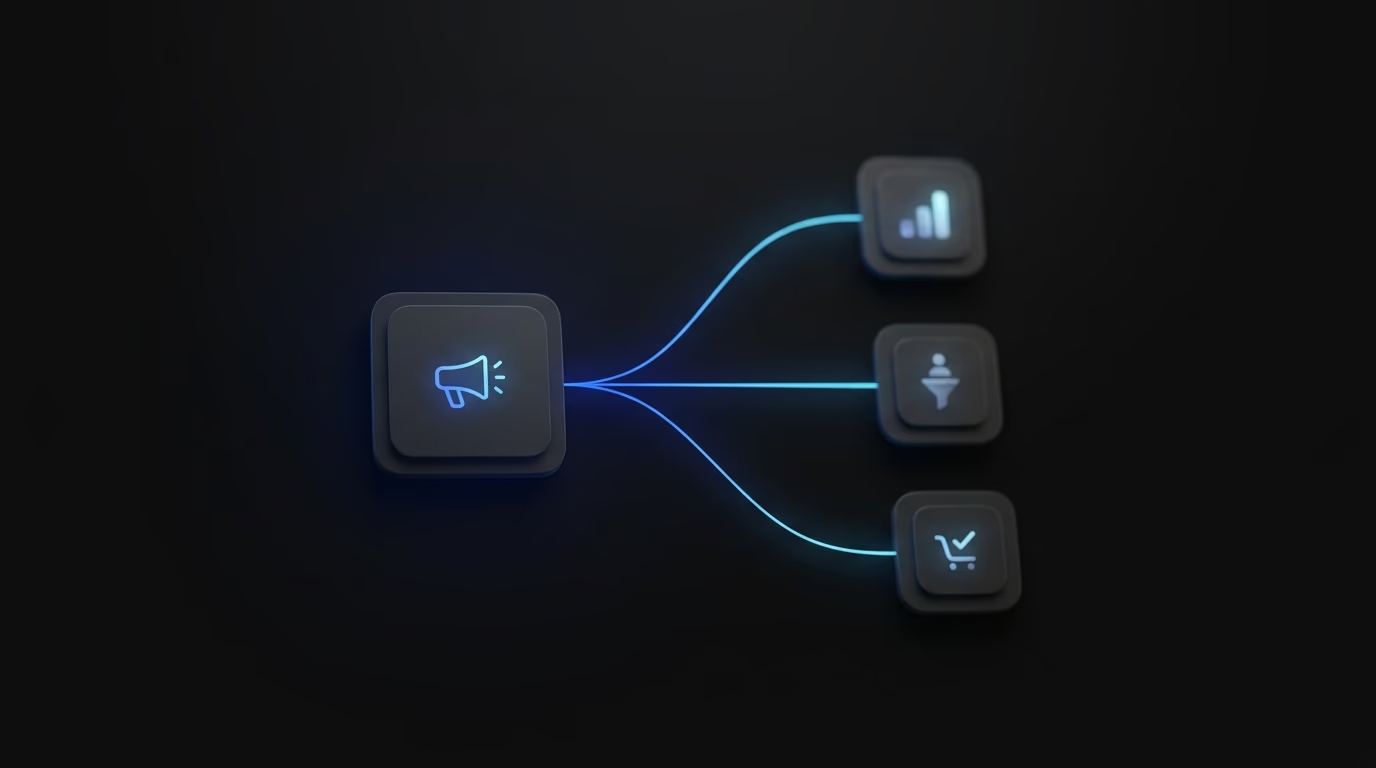
Every effective Facebook ads funnel consists of three layers working together:
- Creative Layer: The hook, format, and visual style.
- Intent Layer: The landing page experience and messaging.
- Backend Layer: Retargeting, upsells, and lifecycle flows.
The mistake most teams make is isolating the first layer. But performance comes from alignment across all three.
Tools like Hunch, Paragone, and TikTok Ads Manager can surface creative trends and performance insights. However, they typically stop at the ad level. They do not help you map the entire funnel—from click to conversion—which is where the real competitive advantage exists.
To go deeper, you need a system for extracting, analyzing, and replicating full-funnel mechanics.
Step 1: Finding and Extracting Competitor Facebook Funnels
To analyze competitor Facebook ad funnels effectively, you must first identify campaigns worth studying.
Focus on ads that have been active for 30+ days. Longevity is one of the strongest signals of profitability.
Here’s a proven workflow:
- Build a list of direct and adjacent competitors.
- Use the Meta Ad Library to find active ads.
- Identify ads running consistently over time.
- Capture destination URLs—not just homepages.
- Analyze UTM parameters for hidden insights.
For a deeper breakdown of this process, see How One Team Extracted Competitor Funnels and Turned Them Into a Scalable Facebook Ads Engine.
The key is building a database—not just collecting random examples. Structure enables scale.
Step 2: Analyzing Competitor Landing Pages with Claude Code
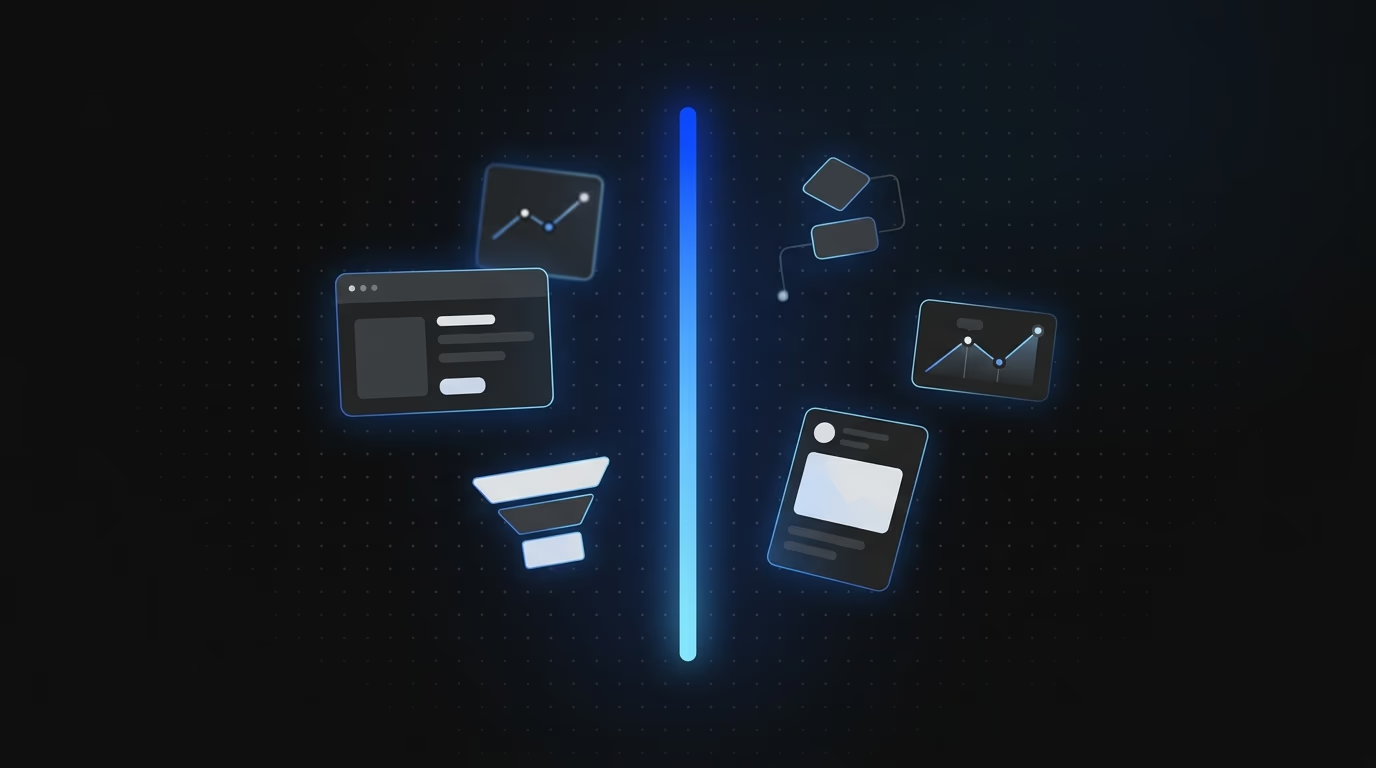
Once you have the landing page, the next step is turning it into structured insight.
Step 2: Analyzing Competitor Landing Pages with Claude Code
Instead of manually reviewing pages, use AI to extract patterns.
With Claude Code, you can input landing page content and prompt it to identify:
- Emotional hooks (fear, gain, urgency)
- Value proposition structure
- Offer positioning
- Objection handling
- Social proof placement
According to the Marketing AI Institute, marketers using AI for campaign analysis reduce research and production time by up to 50% (Source: State of Marketing AI Report, 2023). This is critical when analyzing multiple competitors simultaneously.
For a deeper critique of manual analysis, see Why Traditional Landing Page Analysis Fails for Facebook Ads (And What to Do Instead).
AI allows you to move from observation to understanding—fast.
Step 3: Map the Funnel Mechanics Before You Replicate
Before creating anything, map the funnel.
Break it down into:
Ad Entry Point
- Hook type (question, claim, demonstration)
- Format (UGC, static, video)
Landing Page Sequence
- Information order
- CTA placement
- Proof structure
Backend Flow
- Retargeting ads
- Email/SMS sequences
- Upsell paths
This step ensures you replicate systems—not assets.
Mini Example: Replicating a Financial Service Funnel for Facebook Ads
Consider a fintech competitor using this hook:
“5.00% APY. Stop letting your bank steal from you.”
A shallow approach would copy the headline.
A deeper analysis reveals:
- The landing page is educational, not transactional
- It frames banks as the antagonist
- The CTA appears after value-building content
Using Claude Code, you extract this structure and replicate the logic—not just the copy.
This enables you to generate multiple variations testing different emotional angles, instead of relying on one idea.
Step 4: Turn Funnel Insights Into Testable Variations
Insights only matter if they translate into execution.
Turn each insight into a test matrix:
- 5 hook variations
- 3 visual formats
- 2 landing page angles
This creates 30+ combinations from a single funnel.
According to AdEspresso, advertisers who test multiple creatives see significantly lower cost-per-acquisition compared to those testing only a few variations (Source: AdEspresso Optimization Study, 2023).
For more on scaling creative output, see Why Most Facebook Ads Creative Processes Are Broken—And AI Is the Answer.
Step 5: Scale Launches with Instrumnt and a Facebook Ads Uploader
Execution is where most teams fail.
Manual setup slows down testing and introduces errors.
Using a Facebook ads uploader like Instrumnt, you can:
- Import creative variations
- Map them to campaign templates
- Automate naming and UTMs
- Launch at scale
This removes operational bottlenecks and enables high-velocity testing.
For a deeper system, see How to Build a Facebook Ads Bulk Testing System with Instrumnt and Claude Code.
Operational Section: Building a Repeatable Competitor Funnel Intelligence System
To stay competitive, build a weekly system:
- Monday: Discover competitor ads
- Tuesday: Extract funnel paths
- Wednesday: Analyze with AI
- Thursday: Generate variations
- Friday: Launch using Instrumnt
This creates a continuous feedback loop driven by real market data.
FAQ: Scaling Funnels Without Losing ROI
How do I extract competitor landing pages from Facebook Ads?
Use the Meta Ad Library, click through CTAs, and capture destination URLs. Avoid homepage bias.
What are the key elements to analyze in a competitor's Facebook ad funnel?
Focus on the Creative, Intent, and Backend layers. The connection between them matters most.
How can AI tools like Claude Code accelerate the process?
AI processes large amounts of content instantly, identifying patterns and frameworks that would take hours manually.
How can I maintain ROI while scaling?
Use structured testing, automation, and rapid iteration. Launch more variations, faster.
Final Checklist for Your Team
- Identify competitors with long-running ads
- Document full funnel journeys
- Analyze using Claude Code and AI
- Generate multiple variations
- Deploy using a Facebook ads uploader like Instrumnt
- Repeat weekly
The teams that win with Facebook ads are not the most creative—they are the most systematic. By learning how to analyze competitor Facebook ad funnels and replicate them at scale, you move from guessing to executing with precision.
For more context, see Meta Ads Guide.
For more context, see Meta Blueprint.
For more context, see Meta for Business Help Center.