The Meta Ad Library is making a lot of Facebook ads worse. Not because the tool itself is bad, but because marketers turned it into a shortcut. Open the Meta Ad Library today and you will see the same creative structures repeated endlessly across industries. Founder selfie videos. Fake iMessage screenshots. Aggressive red arrows. UGC clips with identical hooks. Endless “3 mistakes” frameworks.
Everybody claims they want originality, but then they spend half the day building swipe files full of recycled ads. That approach worked when creative cycles moved slower. Now AI has compressed the timeline. The moment one format performs well, dozens of brands copy it within days. Another wave generates slight variations with AI tools. Entire categories collapse into visual sameness. The Meta Ad Library did not create this problem, but it absolutely accelerated it. And the teams getting the best results from Facebook ads today are usually not copying ads directly from the library; they are using it to identify patterns that everybody else is already overusing.
Why the Meta Ad Library Became the Default Creative Research Tool
The appeal of the tool is obvious. The Meta Ad Library gives advertisers free access to competitor campaigns at massive scale. For media buyers running Facebook ads, that level of visibility feels incredibly powerful. You can see which hooks competitors keep running, which offers survive for months, which angles disappear quickly, and which brands refresh creative aggressively. That visibility fits perfectly with modern creative operations where everyone wants faster testing and more launch velocity.
This is why tools like Smartly.io and specialized Facebook ads uploader systems became popular alongside Meta automation. The workflow became predictable: Find a winning ad, copy the structure, launch variations, and push spend. It was simple—too simple. Because the market adapted. According to data released by Meta, advertisers created more than 15 million ads using generative AI tools in 2024 alone, dramatically accelerating creative duplication across the entire Facebook ads ecosystem. This mass production of similar assets means the advantage of seeing a competitor's ad is lower than ever because twenty other competitors are seeing the same thing simultaneously.
Why Everyone’s Swipe File Looks Identical Now
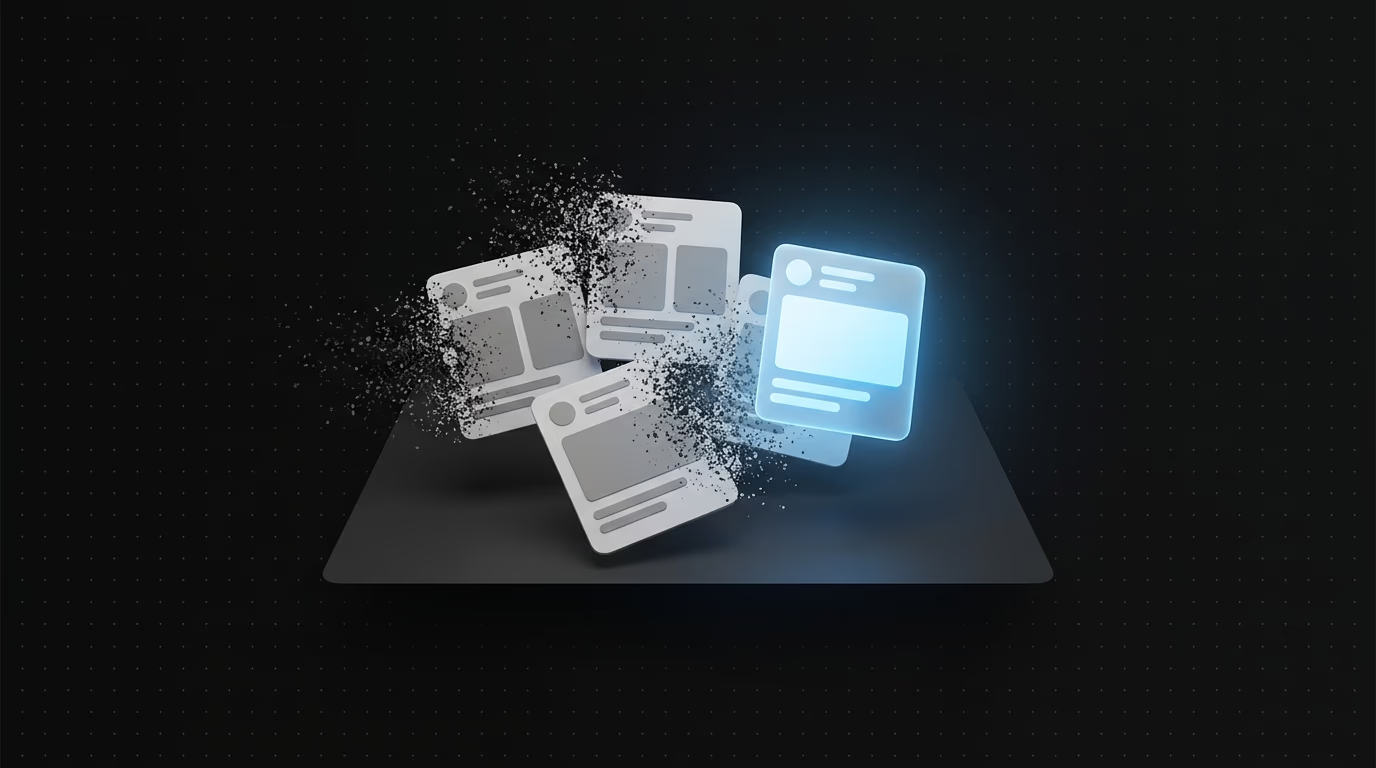
Most competitor research today is recursive copying. One advertiser finds a structure that works, agencies duplicate it, DTC brands imitate it, and AI tools mass-produce variations. Then feeds fill with the same ad wearing different branding. That is why so many Facebook ads feel interchangeable now. Creative sameness is a systemic issue. Most teams optimize distribution while commoditizing the message itself. They focus on targeting tweaks, bid adjustments, and campaign structures, but the creative layer becomes indistinguishable from competitors.
I also think many marketers misunderstand creative fatigue. Audiences are not always tired of your ad specifically; they are tired of seeing twenty versions of the same ad framework from twenty different brands. That is ecosystem fatigue, not campaign fatigue. Meta itself now recommends broader creative variation because repetitive structures decay more quickly. According to research conducted by Meta and Nielsen, creative quality contributes up to 56% of campaign sales performance. If your "quality" is just a carbon copy of a saturated format, you are losing more than half of your potential ROI before the first impression is even served. This is why articles like The Facebook Ad Library Won’t Find Winners resonate so strongly with experienced operators who have seen their performance crater after trying to replicate a competitor's "winner."
The Real Reason Copied Meta Ads Stop Scaling
Most marketers think copied ads fail because users “already saw them.” That is only part of the problem. The deeper issue is predictability. Good advertising works because it disrupts expectation. A strong hook reframes the conversation, a strong visual interrupts scrolling, and a strong offer changes perceived value quickly. But once everybody copies the same structures, the surprise disappears. Users recognize the pattern instantly and stop processing the message.
This became even more obvious after short-form video platforms changed user behavior. Instagram Reels and TikTok trained audiences to scan creative at extremely high speed. Trends now peak faster and formats die faster. That is why cloning “winning ads” is often a backward-looking strategy. By the time an ad dominates the Meta Ad Library, the market has usually already absorbed it. You are studying old information, not discovering what is next.
According to WordStream benchmark data, the average click-through rate (CTR) for Facebook ads across all industries is approximately 0.90%. When you use repetitive, copied creative, your CTR often drops well below this benchmark, leading to higher CPMs and a total loss of efficiency. That is also why original creative matters again. Not necessarily expensive creative, but original creative. The advertisers still scaling efficiently usually possess something competitors cannot reproduce quickly, whether that is unique customer language or distinct product demonstrations. If you are struggling with this, Why Meta Ad Library Searches Often Mislead Marketers and How to Fix It offers a deeper diagnostic on the research side.
AI Turns Competitor Research Into Pattern Detection
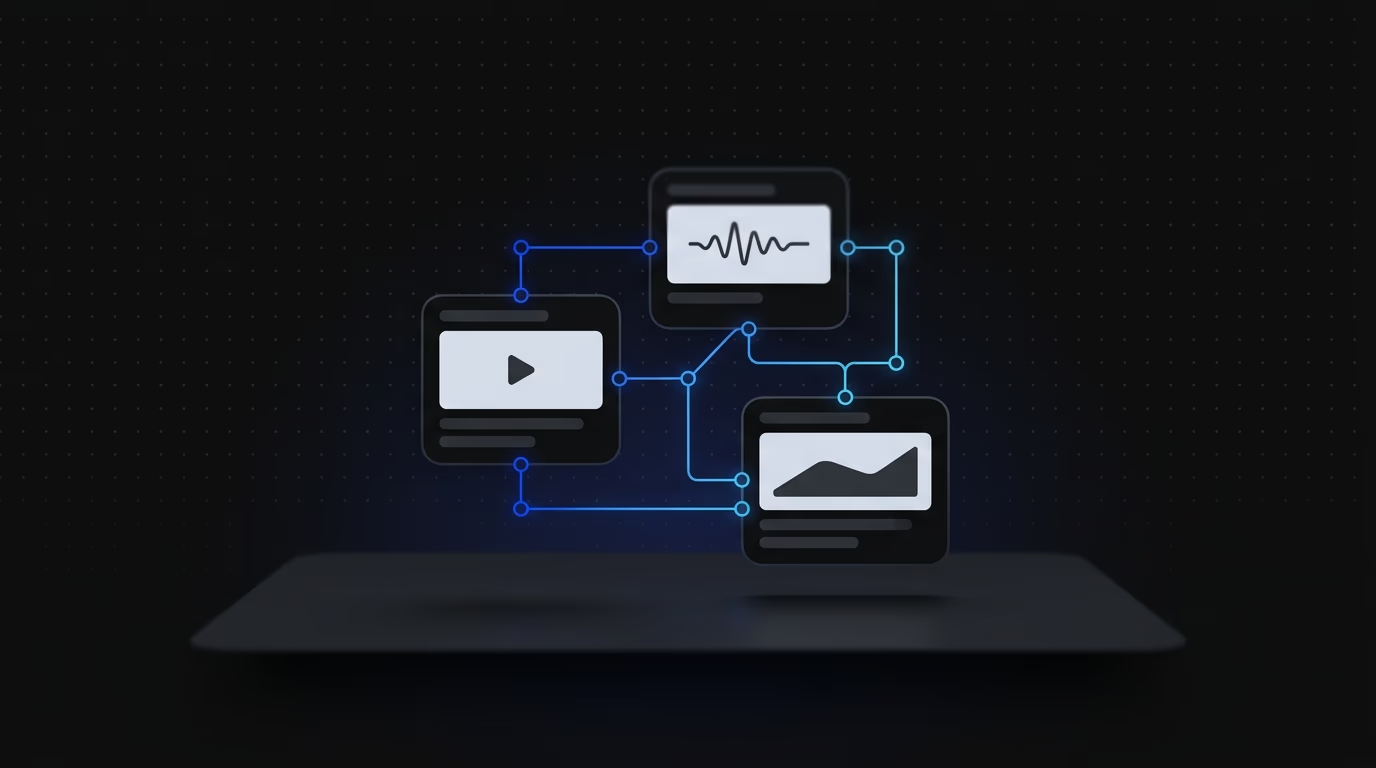
AI is not killing creative strategy; it is killing lazy creative strategy. Most marketers use AI to generate more ads, but smarter teams use AI to analyze creative ecosystems. That is a huge difference. At Instrumnt, we see advanced operators moving away from giant unstructured swipe folders and toward structured research systems. Instead of saving ads because they “look good,” they categorize hook formats, CTA structures, and emotional triggers. The goal stops being replication and becomes pattern recognition.
This is where Claude Code becomes genuinely useful. Claude Code workflows can process hundreds of Meta ads and cluster them into themes dramatically faster than manual research. Now you can ask better questions: Which hooks dominate ecommerce versus SaaS? Which competitors refresh concepts most aggressively? Which testimonial structures survive longest? That kind of analysis creates strategic leverage. Blind copying does not. This is also why systems discussed in Automated Facebook Ads Learning Loops with Instrumnt and Claude Code and Scaling Facebook Ad Testing: Why AI Is the Key to Breaking Through Your Creative Bottleneck matter more than generic swipe-file advice.
Practical Workflow: Using Claude Code to Categorize Creative Angles and Hooks
A smarter Meta Ad Library workflow looks very different from the average swipe-file process. Instead of collecting random screenshots, advanced teams build structured tagging systems. This operational discipline is what separates the top 1% of media buyers from the rest.
- Collect Competitor Metadata: Pull active Facebook ads from direct competitors and adjacent industries. Do not just save the video; save the duration, format, and landing page category.
- Tag Creative Patterns with AI: Use Claude Code to categorize curiosity hooks, fear-based hooks, and problem-solution frameworks. Once enough data accumulates, trends become obvious. You stop asking “Which ad should we copy?” and start asking “Which structures are becoming saturated?”
- Identify the Whitespace: The goal is finding underused positioning. That might mean contrarian messaging, slower pacing, or different customer language. Whitespace matters more than cloning because it allows your ad to stand out in a sea of sameness.
- Accelerate Production with Logic: Use a Facebook ads uploader to launch variations quickly, but only once you have identified a unique angle. Speed only matters if the input is differentiated.
For teams struggling with creative throughput bottlenecks, Breaking the Creative Bottleneck: How One Growth Team Scaled Facebook Ads Throughput with AI provides a useful operational example of how to scale without losing originality.
Smartly.io, Ads Uploader, and TikTok Ads Manager Are Solving Different Problems

A lot of marketers compare advertising tools incorrectly because they assume every platform directly improves performance. In reality, most tools improve operations, which is not the same thing.
Smartly.io
Smartly.io is essentially enterprise advertising infrastructure. Large brands use it for automation, cross-channel execution, and creative scaling. It is an incredible tool for media operations, but automation alone does not create differentiated creative. It improves execution efficiency, which only helps if your creative isn't already failing the "sameness" test.
Ads Uploader
Tools like Ads Uploader focus heavily on speed: bulk launches and reduced manual setup. Again, this is very useful operationally. But as we have discussed, deploying mediocre creative faster still results in mediocre results. You need to combine this launch speed with the strategic insights gained from a more rigorous analysis of the Meta Ad Library.
TikTok Ads Manager
TikTok Ads Manager exposed the weakness in Meta's copy culture faster than many advertisers expected. TikTok punishes stale formats aggressively. Trend timing and native behavior matter more, and audience tolerance for repetition is dramatically lower. You cannot survive there by endlessly cloning old ads. Ironically, TikTok forced many marketers to relearn actual experimentation, and Meta is now moving in the same direction.
The Strongest Counterargument Still Misses the Point
Of course, the Meta Ad Library still matters. You should absolutely monitor competitors, analyze active advertisers, and review creative refresh rates. Ignoring the library entirely would be a mistake. But too many marketers treat it like a template vault instead of a research dataset. That is the real problem. The Meta Ad Library is most valuable when you use it to identify saturated offers, messaging convergence, and category-wide fatigue. That is strategic intelligence. Shot-for-shot recreation is usually just creative insecurity disguised as research. And because everyone has access to the same references, copied ads lose effectiveness faster every year.
According to a report by Triple Whale, brands that diversified their creative angles across at least four different "types" (UGC, static, motion, etc.) saw a 22% higher return on ad spend (ROAS) than those sticking to a single winning format found in the library. This highlights that even if you find a "winner," relying on it exclusively—or relying on a competitor's version of it—is a recipe for stagnation.
Originality Is Becoming the Last Real Advantage
Advertising is slowly returning to fundamentals: clear positioning, distinctive messaging, and strong creative. AI will increasingly handle bidding, delivery, and optimization. Meta Advantage+ products already outperform many manual campaign structures. But AI still struggles to generate genuine differentiation from recycled inputs. That is why smarter teams are changing how they use the Meta Ad Library. They are no longer asking “Which ad should we copy?” They are asking “Which patterns are becoming crowded, and where is everyone still asleep?”
That is the real shift happening inside modern Facebook ads ecosystems. The Meta Ad Library is still incredibly useful, just not as a giant swipe file. For those ready to move beyond basic research, exploring Why Most Facebook Ads Are Created Wrong (And How AI Fixes It) is the next logical step.
Common Questions About Meta Ad Library
Is the Meta Ad Library still useful for Facebook ad research?
Yes. The Meta Ad Library remains valuable for competitor analysis, creative trend monitoring, and understanding how advertisers position offers. The mistake is treating it like a database of templates to copy directly.
Why do copied Facebook ads stop performing over time?
Copied ads become predictable. Once users repeatedly encounter the same structures, hooks, and editing styles across multiple brands, engagement drops because the creative no longer feels novel. This results in the declining CTRs we see in industry benchmarks.
How can AI improve competitor analysis for Meta ads?
AI tools like Claude Code can categorize hooks, offers, and visual structures at scale. This allows marketers to identify saturation trends and whitespace opportunities faster than manual research alone, which is essential when Meta reports over 15 million AI-generated ads entering the ecosystem annually.
For more context, see Meta Ads Guide.
For more context, see Meta Blueprint.
For more context, see Triple Whale's Facebook Ads benchmarks.