Most teams using the Meta Ad Library aren’t conducting real competitor research. They scroll, capture a few ads, and call it strategy.
You can usually spot it in minutes: someone searches a competitor, grabs screenshots, copies a headline, and reports that the market is "running UGC" or "using problem-solution hooks." That’s not operational insight.
The problem isn’t access to ads. It’s the workflow around those ads.
Meta reaches 3.29 billion daily active people across its apps (Meta Q4 2024 earnings). That scale produces massive creative variation, rapid testing, localization, and campaign fragmentation. The Meta Ad Library was built for transparency, not for extracting strategic intelligence from this volume.
Yet marketers treat it like a complete competitive intelligence platform. That’s why teams spend hours inside the library and still fail to identify what competitors are actually scaling.
Why Most Meta Ad Library Research Produces Bad Decisions
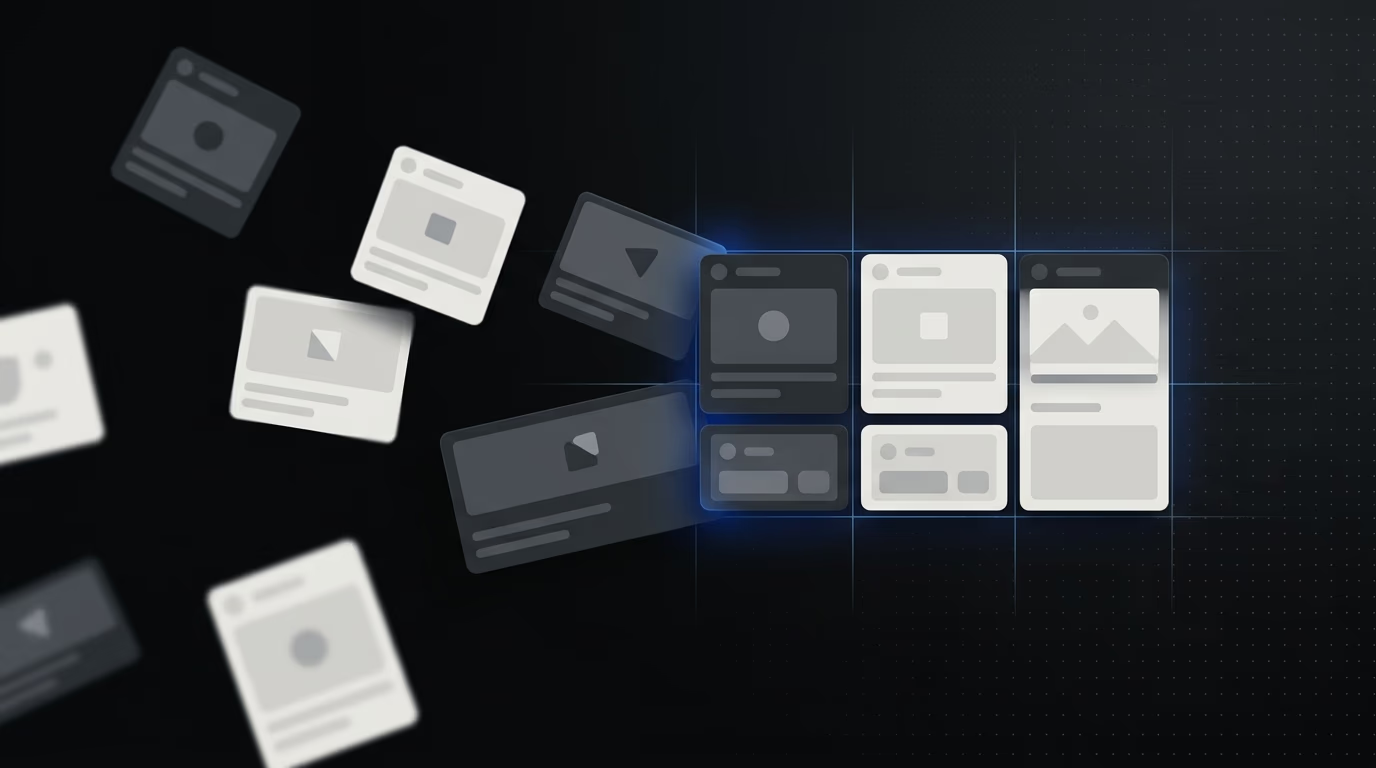
Assuming the library shows the full picture is the first mistake. It doesn’t. You see active ads, but not spend allocation, testing cadence, audience logic, conversion results, or creative rotation. You get snapshots, not the system behind them.
Dangerous misinterpretations follow.
A team sees ten static ads and assumes the competitor prioritizes image creative. In reality, those are just test variants while 90% of budget flows into video. Another team sees repetitive messaging and concludes the brand lacks variety, when they may actually run hundreds of automated variations.
Creative fragmentation is rising. In 2024, over a million advertisers generated 15 million AI-assisted ads on Meta. The library wasn’t designed to help interpret that complexity.
Surface-level spying ends with recycled ideas, not insight.
Dashboards from Paragone or Sotrender add visibility, but they don’t fix unstructured research. Without a repeatable framework, more data is just noise.
| Symptom | Common Fix | Why It Fails | Better Approach |
|---|---|---|---|
| Random screenshots | Build swipe folders | Lacks context | Tag by angle, format, offer, fatigue stage |
| Manual competitor searches | Use filters | Filters don’t interpret strategy | Create recurring workflows tied to objectives |
| Copy visible ads | Recreate assets | Ads are survivors, not winners | Analyze patterns across variations and landing pages |
| Quarterly audits | Schedule ad audits | Misses creative velocity | Continuous collection with uploader workflows |
| Individual review | Team brainstorming | Human review doesn’t scale | AI-assisted clustering and extraction |
The library isn’t failing; the assumption that visibility equals understanding is.
The Workflow Problem Hiding Behind Your Research
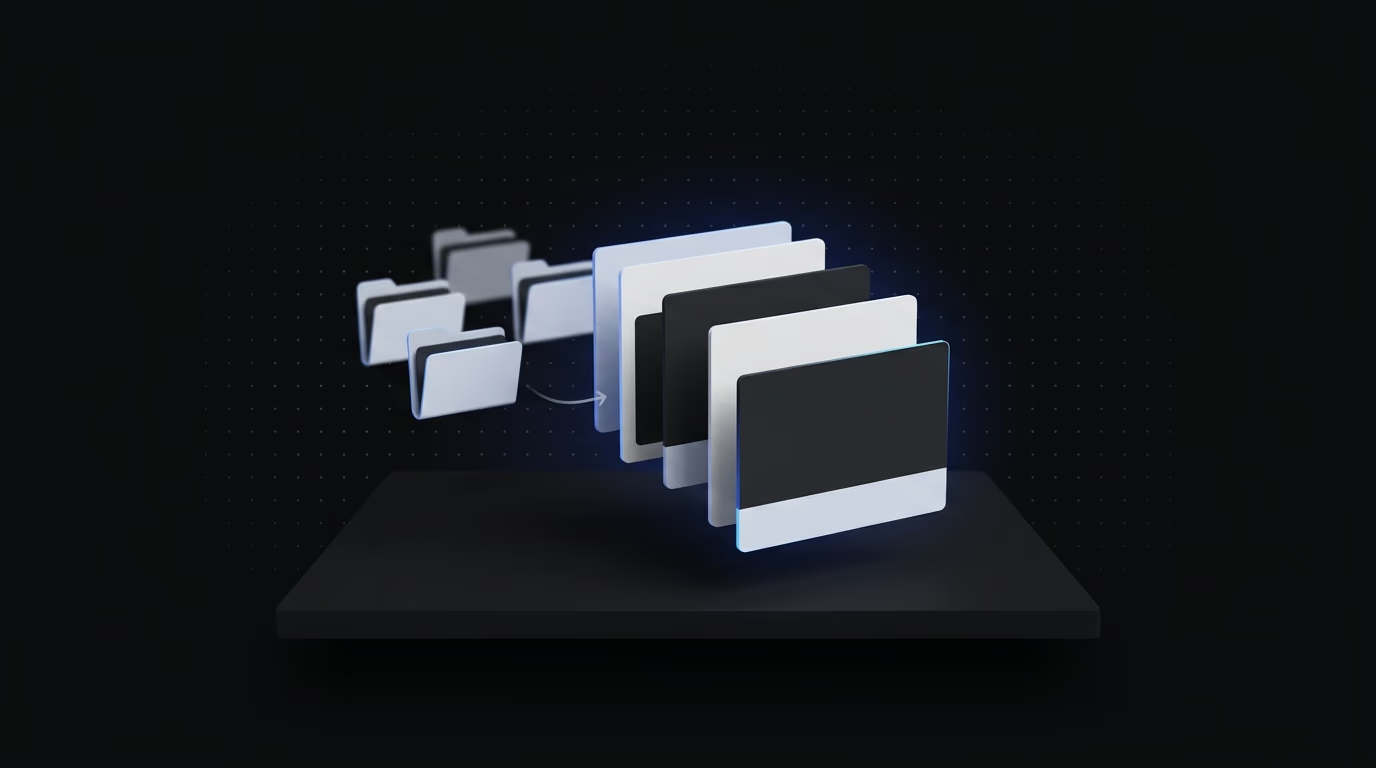
Most workflows fail because everything is manual. Collection, tagging, grouping, insight extraction. Then teams wonder why research doesn’t affect campaigns.
Creative velocity worsens the problem. Only 5-10% of tested creatives become winners, so serious advertisers test aggressively. You’re no longer studying single ads—you’re studying iterative systems.
A media buyer manually tracking hooks, offers, formats, CTAs, landing pages, refresh cadence, and visual composition can’t keep consistency. The result is research theater: screenshots without leverage.
Best teams pair the library with workflow infrastructure. Tools like Meta Ads Guide, Meta Blueprint, and the Meta Marketing API documentation explain formats but don’t speed execution. The real advantage comes from building systems around collection and testing.
Why Manual Research Breaks Once Creative Volume Scales
Creative drives up to 56% of campaign ROAS variation (Nielsen, Meta research). The edge isn’t in audience hacks—it’s in creative iteration speed.
The library shows outputs; you need a way to reverse engineer inputs. Study patterns at scale rather than isolated ads. Track hooks, formats, CTA variations, repeated offers, and landing pages. Distinguish testing campaigns from scaling campaigns.
Now research asks: "What production and testing system are they running?" Not just, "What ad is live?"
Campaigns with five active creative variations see roughly 25% lower CPA; three or more ad variations per audience see up to 30% lower CPA (Meta internal). Winning teams test faster, not just smarter.
References: The Facebook Ad Library Won’t Find Winners, Meta Ad Library Competitor Research: A Practical System.
The Facebook Ads Uploader Becomes a Research Tool
Most see an uploader as a publishing tool. That’s too narrow. When you structure observed patterns into upload frameworks, research becomes testable.
One competitor angle turns into multiple hooks, formats, CTAs, thumbnails, and landing page mappings. Platforms like Instrumnt, Smartly.io, AdEspresso, and Ads Uploader reduce friction between insight and execution. Bulk tools cut ad creation time 80-90% vs. manual Ads Manager workflows (AdManage.ai 2026). Manual building still takes 15-30 minutes per ad.
A good uploader workflow lets teams:
- Convert insights into structured experiments quickly
- Launch dozens of combinations simultaneously
- Keep naming consistent for analysis
- Group variants around hypotheses
- Refresh creatives before fatigue hits
Creative fatigue matters: CTR drops and CPC rises noticeably after four impressions per person. Meta’s recommendations: creative fatigue guidance.
Without a continuous pipeline, performance drops regardless of targeting.
Turning the Meta Ad Library Into a Real Competitive Intelligence System

Top workflows layer:
- Structured collection
- Creative categorization
- AI-assisted pattern extraction
- Bulk testing deployment
AI is where most teams lag. Tools like Claude Code automate grouping by hook, messaging, CTA patterns, offer positioning, creative repetition, and landing page patterns.
Research becomes a searchable intelligence system rather than memory-based screenshot collection.
Hunch and Madgicx emphasize automation, but the differentiator is whether the workflow moves teams from observation to execution.
Practical workflow:
- Collect competitor ads weekly
- Tag creative angles systematically
- Map ads to landing pages
- Use Claude Code for pattern extraction
- Build structured variant matrices
- Launch via Facebook ads uploader
- Feed performance back into the system
Feedback loops matter more than the library itself. Without them, research is entertainment. With them, the library becomes the input layer for scalable creative operations.
The Teams Winning Meta Ads Are Operationally Faster
Competitor research isn’t about inspiration—it’s production infrastructure. Winning teams identify repeatable testing patterns, not just interesting ads.
Operational bottlenecks aren’t ad access—they’re the inability to convert observations into systematic workflows. Manual Ads Manager execution breaks at scale; Meta rewards creative throughput.
References: Automate Creative Testing for Meta Ads, Breaking the Creative Bottleneck: How One Growth Team Scaled Facebook Ads Throughput with AI, Meta Ads Bulk Upload Workflow: A Step-by-Step Operations Guide.
The advantage isn’t secret targeting; it’s research speed, structured insights, rapid testing, continuous analysis, and preemptive creative refresh. The Meta Ad Library is useful, but only as raw input. The edge comes from the workflow surrounding it.
Common questions about meta ad library
What is the best way to meta ad library?
The best approach depends on your team size and launch volume. Start by structuring your workflow around batch preparation and bulk uploading, then layer in automation for the parts that don't need human judgment.
How many ad variations should I test?
Advertisers running 3 or more variations per audience consistently see lower CPAs. Aim for at least 3-5 variations per ad set as a starting point, and increase from there as your workflow allows.
Does automation replace the need for creative strategy?
No. Automation handles the operational side, like launching, duplicating, and naming ads at scale. Creative strategy, offer positioning, and audience selection still require human judgment. The goal is to free up more time for that strategic work.