By the end of this playbook, your team will have a system to turn a single marketing hook into 15+ high-performing ad variations and get them live in Meta Ads Manager in under 30 minutes. You’ll move from manual tasks to system management, using automation to remove bottlenecks that slow down scaling.
Why Automation is the Only Way to Scale Creative
Manual ad creation limits you. If your media buyer spends 20 minutes per ad, you’re stuck with human hours. In 2026, the edge belongs to creative throughput, not manual tasks. Creative quality drives up to 56% of a campaign’s ROAS (Nielsen and Meta research), so to find that edge, you need to test more.
Meta's apps hit 3.29 billion daily active users (Meta Q4 2024 earnings). Reaching them effectively means keeping fresh creative flowing. This playbook shows you how to use Facebook ads automation tools to fuel that engine.
Phase 1: Structuring Your Automated Testing Engine
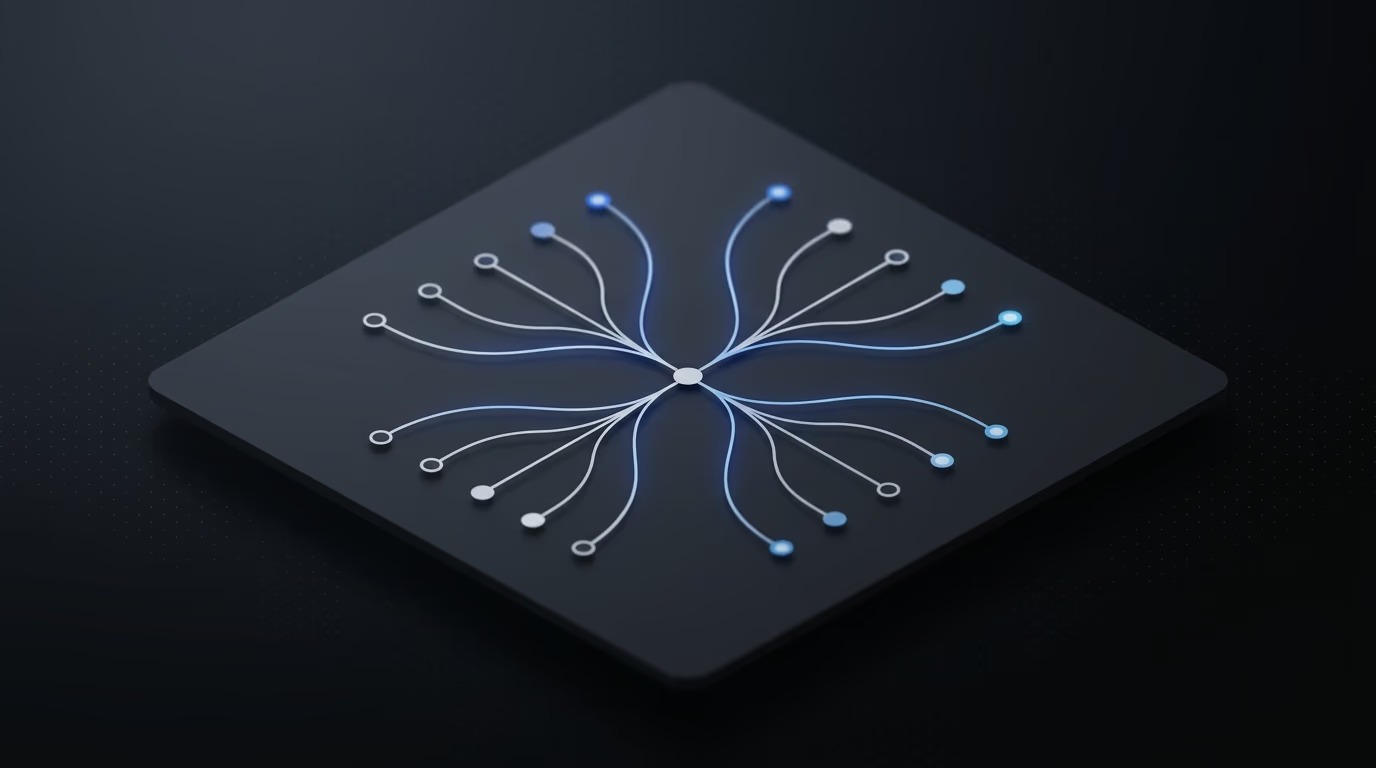
Stop making ads one by one. Focus on building a testing system. Move from creating individual ads to running batches.
- Standardize Your Naming Convention: Use a machine-readable format like
[Date]_[Angle]_[CreativeType]_[HookID]. It’ll let automation tools process your data. - Define Your Minimum Viable Test (MVT): Don’t launch a single ad—launch a group. Meta data shows 3+ variations per audience reduce CPA by 30%. Aim for 5-10 variations per test.
- Use Advantage+ Settings: Leverage Meta’s native automation for placements and budget where possible. Check the Meta Ads Guide to make sure your assets meet automated placement specs.
Without a structure, you can’t automate.
Phase 2: Generating Creative Angles with Claude Code
Most teams fail because they run out of fresh ideas. Use Claude Code to bridge the gap between your strategy and multiple ad iterations. Claude Code isn’t just for copy—it generates the structured data you need for bulk uploading.
The Workflow:
- Feed the Context: Provide Claude with your top-performing past copy, product landing page, and customer pain points.
- Generate Structured Variations: Ask for 15 variations in 3 buckets:
- Logic-based: Focus on specs, ROI, facts.
- Emotion-based: Highlight the transformation and after-effects.
- Fear-based: Focus on the cost of inaction or the problem being solved.
- Export for Upload: Let Claude format these into a CSV or JSON file, including Headline, Primary Text, and Description.
Automating the copywriting process fills your testing pipeline, ensuring a steady flow of fresh variations.
Phase 3: High-Velocity Uploading with Instrumnt
Once you have your variations, don’t input them into Ads Manager manually. That’s where most teams lose hours. Use a dedicated Facebook ads uploader like Instrumnt to push your batch tests live instantly.
Step-by-Step Launch:
- Connect Your Assets: Upload your video/image assets to Instrumnt’s library.
- Map the Copy: Paste the structured copy you got from Claude Code.
- Matrix Creation: Use the tool to automatically combine every copy variation with every visual asset. For example, 3 videos and 5 copy variations create 15 ads.
- Bulk Push: Double-check settings (pixel, conversion event) and push all 15 ads to one or multiple ad sets.
This is the how-to for scaling Meta ads with bulk uploading. It cuts down a half-day task to background processing.
Phase 4: Monitoring Performance and Managing Fatigue
Automation doesn’t stop once your ads are live. You also need to automate kill and scale decisions. According to WordStream's Facebook Ads benchmarks, the average CTR is 0.90%. If your ads are underperforming, the system should flag them automatically.
- Set Automated Rules: Use Revealbot or Meta’s native rules to pause ads that exceed spend thresholds without conversions.
- Detect Creative Fatigue: Watch for rising frequency and dropping CTR—signals that creative fatigue is setting in. Follow Meta’s recommendations to set alerts for frequency over 2.5 on cold audiences.
- Cycle Winners: When a variation becomes a winner, feed that hook back into Claude Code to generate new variations of it.
Scenario: From One Static Image to a 12-Ad Test Suite
Imagine you’re selling a SaaS productivity tool with one clean dashboard image.
- Manual Way: You go to Ads Manager, create a campaign, set an ad set, upload the image, write one headline, and publish. Total time: 15 minutes. Total variations: 1.
- Automated Way: You give Claude Code the dashboard image and URL. Claude generates 4 hooks: "The End of Tab-Hopping," "Save 2 Hours Daily," "Team Clarity in One Click," and "The CFO’s Favorite View." You pair them with 3 background colors for your image. Then you upload them with Instrumnt. Total time: 15 minutes. Total variations: 12.
In the automated setup, your team creates 12x the data points for the same time investment. This is how you win.
Pre-Launch Automation Checklist

Use this table to ensure every batch launch is optimized for the Meta algorithm.
| Task | Tool | Goal | Frequency |
|---|---|---|---|
| Generate 15+ Copy Variations | Claude Code | Maximize Hook Variety | Weekly |
| Batch Creative Matrix | Instrumnt | Create 10-20 Ad Combinations | Weekly |
| Set Spend-Based Kill Rules | Meta/Revealbot | Protect Budget from Underperformers | Once per Campaign |
| Frequency/Fatigue Check | Ads Manager | Detect Performance Decay | Every 48 Hours |
| Winners Feedback Loop | Claude Code | Iterate on Top 5% Performers | Bi-Weekly |
FAQ
How many ad variations should I test? Test at least 3-5 variations per ad set. Meta’s data shows 3+ variations reduce CPA by up to 30%. More variations give the algorithm more options to find the best sub-audience.
Does bulk uploading affect ad performance? No. Bulk-uploaded ads perform the same as manually created ones. Meta’s algorithm treats them equally. The advantage of tools like Instrumnt is operational speed and error reduction.
What can AI optimize in Facebook ads? AI can manage bid and budget allocation, audience expansion, placement, and creative element testing (headlines, images, CTAs). Creative strategy and high-level messaging still need human direction.
How do I know when my Facebook ad is fatigued? Look for frequency above 2.5 for cold audiences (5.0 for retargeting), CTR dropping 15%+ week over week, or rising CPA with steady spend. These signals indicate creative fatigue.
Related reading
If you want to keep reading without changing topic, these pages add more context: