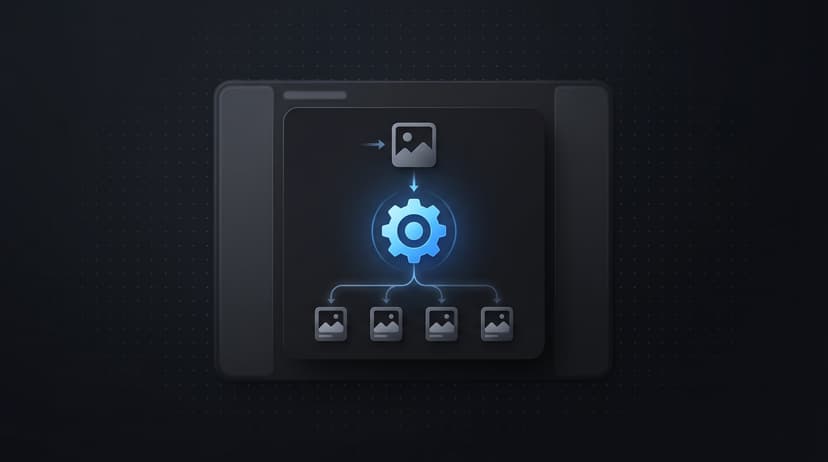

Great media buyers do not win by clicking faster inside Ads Manager. They win by building better systems, protecting their time, and making it easier to test more creative, launch more ads, and learn faster than everyone else.
The numbers make the case clearly. According to WordStream's Facebook Ads benchmarks, the average Facebook ad CTR across all industries is 0.90%, with an average CPC of $0.94. Meta also reports that its family of apps reaches 3.29 billion daily active people (Meta Q4 2024 earnings report), which highlights how competitive and high-volume the platform is. In an environment with margins that thin, how you allocate your attention matters enormously. Spending four hours on manual ad setup instead of two hours on creative strategy is a performance decision with real consequences.
If you manage multiple clients, multiple accounts, or multiple campaigns at once, small workflow problems compound quickly. A few extra minutes per launch becomes hours every week. That is why the best media buyers treat execution speed as a performance advantage instead of an operations detail.
Tip 1: Batch Your Ad Creation Before You Open Ads Manager
One of the easiest ways to work smarter as a media buyer is to stop building campaigns one ad at a time.
Instead, batch the work before launch:
- write all primary text, headlines, and CTA variations together in one sitting
- organize creatives by angle, hook, and format before any of them go into the platform
- decide naming conventions up front and apply them to every asset
- map which creative files belong to which campaign or ad set
This reduces decision fatigue and makes your workflow more consistent. It also helps you catch missing creative, broken naming, or duplicated messaging before you are deep inside a launch, where errors are more expensive to fix.
Teams that batch ad creation report saving 4 to 6 hours per week per account. For a media buyer managing ten clients, batching can realistically save significant time each month. That time can be reinvested into analysis, creative strategy, or additional testing.
For teams that launch frequently, batching turns ad creation into a repeatable process. The goal is to never open Ads Manager without a complete asset set ready to go.
Tip 2: Standardize Your Best Campaign Setups
Most media buyers repeat the same setup patterns constantly. That usually includes campaign objectives, ad set logic, placement choices, naming rules, and common copy frameworks.
If you rebuild those from scratch every time, you are paying a time cost on work you have already solved.
Meta Blueprint offers free certification courses that cover Meta's recommended campaign structures and best practices. Once you know what works structurally, document it.
Create simple standards for:
- campaign naming (client, date, objective, test type)
- ad set naming (audience descriptor, placement, budget tier)
- creative labeling (angle, format, version number)
- copy variation frameworks (primary text, headline, CTA by template)
- approval flow before any launch goes live
Standardization does not make your campaigns generic. It removes low-value decisions so you can spend more energy on creative quality, offer positioning, and testing logic.
A common objection is that standards limit flexibility. In practice, the opposite is true. When the structure is handled, your mental energy goes to the strategic layer.
Tip 3: Automate the Parts of Media Buying That Do Not Need Your Brain
Manual work is one of the biggest growth limits for media buyers and agencies. If your process depends on repetitive clicking, copy-pasting, and rebuilding the same structures inside Meta, you will eventually hit a ceiling.
The best workflows automate repetitive execution, especially:
- bulk ad uploads across campaigns and ad sets
- ad duplication with consistent naming and structure preserved
- creative-to-placement mapping across multiple ad sets
- repeated copy variation deployment
That is where tools built for scale matter. Read our guide on how to scale Meta ads with bulk uploading to see how faster execution creates more room for testing and iteration. The time savings compound. When launch volume increases without a matching increase in manual effort, you get more learning opportunities per week at the same or lower operational cost.
You should still own the strategy. You should not spend your best hours on mechanical launch work.
Tip 4: Test More Variations Instead of Polishing Fewer Ads
A lot of media buyers get stuck refining a small number of ads because launching more variations feels operationally expensive. The result is a hidden problem: performance decisions get made with too little data.
Research from Nielsen and Meta indicates that creative quality accounts for up to 56% of a campaign's ROAS variation. Advertisers who run three or more ad variations per audience see up to 30% lower CPA on average. These numbers highlight why testing volume matters.
The Meta Ads Guide details the full range of ad formats and placements available, but knowing the formats only helps if your workflow lets you test across them.
Smarter media buyers create systems that make it easier to test multiple hooks and opening lines for the same creative, multiple headlines across the same audience, multiple creative angles for the same offer, multiple formats for the same message, and multiple CTAs on otherwise identical ads.
When your workflow is efficient, you learn faster. When you learn faster, you scale faster. The time savings from earlier tips are most valuable when they are reinvested into testing.
Tip 5: Protect Strategy Time Like It Is Revenue Time
Because it is.
Every hour spent uploading ads manually is an hour not spent on creative analysis, brief writing, client communication, offer positioning, post-campaign review, landing page feedback, or account expansion planning.
The strongest media buyers are not just good operators. They are good allocators of attention. The highest-value work in the account usually happens before and after launch.
A useful mental model is to assign every recurring task in your workflow a tier. Tier one tasks are things only you can do. Tier two tasks follow a repeatable process. Tier three tasks are pure mechanical execution.
If tier three work is consuming more than 20% of your week, your workflow has a problem worth fixing.
How to Measure Whether Your Workflow Is Actually Improving
Changing your process is only valuable if the change produces better outcomes. Here are four metrics to track as you implement these tips:
Ads launched per week: This is the most direct measure of execution efficiency. If it is not increasing, the changes have not taken hold yet.
Time from brief to live: How long does it take from a complete creative brief to ads going live? Reducing this timeline creates compounding benefits.
Number of ad variations per ad set: This reflects testing breadth. More variations typically lead to better learning.
Hours spent on manual execution vs. analysis: Track this honestly. If you are spending more time building ads than reviewing results, the balance is off.
CPA trend over time: As testing velocity increases, CPA should trend down. Flat or rising CPA alongside higher volume may signal creative or audience issues.
Where Instrumnt Fits In
Instrumnt is designed for media buyers who need more speed without added complexity. If your current launch process is slowing down testing velocity, our features help you bulk upload ads, duplicate faster, and reduce time spent inside Meta's interface.
You can also explore our pricing plans if you want a workflow that supports higher launch volume without increasing manual effort.
Common Questions From Media Buyers
What tools do media buyers use to manage Meta ad workflows?
The core tool is Meta Ads Manager, but many media buyers rely on supplementary tools to handle bulk uploads, creative organization, and naming consistency. Spreadsheet workflows are common at smaller scale. Dedicated platforms become more valuable as account count and launch frequency increase.
How many ads should a media buyer test per week?
This depends on budget and campaign goals, but a common starting point is three to five creative variations per active ad set. The main constraint is usually execution time, not budget.
Is it worth standardizing processes when every client is different?
Yes. Standardization applies to structure, not strategy. Campaign structure, naming, and workflows can be consistent, while creative and targeting remain customized.
FAQ
Why is batching ad creation important for media buyers?
Batching reduces context switching, improves consistency, and saves several hours per week. It allows more time for strategy and testing.
What is the biggest bottleneck in scaling Meta ad campaigns?
In many cases, it is manual execution. Slow workflows limit how many ads you can launch and test, which slows learning and performance gains.
How can media buyers improve campaign performance without increasing budget?
By increasing testing volume, improving creative quality, and reducing execution time, media buyers can generate better results from the same spend.
Final Takeaway
The best media buying advantage is not a tactic inside the platform. It is building a workflow that lets you move quickly, test aggressively, and stay focused on strategy.
Batch the work. Standardize what repeats. Automate what should not be manual. Protect your attention for the decisions that actually move performance.
These habits, applied consistently, compound into a meaningful operational edge over time.