The Campaign That Never Left Learning
A mid-market ecommerce team checks its dashboards and sees something unsettling: Facebook ads are producing sales, but performance never seems to settle. CPMs move unpredictably. Cost per acquisition rises and falls without a clear pattern. Some days look excellent and others look terrible.
Nothing appears broken. The account has traffic, conversions, and active creative testing. Yet the team feels as if every campaign is constantly starting over.
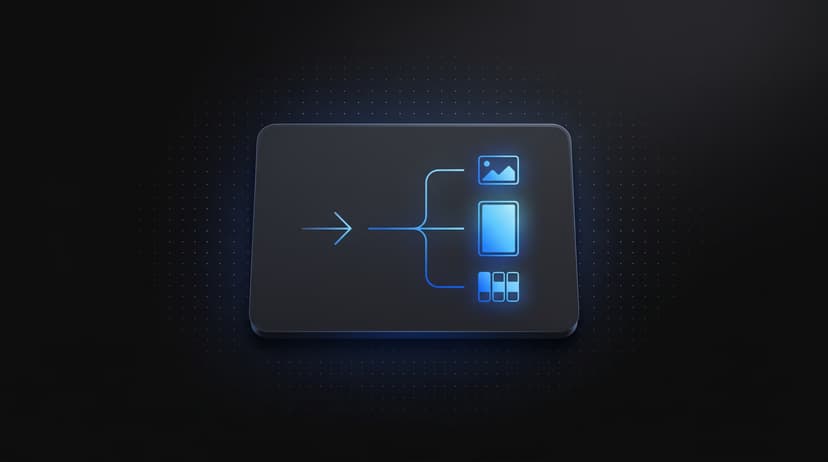
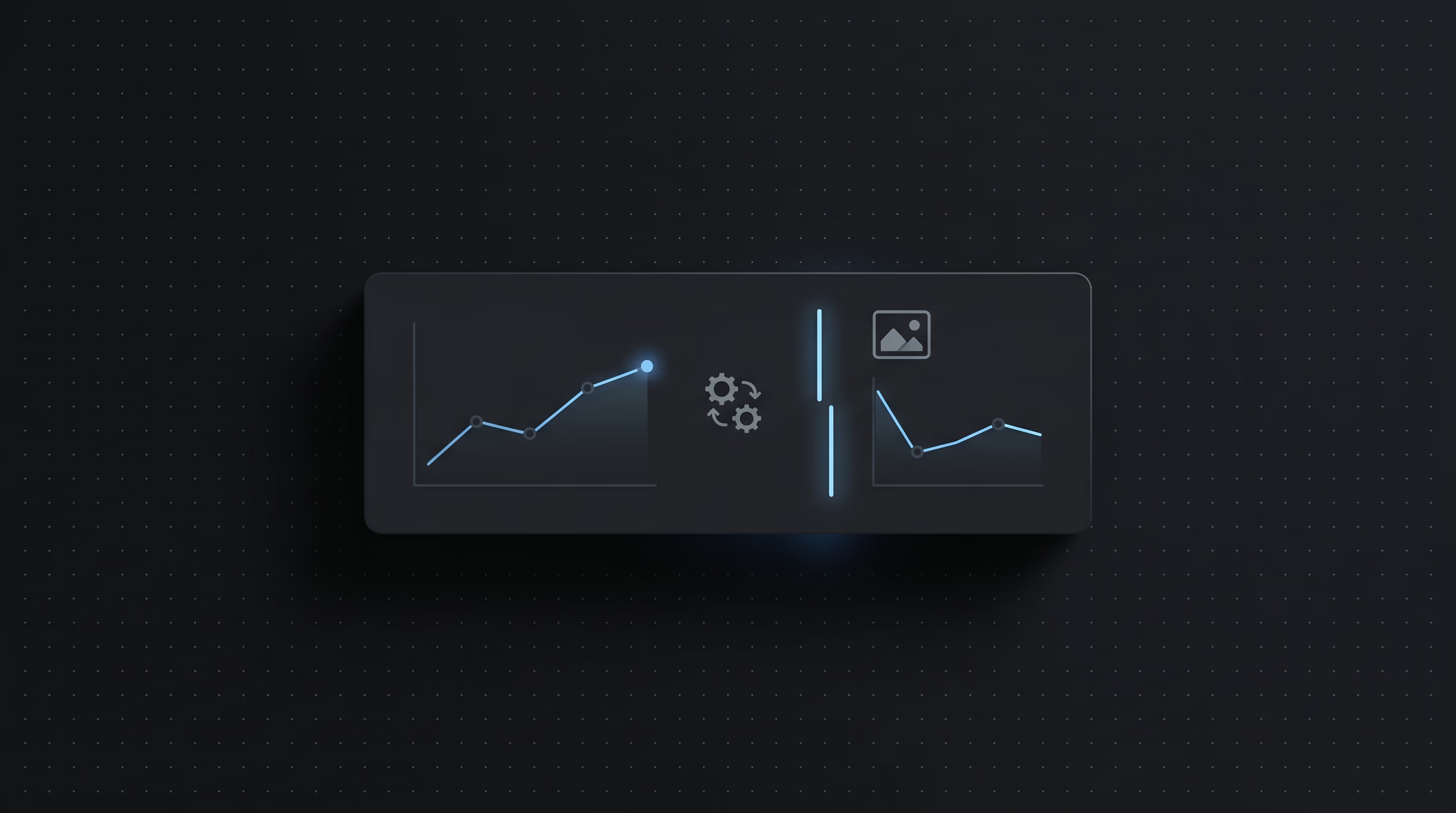
The real problem is not targeting, bidding, or budget size. The problem is that the account repeatedly re-enters the facebook ad learning phase before delivery has enough time to stabilize.
The team's behavior looks reasonable when viewed one change at a time. Someone increases budget to reduce lost impression share. Another person swaps creative to fight fatigue. A media buyer adjusts audiences after seeing a temporary performance dip. A manager duplicates campaigns to test a new structure.
Each action seems harmless. Together, they create continuous disruption.
This is why many Facebook ads accounts struggle to scale. Instability rarely comes from one catastrophic decision. More often, it comes from dozens of small edits made without a coordinated deployment process.
For a broader discussion of signal quality and decision-making, see Why Your Facebook Ad Reporting Dashboard Creates Bad Decisions (And How to Fix the Signal Problem).
What Facebook's Learning Phase Is Actually Measuring
The facebook ad learning phase exists because the delivery system is attempting to understand which users are most likely to complete the selected optimization event.
When an ad set launches or experiences a significant change, the platform gathers data and updates predictions. During this period, delivery can be less efficient because the system is still determining how to allocate impressions.
One of the most frequently cited platform guidelines is that ad sets generally benefit from generating around 50 optimization events per week to exit learning more effectively, according to Meta documentation and industry summaries discussing learning-phase behavior.
The important takeaway is that learning is not simply a timer. It is a signal accumulation process.
If the inputs keep changing, the system keeps rebuilding its assumptions.
Many advertisers incorrectly view learning as a temporary inconvenience. In reality, it is a reflection of how stable or unstable account operations are.
Why Facebook Ads Keep Re-entering Learning (Operational Triggers)

The learning phase resets when the underlying variables of delivery change too frequently.
Common triggers include:
- Budget increases and decreases
- Audience modifications
- Creative replacements
- Bid strategy changes
- Optimization event changes
- Significant structural edits to campaigns or ad sets
The problem is not that these changes occur. The problem is that they often occur simultaneously.
Teams frequently treat Facebook ads like a dashboard that requires constant intervention. Every fluctuation creates pressure to act immediately.
In practice, excessive editing introduces noise faster than the system can process meaningful signals.
Consider a team that changes budget on Monday, launches new creative on Tuesday, adjusts targeting on Wednesday, and duplicates campaigns on Thursday. When performance changes on Friday, nobody can identify which modification caused the result.
The account becomes difficult to interpret because every variable moved at the same time.
Tracing the Real Source of Instability Across Budgets, Audiences, and Creatives
Most learning-phase problems are actually operational problems.
Budget changes alter delivery distribution.
Audience changes alter who sees ads.
Creative changes alter engagement patterns.
When all three happen together, the system receives multiple competing signals.
A useful framework is to classify modifications into three categories:
- Delivery changes
- Targeting changes
- Creative changes
Whenever possible, only one category should change during a testing cycle.
This approach creates cleaner attribution between cause and effect.
For example, if creative performance is the question, maintain stable budgets and audiences while testing creative variations. If audience quality is the question, preserve creative consistency and budget stability.
Teams that separate variables learn faster because results become easier to interpret.
Related reading: Facebook Ad Creative Testing Framework Workflow Guide.
Mini Example: One Creative Change Versus Five Simultaneous Changes
Imagine two media-buying teams.
Team A launches one new creative while leaving budget, audience, bidding, and campaign structure unchanged.
After seven days, the team can confidently evaluate whether the new asset improved performance.
Team B launches three creatives, increases budget by 40%, broadens targeting, adjusts placements, and duplicates campaigns.
Performance improves.
But why?
Nobody knows.
The improvement could have come from audience expansion. It could have come from one creative variation. It could have come from increased spend.
The result is activity without insight.
This distinction becomes especially important when scaling. Teams often believe they are running experiments when they are actually creating operational ambiguity.
The best testing systems maximize learning, not the number of changes.
Uploader Workflow: Scheduling Controlled Creative Releases in Instrumnt
High-performing teams rarely rely on constant manual editing.
Instead, they create deployment systems.
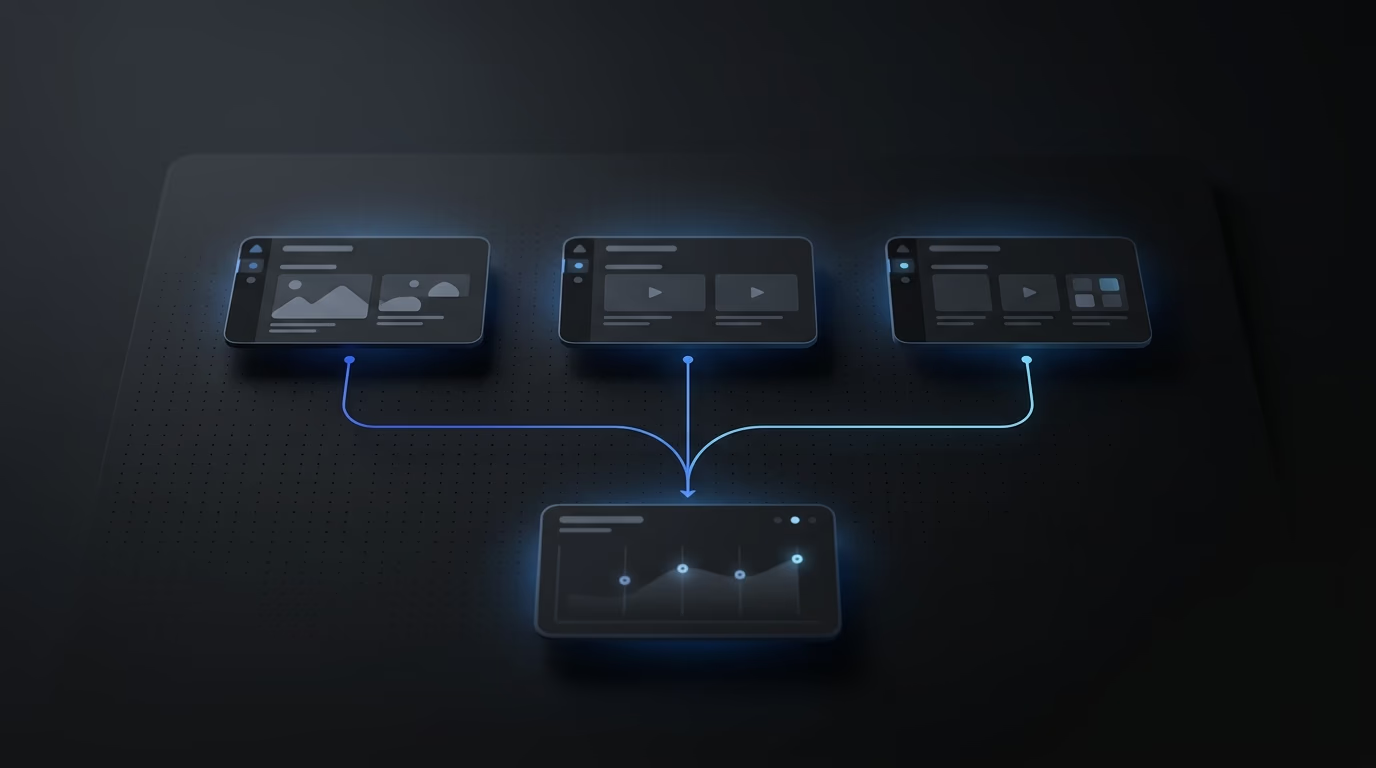
A structured workflow inside Instrumnt typically includes:
- Planned release windows
- Creative approval checkpoints
- Validation before launch
- Modification logging
- Batch deployment using a Facebook ads uploader
Rather than applying edits throughout the day, teams group related changes into controlled releases.
This reduces unnecessary resets and improves accountability.
A Facebook ads uploader becomes particularly valuable because it shifts execution away from reactive clicking and toward planned operations.
The workflow often looks like this:
- Creative concepts are prepared.
- Claude Code reviews deployment checklists.
- AI-assisted validation identifies risky changes.
- Teams approve a release package.
- The Facebook ads uploader deploys the approved batch.
- Results are monitored without additional interference.
The goal is not to eliminate testing. The goal is to make testing interpretable.
For a deeper discussion of bulk deployment, see How to Scale Meta Ads with Bulk Uploading.
AI-Assisted Governance with Instrumnt, Claude Code, and Facebook Ads Uploader
As account complexity grows, governance becomes increasingly important.
Instrumnt provides operational structure around deployment decisions. Claude Code can generate validation checklists, document change logs, and help teams maintain consistency. AI becomes a coordination layer rather than a replacement for strategic thinking.
A mature governance process might require answers to questions such as:
- What variable is being tested?
- Which metrics determine success?
- Which changes are included in the release?
- Which changes are intentionally excluded?
- How long will the observation window last?
Without governance, optimization often turns into continuous intervention.
With governance, optimization becomes a repeatable process.
The result is improved signal quality and more reliable decision-making.
Competitor Landscape: Revealbot vs Sotrender vs Ads Uploader
Different tools approach Facebook ads management from different perspectives.
Revealbot is commonly associated with automation workflows. Automation can improve responsiveness and reduce manual work. However, poorly governed automation may increase the frequency of changes and contribute to additional learning resets.
Sotrender focuses heavily on reporting and analytics visibility. Better reporting helps teams understand performance, but visibility alone does not solve deployment discipline problems.
Ads Uploader workflows emphasize batch execution and structured releases. Rather than encouraging constant modification, they support coordinated deployment cycles that can help preserve experimental validity.
The distinction is important.
Reporting tools explain what happened.
Automation tools execute actions.
Deployment systems help control when and how changes occur.
Organizations often need all three capabilities, but the operational objective should remain the same: reduce unnecessary disruption while maintaining testing velocity.
Building a Repeatable Learning-Phase Recovery System and Governance Checklist

When campaigns repeatedly re-enter learning, recovery requires a deliberate process.
Start with a stabilization period.
Avoid introducing new variables until enough data accumulates to evaluate existing changes.
Next, implement a governance checklist:
- Define the hypothesis before deployment.
- Limit changes to a single variable category when possible.
- Schedule release windows.
- Record every modification.
- Use AI-assisted validation before launch.
- Review results only after a predefined observation period.
Teams should also establish thresholds for intervention. Not every short-term fluctuation requires action.
In many cases, the most productive optimization decision is patience.
One useful benchmark comes from WordStream's widely cited Facebook advertising benchmarks, which reported an average Facebook ads click-through rate of approximately 0.90% across industries. While account-specific results vary significantly, benchmarks remind teams that normal performance variation exists and does not automatically justify immediate campaign edits.
A recovery system is successful when changes become intentional rather than reactive.
FAQ: Facebook Ad Learning Phase Questions
What changes reset the Facebook ad learning phase?
Budget changes, audience modifications, bid strategy adjustments, optimization-event changes, and significant creative replacements can all contribute to learning resets because they alter the inputs used for delivery predictions.
How long does it take for a Facebook ad set to exit learning?
The answer depends on conversion volume, signal quality, account stability, and optimization-event frequency. Higher-volume campaigns typically stabilize faster than campaigns with limited conversion data.
Can I test new creatives without restarting performance on my Facebook campaigns?
Yes. The best approach is to isolate creative testing from other major variables. Maintain stable budgets and audiences while introducing new creative assets through controlled release windows.
What is a learning-limited state?
A learning-limited state generally indicates that an ad set is not generating enough optimization signals for efficient learning. Increasing signal quality, improving conversion volume, or simplifying account structure may help.
The Outcome: From Chaos to Controlled Learning
When teams stop treating Facebook ads as a reactive dashboard and start treating them as an operational system, performance becomes easier to interpret and scale.
The key insight is that the facebook ad learning phase is not merely an algorithmic phenomenon. It is also a workflow challenge.
Accounts that experience constant resets often suffer from uncontrolled deployment behavior rather than poor optimization strategy.
By introducing structured release processes, AI-assisted validation through Claude Code, governance systems inside Instrumnt, and disciplined execution through a Facebook ads uploader, teams can preserve signal quality while continuing to test and improve performance.
Stability is not achieved by avoiding change.
It is achieved by controlling how change is introduced.
In other words, successful scaling comes from changing less at once, learning more from every release, and building an operational system that allows experimentation without sacrificing stability.
For more context, see AdEspresso.
For more context, see Meta's creative fatigue recommendations.
For more context, see WordStream's Facebook Ads benchmarks.