Why Manual Creative Generation Is the Real Bottleneck in Facebook Ads
Many media buyers and growth teams assume that poor Facebook ads performance stems from targeting, bidding, or budget limitations. In reality, the key constraint is creative throughput. According to Databox, creative quality can drive up to 75% of an ad’s overall performance. Nielsen also reports that creative contributes approximately 47% of total sales lift in advertising campaigns, surpassing targeting or reach considerations. This demonstrates that campaigns are often won or lost before launch.
Despite this, most teams still produce creatives manually, creating a fundamental mismatch:
- Algorithms can optimize delivery at scale.
- Humans produce ads one variation at a time.
Manual workflows break down quickly. Building ads inside Ads Manager can take 15–30 minutes per variation, meaning testing 20–30 variations consumes a full day. Not only does this delay insights, it also limits testing frequency, reducing campaign effectiveness.
If your creative workflow feels fragmented or slow, consider starting with How to Create Facebook Ads That Don’t Waste Spend: Fixing the Broken Creation Process to establish a strong foundation.
What “Automated Creative Generation” Actually Means in Practice
Automation in Facebook ads is frequently misunderstood. Many teams equate it with rules-based actions like pausing ads or adjusting budgets—these are optimization tasks, not true creative generation.
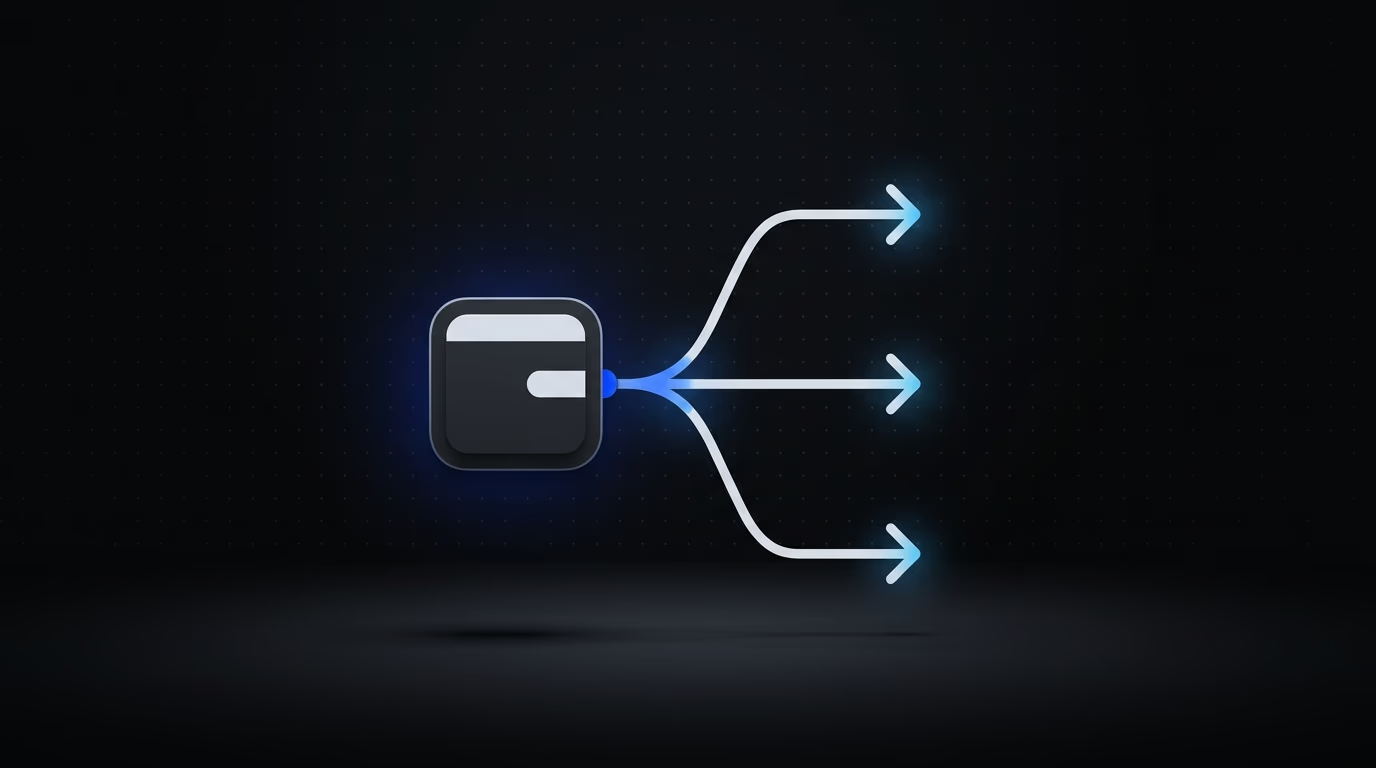
Real automation involves building a system that continuously produces ad variations. Instead of manually creating each ad, teams design a pipeline with four stages:
- Componentization — Break ads into variable elements such as hooks, offers, social proof, and CTAs.
- AI Generation — Generate creative variations using AI tools like Claude Code.
- Asset Assembly — Combine copy and visuals efficiently.
- Bulk Publishing — Upload and launch using a Facebook ads uploader such as Instrumnt.
This transforms the team’s role from builder to system operator, enabling higher testing volume without increasing manual effort.
Core Stack: AI + Facebook Ads Uploader + Structured Inputs
Automating creative generation requires more than individual tools—it needs a structured system.
1. Structured Inputs
Every ad should be defined by variables:
- Hook
- Value proposition
- Social proof
- CTA
Structured inputs enable AI to generate meaningful variations rather than random outputs, forming the foundation of repeatable automation.
2. AI Generation
Claude Code enables controlled, programmatic generation:
- Consistent formatting
- Rapid production of 50–100 variations in seconds
- Alignment with structured input constraints
3. Bulk Publishing
Once variations are generated, distributing them efficiently is critical. A Facebook ads uploader like Instrumnt eliminates manual setup, CSV handling, and naming errors. This ensures the bottleneck does not shift from creative production to execution.
Competitor Context
Tools like Revealbot and Madgicx excel in optimization and performance analysis but do not address core creative generation. Revealbot is strong in automation rules and budget management but lacks bulk creative production. Madgicx offers AI-driven insights but limited generation capabilities. The combination of Claude Code and Instrumnt fills this operational gap.
Step-by-Step: Build Your Automated Creative Generation Pipeline
Step 1 — Define Your Creative Variables
Create a structured table of hooks, value propositions, social proof, and visuals. These variables become the levers for testing.
Step 2 — Generate Variations with Claude Code
Feed your structured inputs into Claude Code. Example prompt:
"Generate 12 ad variations using these hooks and value propositions. Include headline (<40 chars) and primary text (<125 chars). Output as CSV."
This ensures scalable, structured outputs.
Step 3 — Template Your Visuals
Leverage 3–5 visual templates and swap text or backgrounds to maximize output. Tools like Bannerbear can automate overlays.
Step 4 — Upload via a Facebook Ads Uploader
Use Instrumnt to upload CSVs and launch multiple ads simultaneously, removing manual errors and tracking inconsistencies.
Mini Example: Turn One Idea Into 24 Ads in 30 Minutes
Product: Project management tool
- Variables: 3 Hooks, 2 Proof points, 2 CTAs
- AI Generation: 3 × 2 × 2 = 12 variations via Claude Code
- Visual Pairing: Pair with 2 visuals = 24 ads
- Launch: Upload via Facebook ads uploader
Without automation, most teams would only test 3–5 ads, highlighting the throughput advantage.
Optimization Layer: Turn Performance Data Into New Creative
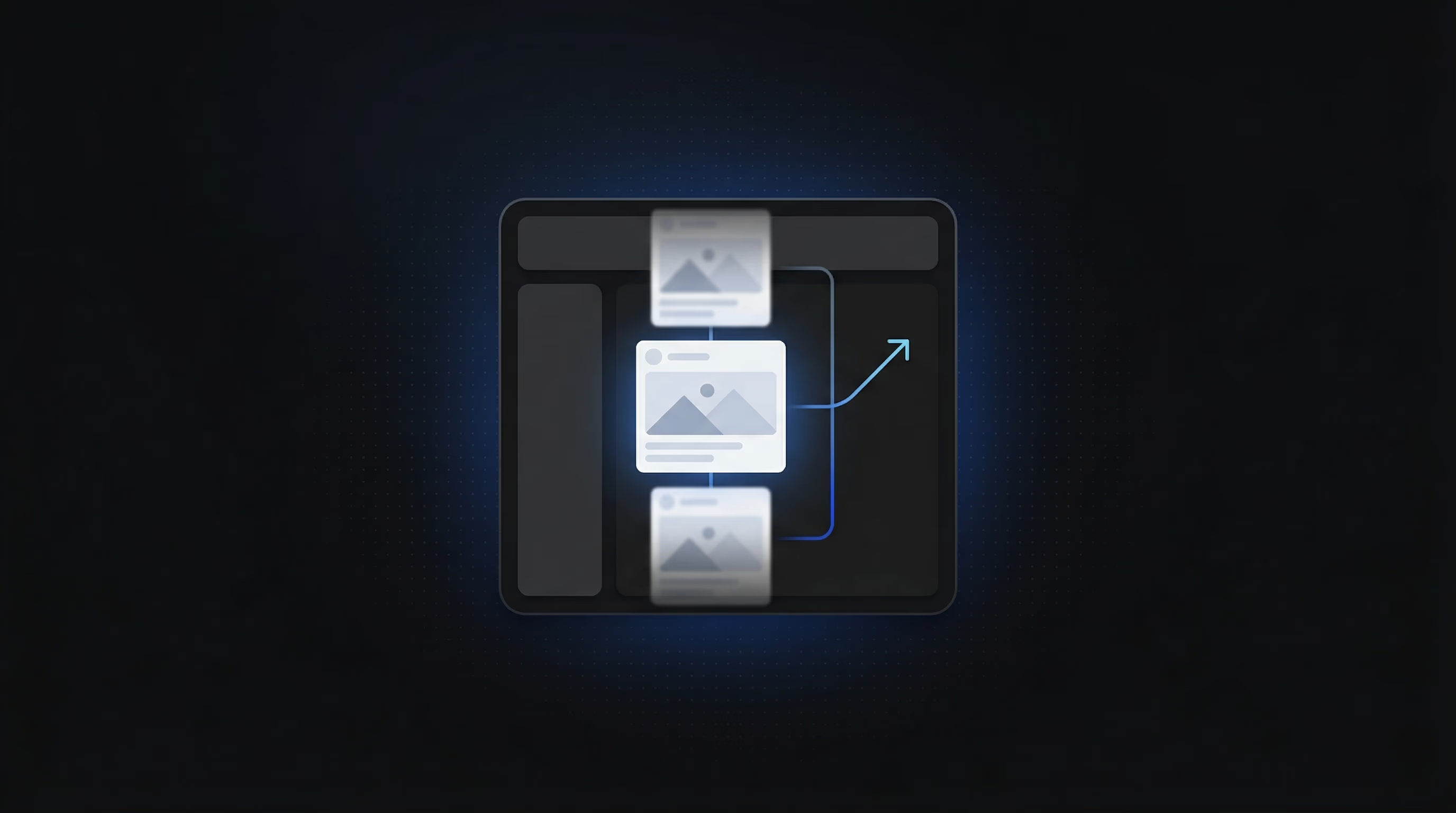
Automation should include a feedback loop. Top-performing variations can inform subsequent generation cycles:
- Analyze performance metrics
- Identify top-performing creatives
- Feed data into Claude Code
- Generate improved variations
Example: "These hooks outperformed by 40%. Generate 10 variations using similar logic." This iterative approach compounds gains.
For additional insight, see Automated Facebook Ads Learning Loops with Instrumnt and Claude Code.
Production Rules That Keep the System Fast
Rule 1: Standardize Naming
Use variable-based naming: [Hook]_[Proof]_[Visual]
Rule 2: Batch Production
Run weekly cycles for strategy, generation, and upload to maintain focus and reduce manual intervention.
Rule 3: Kill Fast
High volume creates more low-performing ads. Tools like Revealbot can automatically pause underperforming creatives.
Common Questions About Automating Facebook Ads Creative
How can I automate Facebook ad creative generation without losing quality?
High-quality inputs are critical. Well-defined variables ensure AI outputs remain consistent and actionable.
What tools are needed to build an automated Facebook ads creative pipeline?
You need Claude Code for generation, structured spreadsheets for inputs, and Instrumnt for bulk uploading.
How many creative variations should I generate and test at once?
- Mid-market teams: 10–20 variations/week
- High-spend teams: 30–50 variations/week
Throughput, rather than time, is the limiting factor.
Automation allows media buyers to scale testing volume, shorten learning cycles, and improve overall Facebook ads performance without increasing workload. Internal system design, rather than individual tool features, drives these gains.
For a broader strategic perspective, see The Future of Facebook Ads Testing: Automation Over Manual Optimization.
For more context, see Meta Ads Guide.
For more context, see Meta Blueprint.