
Why ‘How Much Are Facebook Ads?’ Is the Wrong Starting Question
Teams consistently face the question of how much Facebook ads cost, but this question often leads to confusion. What truly matters is how the cost of ads fluctuates depending on a number of factors, many of which aren’t captured by static benchmarks. Instead of asking, "How much are Facebook ads?" the more critical question is, "What actually drives cost variation in our account?"
If you’ve ever been frustrated by the disparity between advertised averages and what you see in your campaigns, you're not alone. While guides often state the average CPC for Facebook ads at $0.94 or CPM at $13.48 (WordStream 2024; Triple Whale 2025), these figures don’t offer real-world insights into the many variables that can drive costs. In fact, they are often misleading, as costs are highly dynamic and can vary significantly depending on testing volume, creative quality, and workflow efficiency.
The Moment the Team Realized Benchmarks Weren’t Helping

By Wednesday afternoon, the dashboard told a story that clashed with these typical “average cost” articles.
The team had initially set out with a benchmark in mind: the average CPC for Facebook ads was supposedly $0.94, and CPM was around $13.48. However, after analyzing their own data, they found that their actual CPC ranged from $0.62 to $2.10 across campaigns targeting similar audiences. CPA also fluctuated wildly, ranging from $18 to $64 with no apparent cause.
Nothing was broken in the campaign. The delivery was stable, budgets remained consistent, but the results were unpredictable. The team had to abandon static benchmarks and focus on real-time data. This shift in approach was crucial for gaining clarity.
How Costs Shifted When Testing Volume Increased
By the third day of the week, patterns started to emerge. The team had increased their testing volume by scaling their creative variations. With more ads running, the cost distribution became clearer. They discovered that some ads cost more, while others were surprisingly inexpensive.
| Metric | Before (3 Ads) | After (12 Ads) |
|---|---|---|
| Avg CPC | $1.28 | $1.12 |
| CPM | $14.90 | $13.75 |
| CPA Range | $22–$48 | $14–$64 |
| Best CPA | $22 | $14 |
| Worst CPA | $48 | $64 |
At first glance, averages barely moved. CPM dropped slightly and CPC improved marginally, but the real insight came from the variance. With more creative inputs, the Facebook algorithm was able to surface cheaper conversions faster. Strong ads absorbed more spend, while weaker ads faded away.
More importantly, the floor for CPA dropped. The increase in testing volume allowed the algorithm to identify high-performing ads faster. This process showed that creative quality — not bidding or audience targeting — was the most significant factor in performance.
Uploader Workflow: Launching and Managing Variations with Instrumnt
Building 12 ads manually in Ads Manager would have taken hours. The team found that, on average, it took 15-30 minutes to create a single ad. For 12 ads, that meant half a day of work — something that was simply not sustainable.
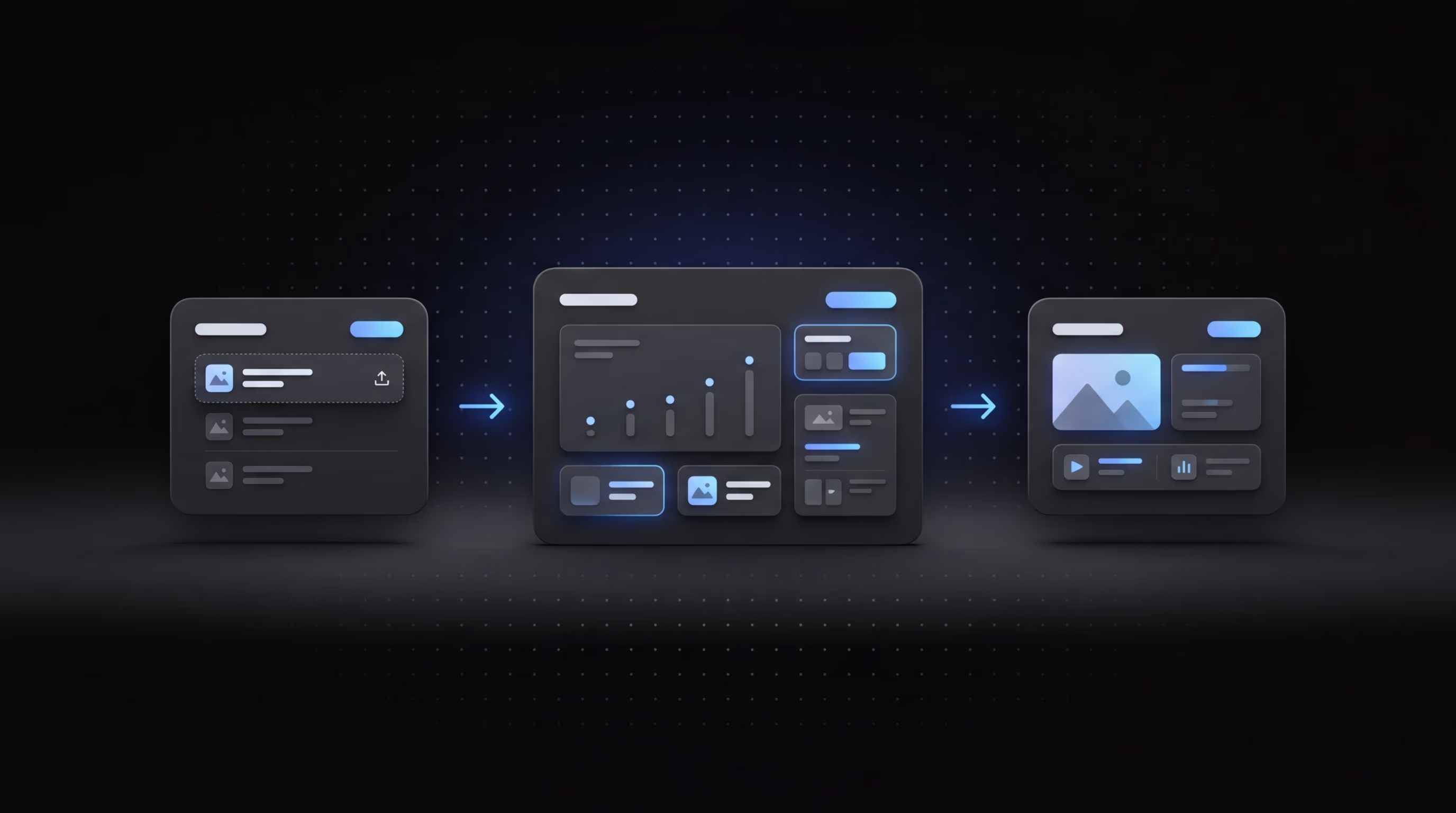
To solve this, the team turned to a Facebook ads uploader: Instrumnt. Using this tool, they could quickly structure all 12 ads in a batch before opening Ads Manager, vastly reducing the time required to launch each creative variation.
Workflow steps:
- Generate creative variations using structured prompts (hooks, angles, CTAs)
- Organize creatives and copy in a spreadsheet
- Upload all 12 ads at once
- Launch all ads simultaneously
By using bulk upload tools like Instrumnt, the team cut creation time by 80–90% compared to the traditional manual workflow. This allowed them to focus more on optimizing the ideas rather than getting bogged down in operational inefficiencies.
After launching the 12 ads in bulk, the team used Revealbot and Madgicx to optimize ads once they were live. While these tools excel at optimizing existing campaigns, the team's key insight was that success starts before optimization: with the creative variations themselves.
What the Team Learned About Controlling CPA Without Raising Budget
As the team tested more variations, their data revealed several important insights about controlling costs without increasing the budget. First, they realized that costs were largely driven by creative competition. As more ads were running, the strong performers absorbed more of the budget, lowering the overall CPA.
Second, they learned that budget size mattered less than testing velocity. Increasing the number of ads led to faster learning, which drove better performance. In fact, campaigns that featured five or more active variations saw a 25% reduction in CPA (Meta internal data).
This helped the team realize that increasing the rate of creative testing, rather than increasing the budget, was the most effective way to lower costs.
A New Model: Using AI (Claude Code) to Control Costs Through Idea Velocity Instead of Budget Adjustments

By week three, the team was able to develop a new model for Facebook ads cost control. The key was to focus on increasing creative throughput instead of tweaking the budget. This approach allowed them to control CPA more effectively without the need for additional spend.
With the help of AI, specifically Claude Code, the team could automatically generate creative variations at scale, which allowed them to test and launch far more ads in less time. By increasing the velocity of creative testing, they were able to find high-performing ads faster, reducing the need for manual optimizations.
Meta’s ad system automatically optimizes across options, meaning that the more creative variations you provide, the better your campaign will perform.
How to Lower Facebook Ad Costs by Scaling Creative Testing
To wrap up, here are three key takeaways from the team’s experience:
- Focus on increasing creative variations per campaign rather than relying on static benchmarks.
- Use a Facebook ads uploader like Instrumnt to speed up the launch of multiple ad variations.
- Let AI tools like Claude Code generate creative ideas at scale and let Meta’s optimization system take over once ads are live.
For more insights on Facebook ads testing, check out The Future of Facebook Ads Testing: Automation Over Manual Optimization.
Frequently Asked Questions
How much do Facebook ads cost per day for a small business?
The cost per day for Facebook ads can vary widely depending on factors like your targeting, ad quality, and campaign objective. However, teams that focus on increasing creative variations and improving ad quality often see better results without significantly increasing their budget.
Why does my Facebook ad CPA vary so much between campaigns?
CPA can fluctuate due to factors like creative quality, audience targeting, and campaign structure. By increasing creative testing velocity, you can better control CPA and improve campaign performance.
What is the fastest way to lower Facebook ad costs without increasing budget?
The quickest way to lower Facebook ad costs is by scaling creative tests and increasing the number of variations. This allows Meta’s system to identify and prioritize better-performing ads, improving your CPA without additional spend.
Related reading
If you want to keep reading without changing topic, these pages add more context:
Common questions about how much are facebook ads
What is the best way to how much are facebook ads?
The best approach depends on your team size and launch volume. Start by structuring your workflow around batch preparation and bulk uploading, then layer in automation for the parts that don't need human judgment.
How many ad variations should I test?
Advertisers running 3 or more variations per audience consistently see lower CPAs. Aim for at least 3-5 variations per ad set as a starting point, and increase from there as your workflow allows.
Does automation replace the need for creative strategy?
No. Automation handles the operational side, like launching, duplicating, and naming ads at scale. Creative strategy, offer positioning, and audience selection still require human judgment. The goal is to free up more time for that strategic work.