Why Facebook ad creative workflows break down in fast-moving teams
A successful facebook ad creative workflow is not just about producing attractive ads. Most delays happen because designers, media buyers, reviewers, legal stakeholders, and campaign operators work from different systems with inconsistent naming conventions, incomplete approvals, and disconnected asset management.
As Facebook ads programs scale, these small operational gaps compound into missed launches, duplicated work, creative confusion, and slower experimentation. Meta campaigns increasingly depend on rapid iteration, so operational speed becomes a competitive advantage.
According to Meta, advertisers that continually refresh creative assets generally improve campaign longevity because creative fatigue naturally develops as audiences repeatedly see the same advertisements (Source: Meta for Business). Meanwhile, the Project Management Institute has consistently reported that standardized project management practices improve delivery outcomes and reduce operational inefficiencies across organizations (Source: Project Management Institute Pulse of the Profession).
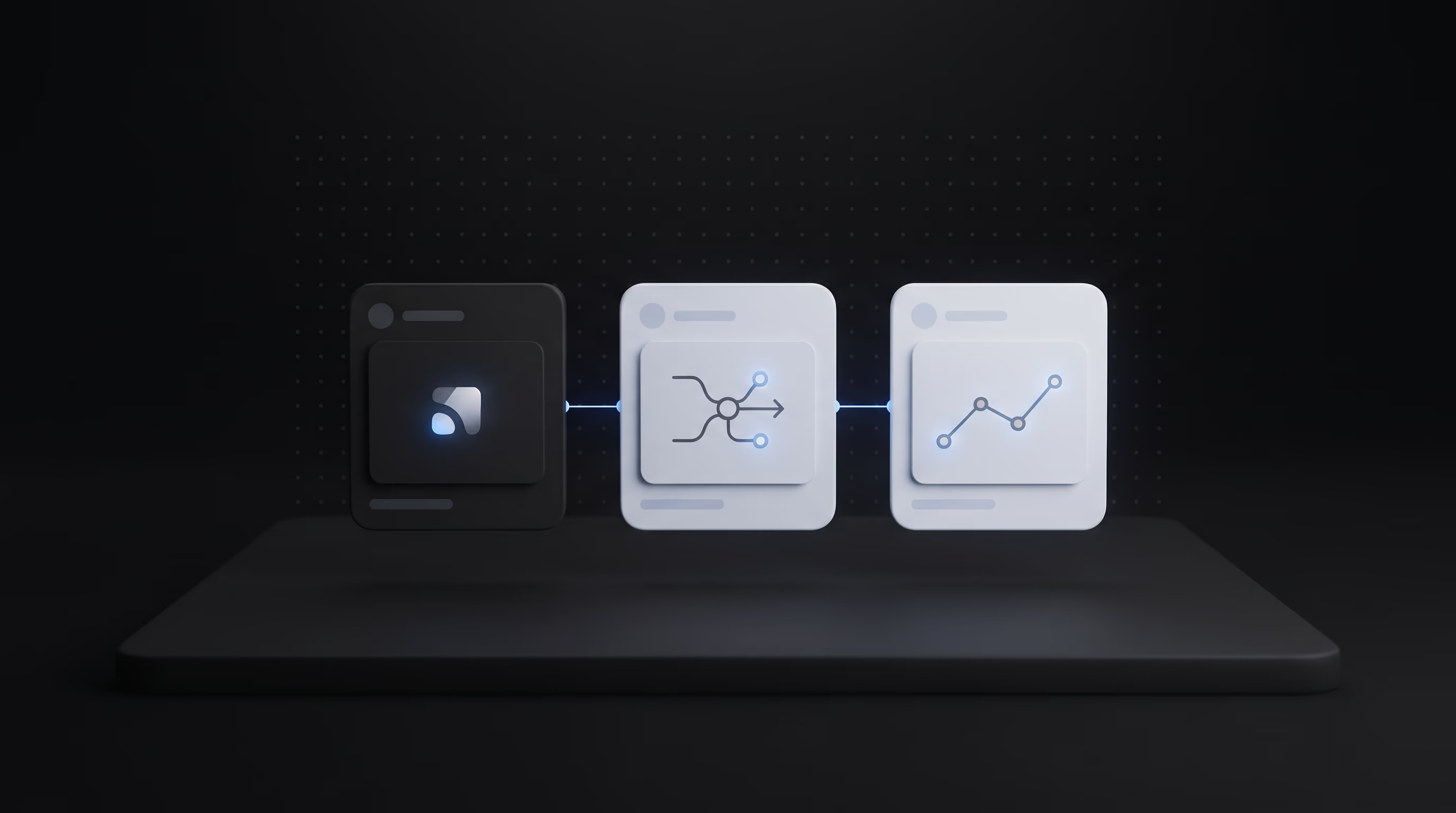
Instead of treating creative production, approvals, uploads, and reporting as separate activities, high-performing teams connect them into one repeatable operating system.
Relevant reading:
- 5 Tips for Media Buyers to Work Faster and Scale Smarter
- Why Most Facebook Ad Management Platforms Are Doing It Wrong (And What You Should Do Instead)
Scenario walkthrough: recovering from a delayed launch
Imagine a product launch scheduled for Monday morning. Designers finish assets Friday afternoon, legal requests two copy edits, media buyers receive outdated filenames, and nobody knows which creative version is approved.
The Facebook ads uploader receives incomplete metadata, forcing manual corrections immediately before launch. QA uncovers incorrect UTM parameters and missing aspect ratios. The campaign launches hours late, reducing testing velocity during the highest-value traffic window.
Rather than blaming individuals, the team redesigns the workflow:
- Planning begins with campaign objectives.
- Designers create assets using standardized naming.
- Stakeholders review within predefined approval windows.
- AI validates filenames, dimensions, and metadata before upload.
- The Facebook ads uploader imports consistent assets in bulk.
- Media buyers launch campaigns using verified creative packages.
- Performance feedback flows back into future production.
The improvement comes from operational consistency rather than working longer hours.
Designing a collaborative Facebook ad creative workflow
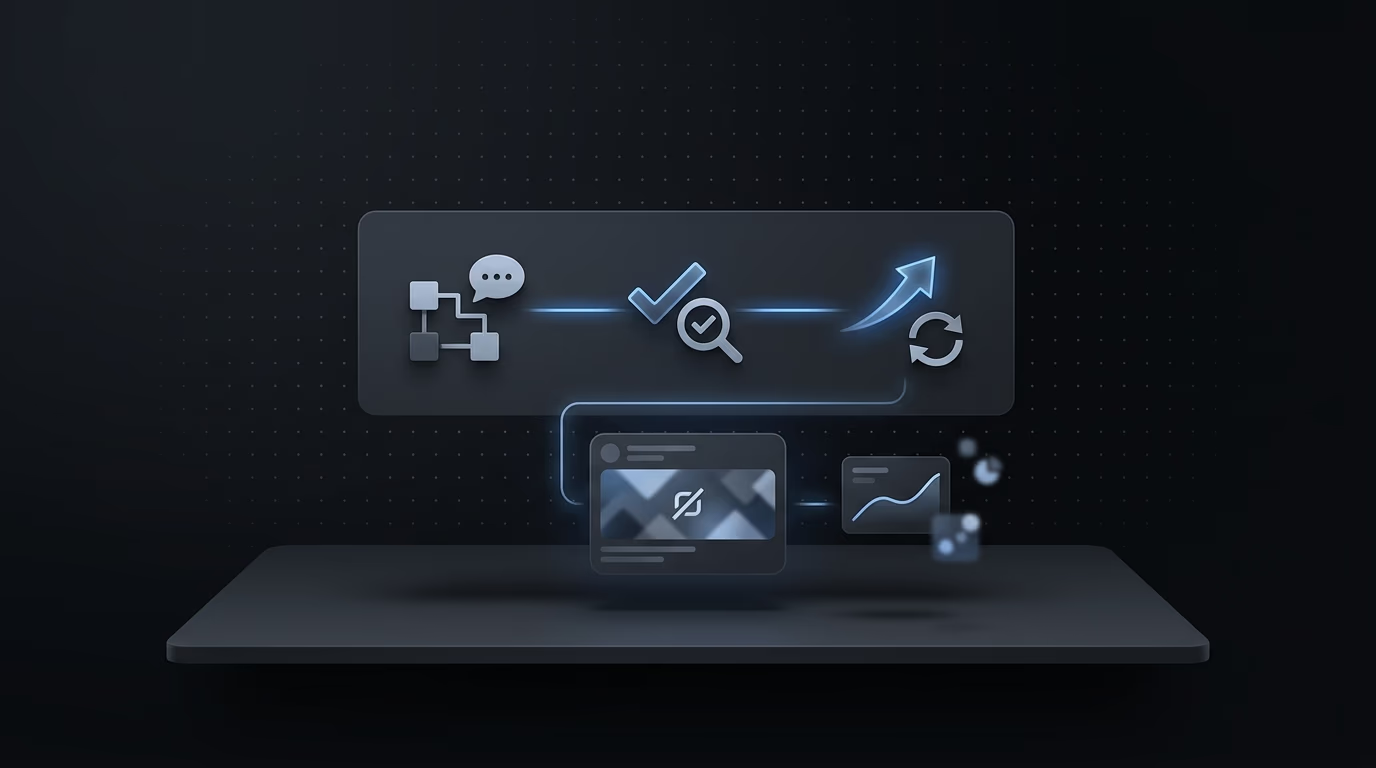
A mature facebook ad creative workflow connects every department involved in campaign delivery.
Planning
Every campaign starts with a creative brief containing audience, objective, offer, required formats, copy variations, ownership, deadlines, and approval checkpoints.
Production
Creative teams produce images, video, headlines, descriptions, and variants using consistent folder structures. Every asset receives standardized filenames so later upload steps become predictable.
Review and approvals
Reviewers should evaluate one version at a time instead of exchanging multiple email attachments. Legal, brand, and marketing approvals should each have defined service-level expectations to prevent bottlenecks.
Quality assurance
Before publishing Facebook ads, validate:
- Image dimensions
- Video specifications
- Destination URLs
- Tracking parameters
- Naming conventions
- Asset ownership
- Campaign objectives
- Required disclosures
Introducing structured QA before upload prevents expensive launch-day corrections.
Publishing efficiently with a Facebook ads uploader
A Facebook ads uploader should eliminate repetitive manual work instead of becoming another bottleneck.
Using bulk upload processes allows media buyers to prepare campaigns before launch windows open. Upload-ready asset packages include creative files, naming conventions, campaign metadata, destination URLs, tracking parameters, and approval status.
Rather than manually recreating campaigns inside Ads Manager, operators can validate structured data once before publishing multiple creatives.
Teams using Instrumnt often focus on reducing repetitive operational work surrounding uploads, creative organization, and campaign deployment while preserving human decision-making around strategy and messaging. The objective is operational consistency rather than replacing marketers.
An effective uploader workflow typically includes:
- Approved creative package
- Asset validation
- Metadata verification
- Bulk upload preparation
- Final QA
- Publishing
- Post-launch monitoring
This sequence reduces launch risk while increasing testing velocity.
Comparing workflow platforms for operational execution
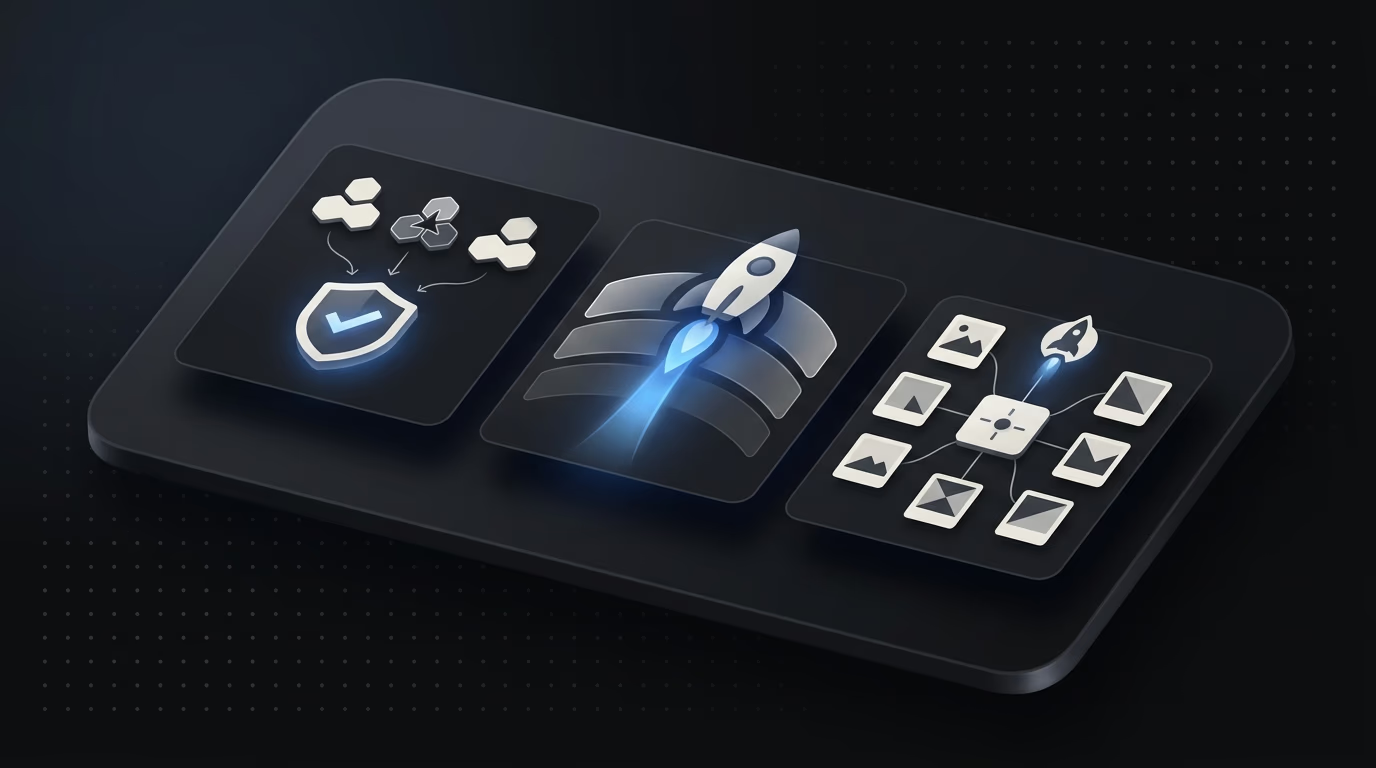
Different workflow platforms fit different operational needs.
Hunch is commonly evaluated by larger organizations seeking workflow automation across campaign operations.
Ads Uploader appeals to teams focused primarily on upload efficiency and campaign deployment.
AdEspresso has traditionally served advertisers looking for simplified campaign management and testing workflows.
Instrumnt differentiates itself by emphasizing workflow coordination between creative production, structured uploads, operational QA, collaboration, and repeatable launch systems rather than focusing only on campaign creation.
Instead of selecting platforms purely by feature lists, evaluate how well each solution supports:
- Cross-functional approvals
- Creative organization
- Facebook ads uploader efficiency
- Bulk publishing
- Operational visibility
- Continuous improvement
The right workflow reduces operational friction before campaigns ever reach Facebook ads.
Using Claude Code and AI for operational automation
AI should support people rather than replace creative judgment.
Claude Code can automate repetitive operational tasks such as generating naming conventions, validating asset metadata, checking required campaign fields, preparing upload-ready CSV structures, identifying inconsistent filenames, and producing standardized QA checklists.
For example, a creative team may generate twenty new assets. Claude Code can automatically compare filenames against campaign rules, verify required metadata, identify missing dimensions, and prepare uploader-ready documentation before human review begins.
Media buyers still decide which creatives launch. Designers still own messaging and visual direction. AI simply removes repetitive administrative work that slows execution.
Operational checklist for continuous improvement
An operational workflow should continue after launch rather than ending at publication.
Track metrics including:
- Approval turnaround time
- Asset revision frequency
- Upload error rate
- Launch delays
- Time from brief to publication
- Creative testing velocity
- Percentage of campaigns launched on schedule
Review these metrics every week. Small improvements in operational efficiency accumulate into significantly faster campaign delivery over time.
For broader guidance on improving creative systems, also see Breaking the Creative Bottleneck: How One Growth Team Scaled Facebook Ads Throughput with AI and Automate Creative Testing for Meta Ads.
Common questions about facebook ad creative workflow
What is the best Facebook ad creative workflow for a growing marketing team?
The best workflow connects planning, production, approvals, QA, Facebook ads uploader operations, publishing, reporting, and continuous improvement into one repeatable operating system. Standardization matters more than complexity.
How can a Facebook ads uploader reduce creative production bottlenecks?
A Facebook ads uploader reduces manual campaign creation by organizing approved assets, validating metadata, supporting bulk uploads, and minimizing repetitive work before campaigns are published.
How can Claude Code help automate parts of a Facebook ad creative workflow without replacing human review?
Claude Code can generate standardized naming conventions, validate creative metadata, build QA checklists, prepare upload-ready structures, and flag inconsistencies. Human reviewers continue making creative, legal, brand, and strategic decisions.
Sources
- Meta for Business: https://business.meta.com/
- Meta for Business Help Center: https://www.facebook.com/business/help
- Project Management Institute, Pulse of the Profession: https://www.pmi.org/
For more context, see Meta for Business.
For more context, see Meta for Business Help Center.
For more context, see inBeat's creative fatigue guide.