The Challenge: Manually Mapping Competitor Funnels
At 9:40 a.m. on a Thursday, the growth team at a mid-market SaaS company stared at a shared doc labeled “Competitor Research — Q2.”
It was packed with screenshots from Facebook ads, notes on hooks, and a few landing page links.
But when they tried to turn it into campaigns, nothing happened.
The issue wasn’t insight. It was execution.
One strategist had spent three hours in the Meta Ad Library pulling examples. Another traced landing pages. A third copied headlines into a swipe file.
By week's end, they had five usable ideas.
Their account needed dozens of new creatives to keep up with ad fatigue. CTR dropped and CPC climbed after just four impressions per user.
They weren’t under-researched—they were under-producing.
Most competitor analysis ends here: static knowledge with no operational output. As explained in Analyzing Competitor Facebook Ads Is a Waste of Time (Unless You Do This Instead), insight only matters when it drives action.
The team needed a system to turn competitor funnels into results.
Mini Example: From Ad Library to Landing Page Insights
The shift began with a key realization: the funnel—not the ad—is the unit of analysis.
They chose one ad promoting a free trial for a productivity tool.
Instead of saving it, they broke it down:
- Hook: “Stop wasting 10 hours a week on manual reporting”
- Format: Short-form video with captions
- CTA: Free trial
- Landing page: Feature breakdown + ROI calculator
- Conversion flow: Email capture → onboarding sequence
Instead of a screenshot in a deck, they turned it into structured data:
- Problem statement
- Target persona
- Offer type
- Value framing
- Funnel steps
They repeated this across 10 competitors.
Manual extraction still didn’t scale. Clicking through ads, tracing landing pages, documenting flows—it was slow. And it still didn’t produce creatives.
They had inputs but no engine.
Uploader Workflow: Feeding Extracted Funnels Into AI Ad Generation
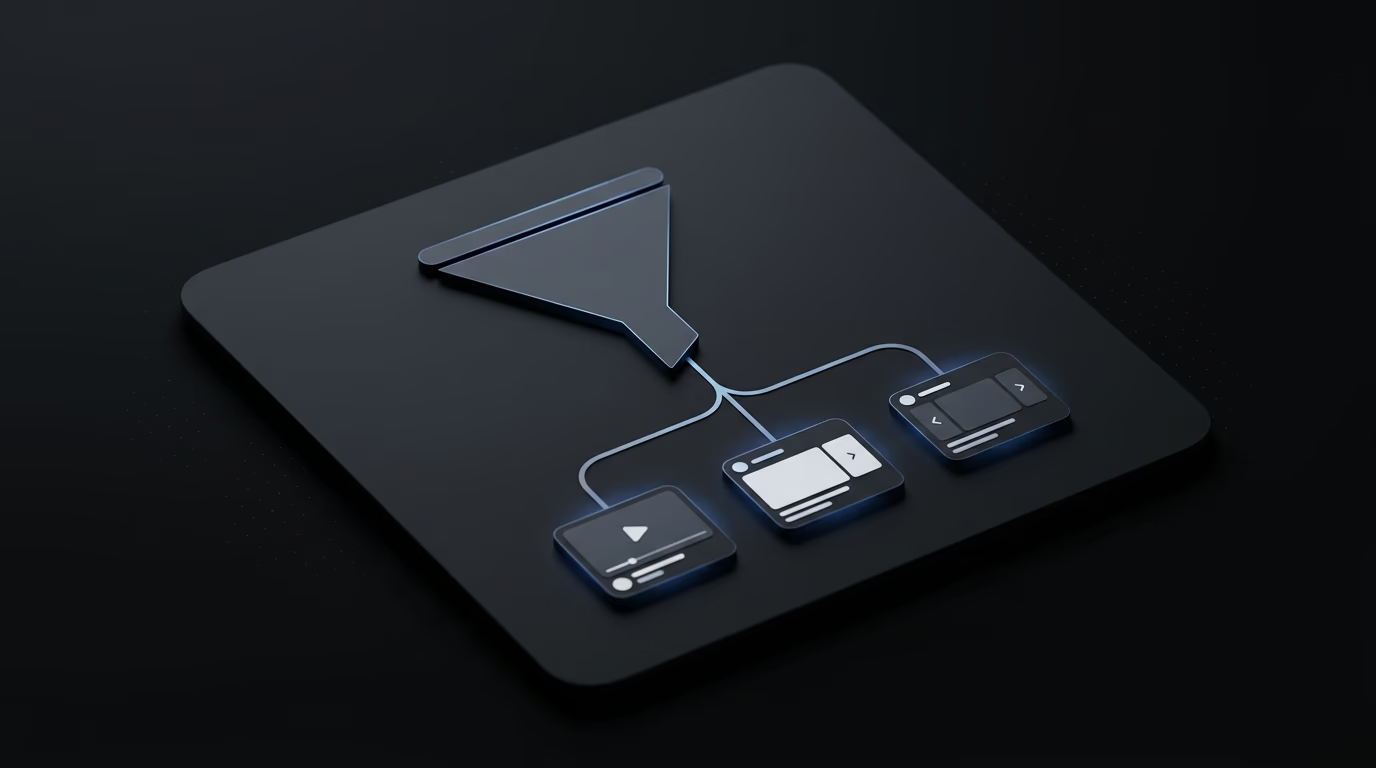
The breakthrough came when they treated funnel extraction as ingestion, not research.
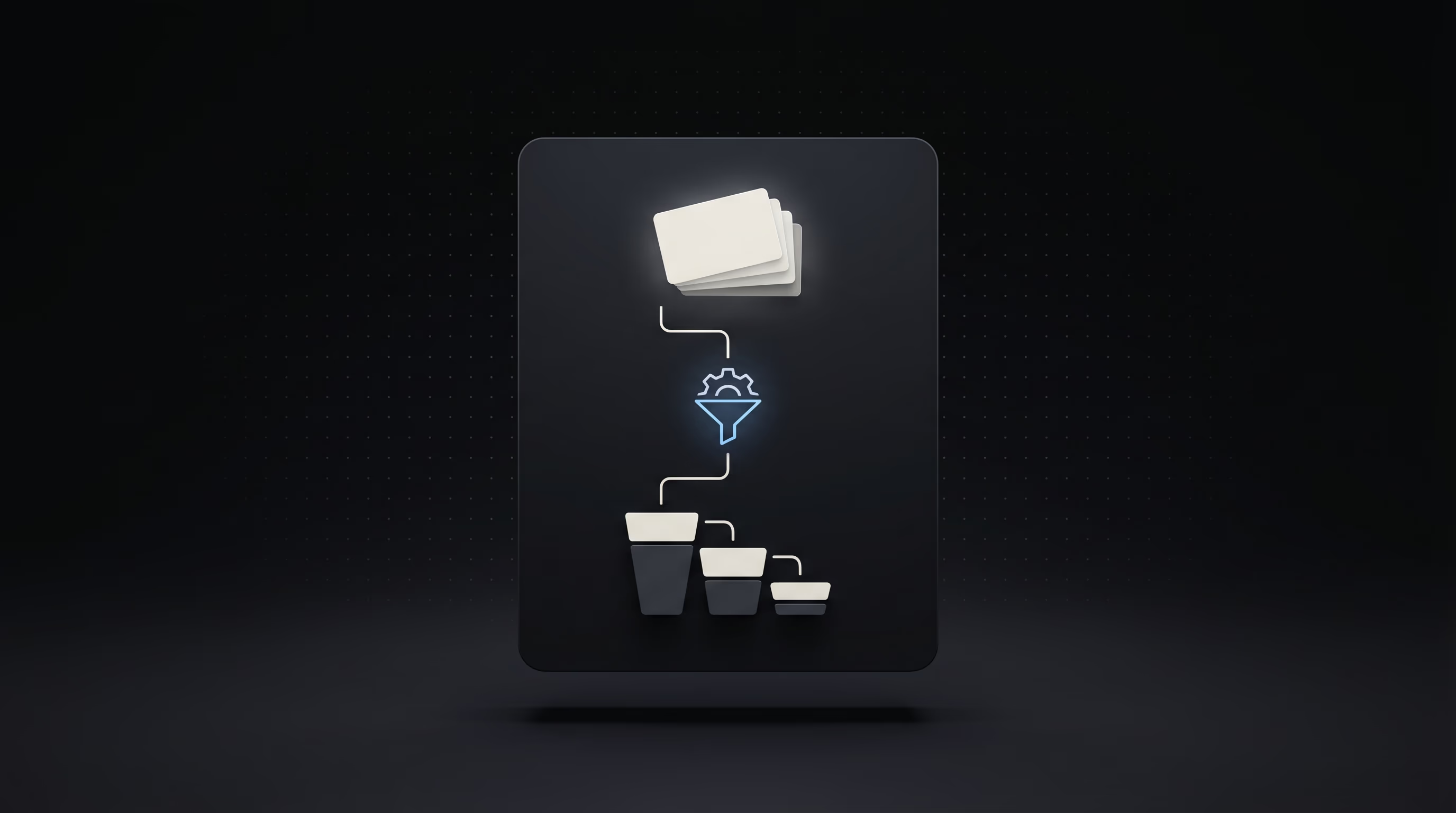
They built a pipeline:
- Extract funnel components (ad → landing page → offer → flow)
- Structure them into standardized inputs
- Feed inputs into AI for variations
- Push outputs into a Facebook ads uploader
Rather than copying ideas, they created a repeatable transformation layer.
Claude Code processed inputs to generate variations for hooks, headlines, primary text, and creative angles.
Outputs went into a Facebook ads uploader workflow.
Manual ad creation—15–30 minutes per ad—was replaced with batch uploads. Bulk tools cut creation time by 80–90% (AdManage.ai, 2026).
This approach contrasts with AdEspresso or Hunch, which focus on campaign management or templates. Funnel extraction feeds creative generation directly. Tools like Instrumnt and Ads Uploader bridge idea volume to live testing.
Claude Code in Action: Automating Angle Generation and Variations
Once the team had structured inputs, Claude Code became the transformation engine.
Instead of asking AI to “write ads,” they passed structured funnel data like:
- Persona: Head of Marketing
- Pain: Manual reporting inefficiency
- Offer: Free trial with ROI calculator
- Funnel step: Email capture → onboarding
Claude Code generated variations across dimensions:
- Hook rewrites (time savings vs revenue growth)
- Emotional tone (frustration vs ambition)
- Format shifts (question, statement, contrarian)
Each input produced 10–20 variations instantly.
This aligned with broader industry data: Nielsen found that creative drives up to 56% of campaign performance (Nielsen, 2023). The implication is simple—volume of quality variations matters more than incremental targeting tweaks.
For teams still stuck in manual workflows, this is the unlock. As explained in How to Automate Facebook Ads Creative Generation and Speed Up Your Workflow, structured inputs dramatically improve AI output quality.
Iteration and Testing: Scaling Variations From One Funnel
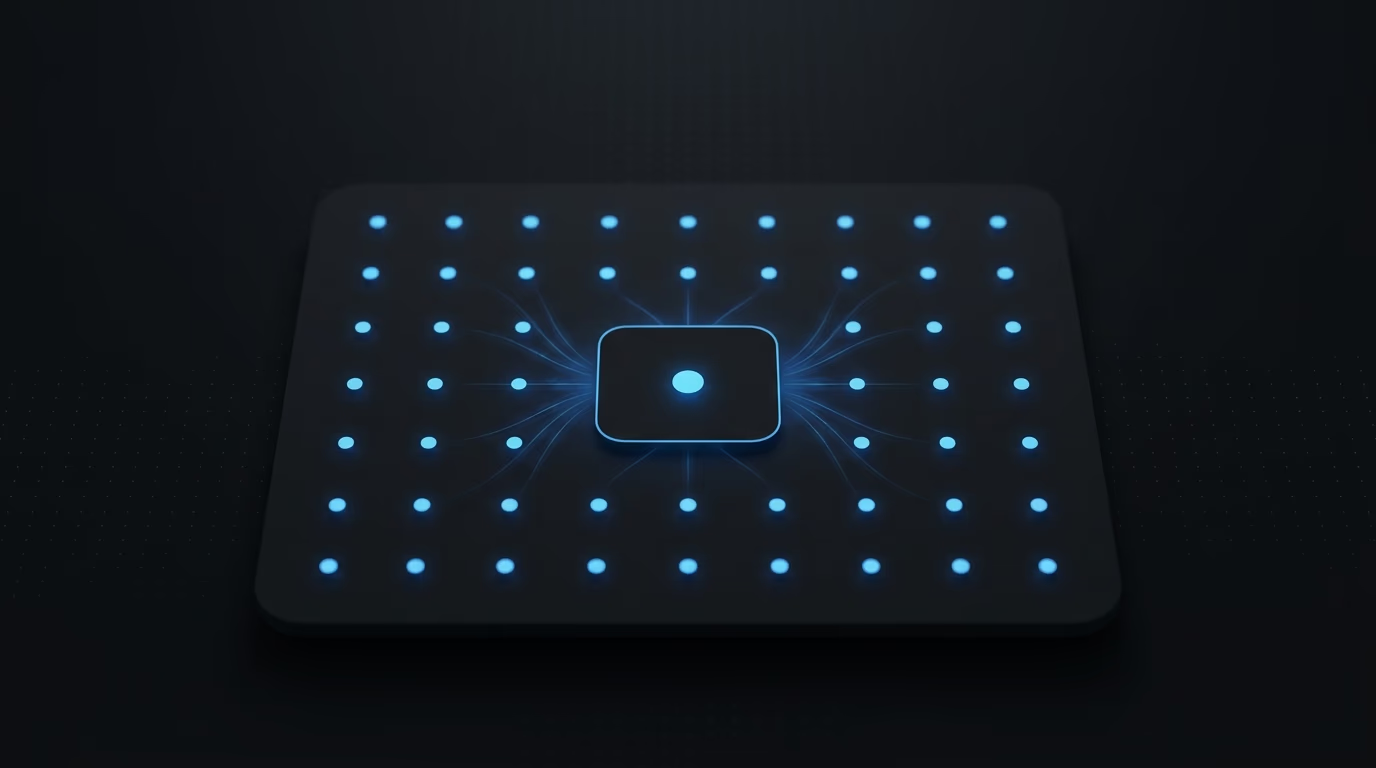
With the pipeline live, one competitor funnel produced 20 variations.
Each varied one element:
- Pain points (time loss vs revenue leakage)
- Personas (operators vs founders)
- Value framing (speed vs accuracy)
Two hours later, the ads were live. Previously, this would take two days.
Only 2–3 creatives outperformed baseline, matching industry norms where 5–10% of creatives succeed (Meta internal benchmarks, 2024).
They could generate 20 more variations the next day.
Meta favors variation. Campaigns with 3+ ads per audience see up to 30% lower CPA (Meta, 2024), and accounts with higher creative diversity exit learning phases faster.
The bottleneck shifted: it was no longer “what to test?” but “how fast can we feed the system?”
A Step-by-Step System You Can Implement Today
To make this actionable, here’s the exact system the team operationalized.
Step 1: Capture Competitor Funnels Systematically
Use the Meta Ad Library, but don’t stop at screenshots.
For each ad:
- Click through to the landing page
- Map the full flow (ad → page → email capture → onboarding)
- Save URLs and screenshots
If you’re struggling with this step, see Stop Guessing: How to Actually Find Competitor Ad Funnels.
Step 2: Structure Inputs for AI
Convert raw observations into structured fields:
- Persona
- Pain point
- Offer
- Hook
- Funnel steps
This step is critical. AI output quality depends entirely on input clarity.
Step 3: Generate Variations with Claude Code
Feed structured inputs into Claude Code.
Generate:
- 10–20 hooks
- 5–10 primary texts
- 3–5 angles per persona
Avoid generic prompts. Treat AI like a transformation engine, not a brainstorming partner.
Step 4: Batch Upload Using a Facebook Ads Uploader
This is where most teams fail.
Without a Facebook ads uploader, you’re stuck manually creating ads.
Tools like Instrumnt or Ads Uploader allow:
- Bulk creative uploads
- Structured naming conventions
- Fast deployment across ad sets
Compared to AdEspresso (campaign management) or Hunch (creative templates), uploader systems prioritize execution speed.
Step 5: Measure and Feed Back Into the System
Track:
- CTR
- CPA
- Conversion rate
Identify winning patterns:
- Which hooks outperform?
- Which personas convert?
- Which offers drive clicks?
Feed these insights back into the next generation cycle.
This creates a compounding loop.
Operationalizing the Loop: From Extraction to Learning System
After three weeks, they thought in loops, not campaigns:
- Extract 5–10 competitor funnels
- Structure them as inputs
- Generate 50–100 variations
- Launch via Facebook ads uploader
- Measure performance
- Feed winning patterns into the next cycle
This created a compounding system.
Insights evolved from “this ad worked” to identifying which funnel structures, offers, and landing pages drive conversion.
AI amplified iteration without replacing judgment.
What Actually Changed (And Why It Matters)
Three weeks prior, the team had a Notion doc of screenshots.
Three weeks later, they produced hundreds of testable creatives weekly.
| Metric | Before | After |
|---|---|---|
| Funnel extraction time | 2–3 hours per funnel | 15–20 minutes structured |
| Ads launched per week | 10–15 | 80–120 |
| Time to launch new test | 1–2 days | Same day |
| Creative iteration loop | Manual, inconsistent | Continuous, automated |
| Performance insight depth | Surface-level | Pattern-driven |
Consistency mattered more than speed.
Every competitor funnel became input, each input produced output, and each output generated data for the next cycle.
Why a Facebook Ads Uploader Is the Missing Piece
Teams often underestimate deployment.
Research and AI generation are useless if ideas can’t get live.
A Facebook ads uploader lets teams:
- Launch dozens of creatives simultaneously
- Maintain structured tracking
- Reduce execution friction
Instrumnt ties structured inputs, AI outputs, and bulk deployment into one system.
Traditional platforms optimize control. Uploader systems optimize speed and volume.
In modern Facebook ads, volume drives results.
The Outcome: From Research to Production
By quarter’s end, the team shifted from analysis to production.
Each new funnel became raw material.
Each insight translated into experiments.
Each experiment improved the system.
Old model: analyze → think → build → test
New model: extract → generate → launch → learn
Automated competitor funnel extraction doesn’t improve research—it improves output.
Creative quality can drive over half of campaign performance (Nielsen, 2023), and systems that maximize output win by default.
Teams that win convert every funnel into 50 tests before competitors ship five.
FAQ
How do you automatically extract competitor funnels from Facebook ads?
Use a structured process capturing ad creative, landing pages, offers, and conversion flows. Combine manual capture with AI workflows to organize and standardize inputs.
What tools are needed to automate competitor funnel extraction and testing?
You need three layers: data capture (Meta Ad Library), transformation (Claude Code), and execution (Facebook ads uploader like Instrumnt or Ads Uploader).
How can AI and Claude Code help generate ad variations from competitor funnels?
AI takes structured funnel inputs and generates variations across hooks, messaging, and angles, enabling high-volume testing without manual writing.
How many ad variations should I test?
At least 3–5 per ad set. High-performing teams often test 20+ variations per funnel to find winners quickly.
Related reading
- Why Your Creative Testing Is Failing (And How to Automate the Solution)
- Building an Automated Facebook Ad Testing Pipeline with AI
For more context, see Meta Ads Guide.
For more context, see Meta Blueprint.
For more context, see Meta for Business Help Center.