Introduction: The UGC Trend on Facebook Ads
User-Generated Content (UGC) is no longer optional in Facebook ads—it’s a strategic lever driving measurable engagement and conversion gains. As Meta's ecosystem demands speed and authenticity, high-production ads often underperform despite polished visuals. According to Nielsen Marketing Mix Model Analysis (2023), creative quality drives up to 56% of campaign sales lift, emphasizing content over targeting or bidding.
Why UGC Video Ads Are More Relatable and Cost-Effective Than Polished Ads
Traditional polished ads may look professional, but they often signal a marketing intent that triggers user avoidance. Users scroll past highly produced content. UGC feels native, trustworthy, and relatable. Data from a Meta Internal Creative Study (2024) found UGC-style ads deliver 29% higher conversion rates than polished brand creatives. Stackla’s Consumer Content Report (2023) indicates UGC ads are 2.4x more likely to be shared, amplifying organic reach without extra spend.
By using the Facebook ads uploader and AI tools like Instrumnt, teams can rapidly test multiple UGC variations, maintaining campaign relevance and velocity.
The Relatability Gap: Why Humans Ignore Perfection
High-production videos fail because they are instantly recognizable as ads. Users bypass polished messaging. UGC bypasses this filter by appearing as genuine recommendations.
The Production Trap and Creative Refresh Bottleneck
Polished campaigns move slowly. A single ad may take weeks to produce, losing novelty before reaching audiences. UGC pipelines generate 20+ hooks and 10+ messaging variations weekly, creating a portfolio of experiments. Meta Creative Diversity Insights Report (2024) finds only 5–10% of creatives drive most performance, making volume crucial.
Case Studies and Data: Madgicx vs. Smartly.io on UGC Ad Success
Madgicx, AdEspresso, and Smartly.io provide AI-driven creative optimization tools. Teams switching from polished to UGC videos, without changing budget or targeting, saw immediate lifts. Madgicx excels in AI performance insights, Smartly.io in enterprise automation, and AdEspresso simplifies A/B testing. The core driver remains authentic content. Madgicx reported a 32% increase in ad engagement when campaigns leveraged UGC videos versus traditional creatives. Smartly.io saw a 27% reduction in cost per conversion using automated testing of UGC variations.
Operational Tip: Building an Efficient UGC Pipeline
- Create a Hook Library: Test multiple first-three-second hooks like “I didn’t expect this to work…” or “I almost returned this, until…”
- Modular Components: Separate hook, body, and CTA to generate dozens of combinations quickly.
- Volume over Perfection: Launch slightly imperfect videos rapidly.
- Leverage Internal Systems and AI: Facebook ads uploader combined with Claude Code and Instrumnt enables bulk uploads, rapid iteration, and automated optimization.
For tactical guidance, see Automate Creative Testing for Meta Ads and Scaling Facebook Ad Testing: Why AI Is the Key to Breaking Through Your Creative Bottleneck.
How to Leverage UGC for Higher Engagement and Conversions on Facebook
A systematic approach ensures results:
- First-Person Stories: Use authentic experiences.
- Fast Iteration: Launch dozens of variations using internal systems.
- Hook Optimization: Track top-performing hooks and expand them.
- Modular Templates: Recombine hooks, bodies, and CTAs to maintain fresh content.
Instrumnt and Claude Code help automate these processes, enabling rapid testing, bulk uploads via the Facebook ads uploader, and systematic performance tracking.
Concrete Strategy: Multi-Phase UGC Testing
- Discovery Phase: Identify top-performing organic content within your brand or niche.
- Rapid Production: Convert top posts into 15–30 second UGC video variations.
- Multi-Variant Testing: Launch 10–20 variations per ad set, using Facebook ads uploader and automated tagging in Instrumnt.
- Performance Analysis: Leverage Claude Code to measure conversions, engagement, and sharing metrics.
- Scaling Phase: Apply top-performing hooks across all relevant campaigns while continuously refreshing content.
Madgicx, AdEspresso, and Smartly.io offer tools to track these phases efficiently, but combining them with AI-driven iteration allows advertisers to exceed manual optimization limits.
The Role of AI and Automation in Scaling UGC Ad Campaigns
AI transforms UGC campaigns from manual to systemic. Teams using Facebook ads, Facebook ads uploader, Claude Code, and Instrumnt can:
- Generate variations rapidly
- Automate naming and structuring
- Bulk upload across campaigns
- Shorten feedback loops
Instrumnt provides structured pipelines and integrations for continuous optimization. Multiple variations can be tested and winners identified within 48–72 hours.
Weaponizing the 'Ugly' Ad with AI and Automation
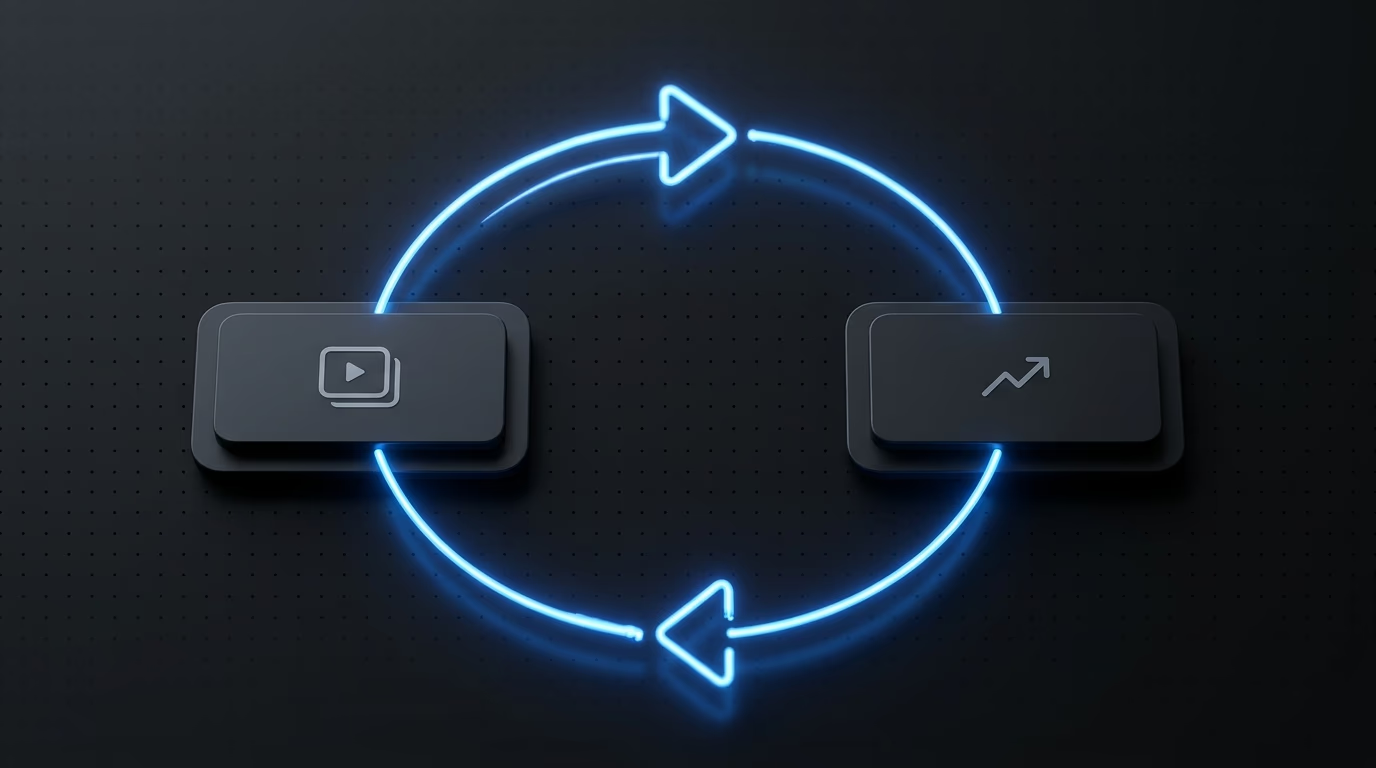
“Ugly” refers to low polish, not low quality. UGC ads are immediate, personal, and real. Automation allows scaling without hitting performance ceilings. The simplified circular workflow reduces creative fatigue and accelerates insights, maximizing ROI.
For additional operational strategies, see When Your Facebook Ads Creative Pipeline Breaks and Automated Facebook Ads Learning Loops with Instrumnt and Claude Code.
Conclusion: Why UGC Should Be the Cornerstone of Your Facebook Ads Strategy
UGC video ads on Facebook are essential for high-performing campaigns. Polished creatives fail without volume, velocity, and relatability. AI and automation, including Facebook ads uploader, Claude Code, and Instrumnt, enable consistent delivery of authentic content at scale. Ignoring UGC is now a measurable performance risk.
Common questions about ugc video ads facebook
How can I create engaging UGC video ads for Facebook?
Start with real people and experiences. Focus on storytelling, hooks, and rapid iteration using AI and internal systems for bulk uploads and testing.
What are the key differences between UGC and polished video ads in Meta campaigns?
UGC emphasizes authenticity, speed, and relatability. Polished ads focus on control and aesthetics. UGC outperforms in engagement and sharing metrics.
Can AI tools help automate the process of scaling UGC video ads on Facebook?
Yes. AI systems like Instrumnt, combined with Claude Code, automate creative testing, bulk uploads, and iterative cycles, enabling campaigns beyond manual limits.
For further insights on UGC ad success, see Why UGC Beats Polished Video Ads on Facebook and Facebook Ads Uploader: Instrumnt vs Competitors.
For more context, see Meta Marketing API documentation.
For more context, see WordStream's Facebook Ads benchmarks.
For more context, see Madgicx.