Introduction: Why Finding Competitor Landing Pages Is Hard
Most marketers trying to find all ad landing pages of competitors assume the problem is access.
It isn’t.
The real issue is fragmentation.
Landing pages are scattered across Facebook ads, tracking links, redirects, and constantly changing campaigns. Even when you find them, they exist as isolated examples—not structured insights you can act on.
So teams fall into a loop:
- Search manually
- Save screenshots
- Lose context
- Never test anything meaningful
This is why most competitor research never translates into performance.
The Current Struggles with Ad Library and Manual Research
The Facebook Ad Library is often the starting point. But it creates three major bottlenecks:
- Incomplete visibility – You only see active ads, not historical winners.
- No landing page mapping – You must click through manually, often hitting broken or geo-restricted pages.
- Zero structure – There’s no system for grouping insights into patterns.
Manual workflows break at scale.
Even worse, they create a false sense of progress. You feel like you're learning—but you're not building anything reusable.
If this sounds familiar, you’re not alone. Many teams run into the same ceiling described in Why the Facebook Ad Library Won’t Help You Find Winning Ads (And What Will).
How AI Unlocks Real Insights from Competitor Ads
AI changes the question entirely.
Instead of asking:
"Where are competitors sending traffic?"
You ask:
"What patterns repeat—and how fast can I test them?"
This shift matters because creative—not targeting—is the main driver of performance.
According to Nielsen research, creative quality accounts for up to 56% of advertising ROI (Nielsen, 2021). Meta has similarly reported that creative drives the majority of campaign performance variance (Meta, 2023).
That means your advantage doesn’t come from finding more landing pages.
It comes from extracting more insights per page.
What AI Actually Does
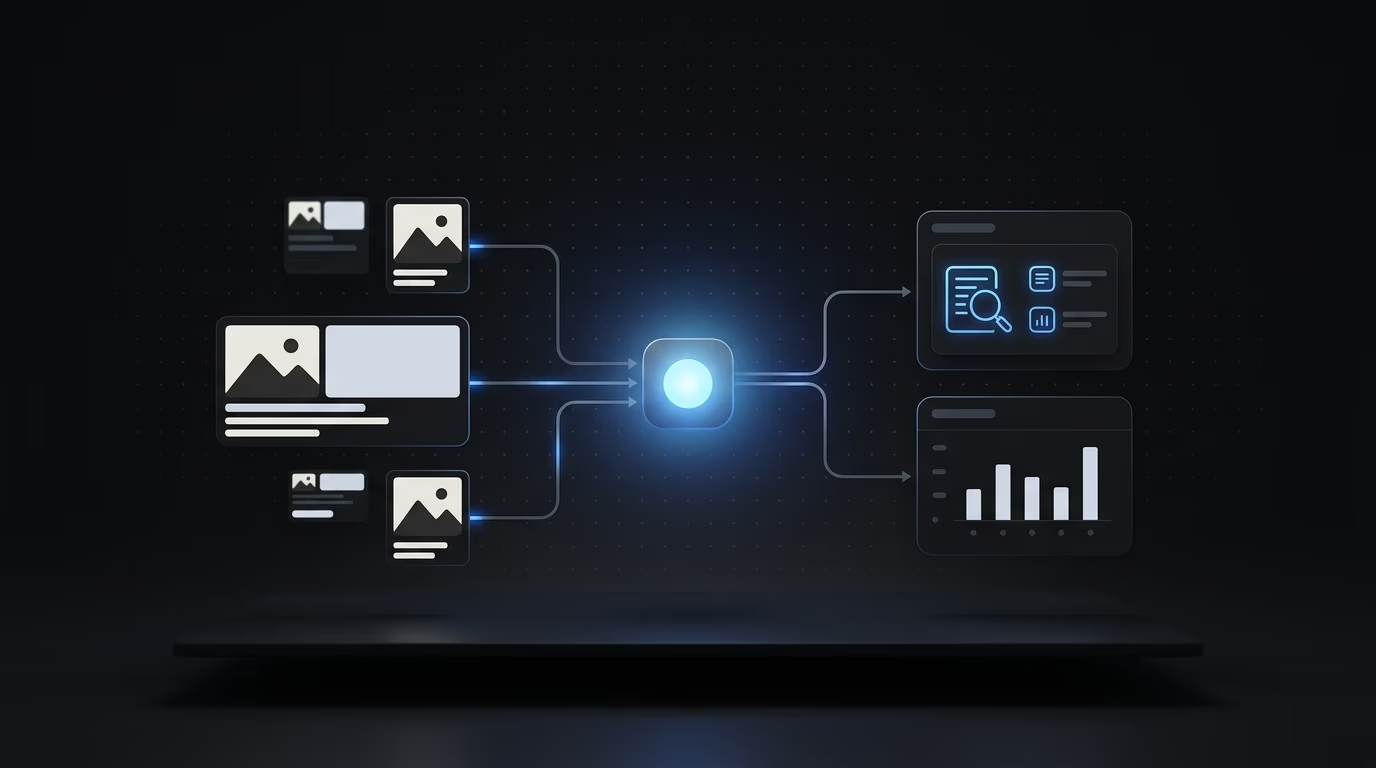
AI systems process competitor data differently:
- Cluster landing pages by offer, angle, and audience
- Identify repeated hooks and messaging structures
- Detect funnel patterns across multiple campaigns
- Generate variations based on proven themes
This is where tools like Instrumnt integrate directly into execution.
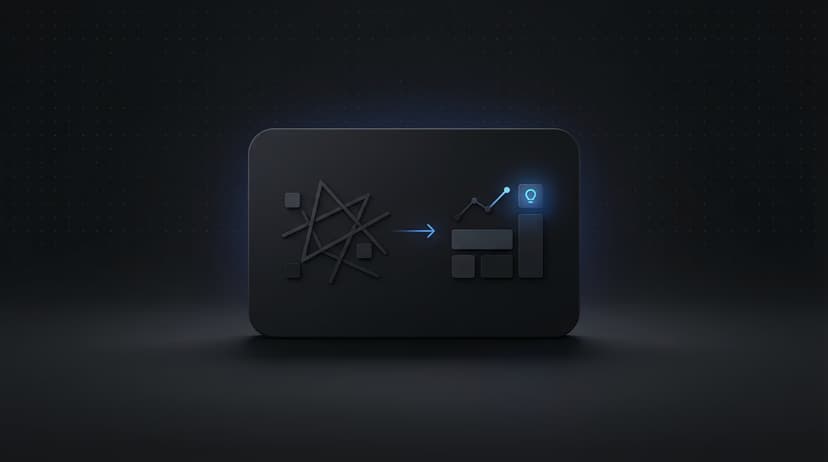
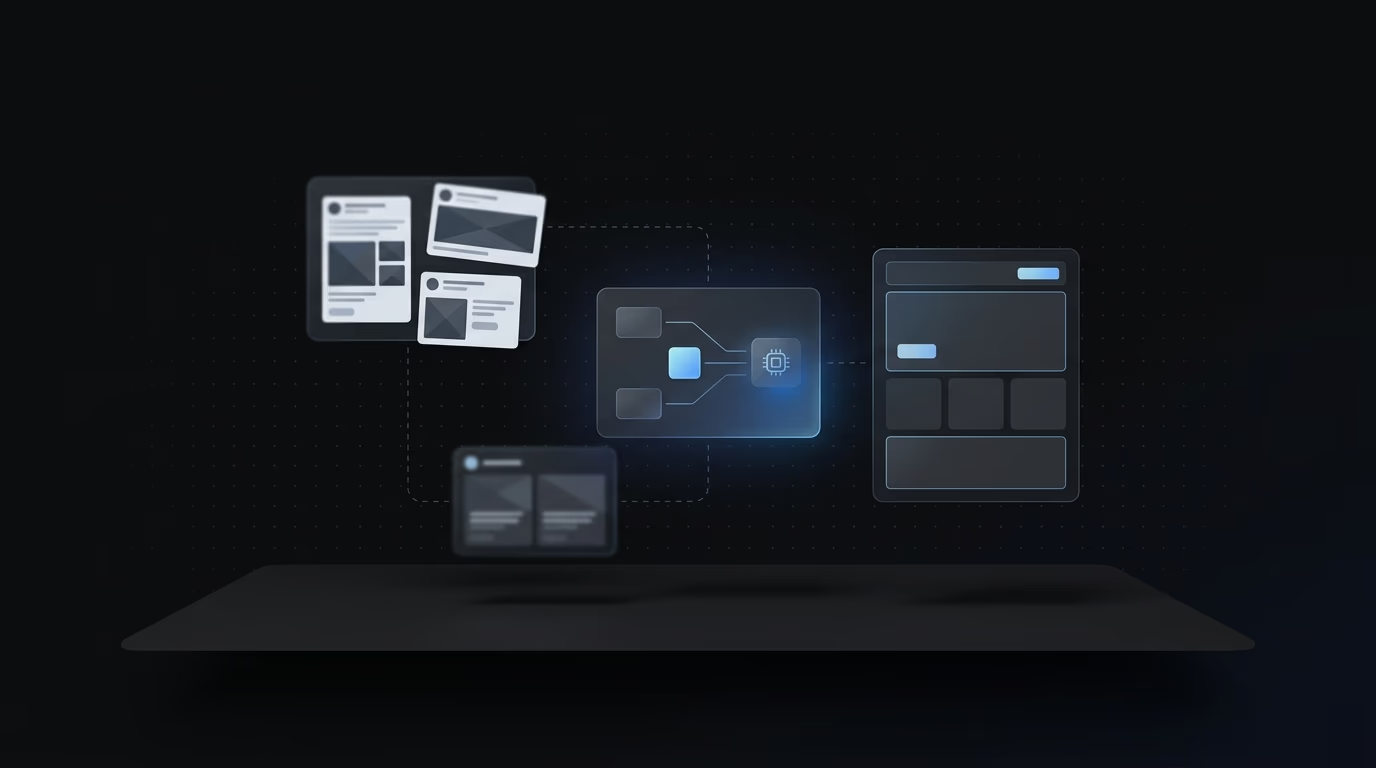
Instead of research → delay → build → launch, you get:
Research → structure → generate → launch
That compression is the real advantage.
If you want to understand how this fits into the broader shift, see Why AI Is the Only Way Forward for Facebook Ads in 2026.
The Technology Behind Scalable Competitor Research
To actually find all ad landing pages of competitors in a meaningful way, you need more than scraping.
You need a system.
Here’s what that system looks like in practice:
Step 1: Input Collection
Pull data from multiple sources:
- Facebook ads
- Tracking links
- Public ad libraries
- Website variations
AI consolidates these into a single dataset.
Step 2: Pattern Extraction
This is where Claude Code or similar tools come in.
You can feed landing page data into Claude Code and prompt it to:
- Group pages by offer type
- Extract headline formulas
- Identify recurring emotional triggers
Instead of reviewing 50 pages manually, you get structured outputs instantly.
Step 3: Insight Translation
Raw insights don’t matter unless they become tests.
AI translates patterns into:
- New hooks n- Creative angles
- Offer variations
This is where most tools fail—they stop at observation.
Step 4: Execution via Facebook Ads Uploader
Once you have structured variations, execution becomes the bottleneck.
A Facebook ads uploader solves this by allowing bulk deployment of creatives.
Combined with AI, you can:
- Launch dozens of variations at once
- Maintain naming consistency
- Track performance across structured tests
This is the operational layer most teams are missing.
For a full breakdown, see How to Build a Facebook Ads Bulk Testing System with Instrumnt and Claude Code.
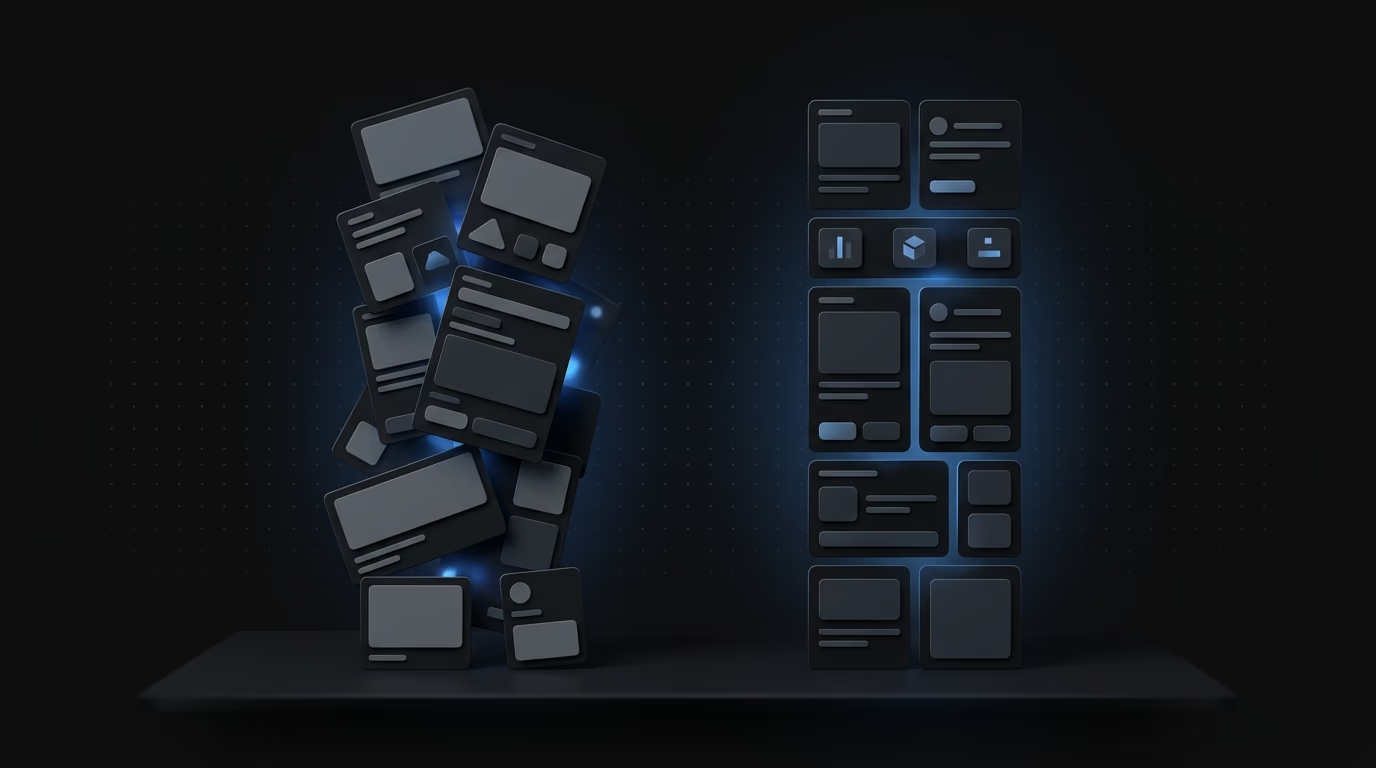
Competitive Comparison: Where Tools Fall Apart
Hootsuite Ads
Hootsuite Ads is useful for reporting and scheduling. But when it comes to competitor research, it lacks:
- Automated landing page discovery
- Pattern recognition
- Workflow integration for testing
You can see data—but you can’t act on it efficiently.
Sotrender
Sotrender is strong in analytics and benchmarking.
However, it remains observational.
There’s no direct path from:
Insight → creative generation → test launch
This gap slows down execution.
AdManage.ai
AdManage.ai improves ad creation speed through bulk workflows.
It reports up to 80–90% time savings in ad setup (AdManage.ai, 2026).
But it still relies on manual or semi-structured inputs for competitor insights.
Landing page extraction and pattern generation are not fully automated.
The Common Limitation
All three tools improve visibility.
None of them fully solve output.
And output—not insight—is what drives growth.
For a deeper critique, see Why Most Facebook Ad Management Platforms Are Doing It Wrong (And What You Should Do Instead).
Transforming Insights Into Actionable Ads with AI
This is where most teams fail.
They collect insights—but never convert them into structured tests.
Here’s a simple workflow you can implement immediately:
1. Extract 10–20 Competitor Pages
Don’t aim for completeness.
Aim for diversity across:
- Offers
- Angles
- Audiences
2. Feed Into Claude Code
Use prompts like:
- “Group these landing pages by core offer”
- “Identify recurring headline structures”
- “Extract emotional triggers used repeatedly”
3. Generate Variations
Turn each pattern into 3–5 variations.
If you identify 5 strong patterns, you now have:
15–25 testable creatives
4. Launch via Facebook Ads Uploader
Upload everything in bulk.
This is where speed compounds.
5. Measure and Loop
Feed performance data back into AI.
Refine patterns.
Repeat.
This creates a continuous learning system instead of one-off research.
The Counterargument: “Isn’t This Just Overkill?”
Some teams push back.
- “We don’t need AI.”
- “Manual research works fine.”
That works—until scale increases.
Creative fatigue is accelerating.
Meta recommends refreshing creatives frequently to maintain performance, especially in competitive auctions (Meta Business Help Center).
At the same time, only a small percentage of creatives actually win.
Internal benchmarks across large advertisers show that as few as 5–10% of creatives drive the majority of results (industry consensus across Meta partners).
This creates a math problem:
If only 1 in 10 creatives works, you need volume.
Manual workflows can’t sustain that volume.
AI can.
The Real Shift: From Research to Velocity
Stop trying to find all ad landing pages of competitors.
You don’t need completeness.
You need momentum.
Winning teams focus on:
- Faster pattern extraction
- Higher creative output
- Continuous testing cycles
This is what AI enables.
Instrumnt operationalizes it by connecting insights directly to execution.
Competitor research stops being a bottleneck—and becomes a growth engine.
That’s when Facebook ads start compounding.
Common Questions About Find All Ad Landing Pages of Competitors
Can I use AI to discover competitor landing pages without violating privacy policies?
Yes. AI systems rely on publicly available data such as ads, landing pages, and metadata. The key is structuring and analyzing this data—not accessing private information.
How do I integrate insights from competitor ads into my own creative tests?
Use a structured workflow:
- Extract patterns
- Generate variations
- Launch in bulk
- Measure performance
Tools like Claude Code and a Facebook ads uploader make this process scalable.
What are the limitations of using ad libraries versus AI-powered discovery tools?
Ad libraries are static and incomplete.
They show snapshots.
AI systems build dynamic models from those snapshots, allowing you to:
- Identify patterns
- Predict winners
- Generate new creatives
That’s the difference between observation and execution.
How many variations should I test?
Start with 3–5 variations per ad set.
Then scale based on capacity.
Teams using AI-driven workflows often test dozens of variations simultaneously—something manual systems can’t support.
Does automation replace creative strategy?
No.
AI handles execution and pattern recognition.
Strategy still comes from humans.
The goal is to spend less time building ads—and more time deciding what to test.
If you shift from chasing competitor landing pages to building a system that turns insights into output, the entire game changes.
That’s the real advantage.
For more context, see Meta Ads Guide.
For more context, see Meta Blueprint.
For more context, see Meta for Business Help Center.