Why Facebook Ads Reporting Discrepancies Keep Happening Across Campaigns and Dashboards

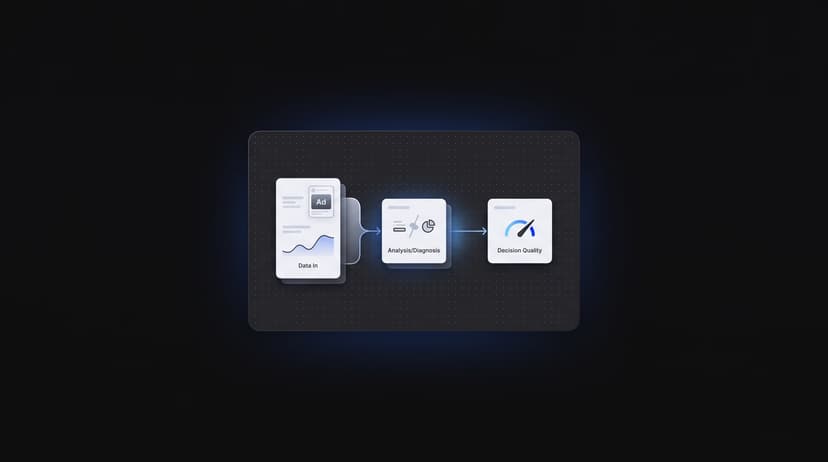
Facebook ads reporting discrepancies rarely come from one broken metric. Most differences appear because Meta Ads Manager, analytics platforms, CRM systems, spreadsheets, and internal dashboards collect, process, and attribute events differently.
That technical reality is only part of the problem. Operational inconsistency is often the larger issue. When campaign names, creative identifiers, upload workflows, and reporting rules differ from one launch to the next, every downstream report becomes harder to trust.
Common causes include:
- Different attribution windows
- Delayed conversion reporting
- Pixel and Conversion API timing differences
- Inconsistent campaign naming conventions
- Manual spreadsheet edits
- Duplicate creative assets
- Missing campaign metadata during uploads
According to Meta Business Help documentation, reporting differences commonly occur because attribution settings, event processing, and measurement methodologies vary across platforms.
A reliable reporting system begins by identifying exactly where campaign information changes between creation, upload, launch, reporting, and executive dashboards.
The Hidden Workflow Problems Behind Unreliable Meta Performance Data
Many teams assume reporting discrepancies are purely an analytics problem. In reality, reporting quality often begins long before a campaign goes live.
If creative files are renamed manually, campaign conventions differ between media buyers, or metadata is lost during deployment, reports become increasingly unreliable as campaign volume grows.
Instead of asking which dashboard is correct, ask whether every campaign follows the same operational process.
Standardized Campaign Naming
Campaigns should include consistent identifiers for audience, offer, creative angle, testing round, geography, and launch date. Consistent naming makes historical analysis dramatically easier.
Consistent Creative Tracking
Every image, video, headline, primary text variation, and landing page should maintain a stable identifier so reported performance always connects back to the original creative.
Reliable Export Processes
Organizations should define who exports reports, when exports occur, which attribution window is used, and how discrepancies are investigated before reports reach decision makers.
For broader guidance on reporting quality, see Facebook Ad Reporting Accuracy: A Practical Workflow for Diagnosing Data Conflicts and Improving Decision Quality.
How Facebook Ads Uploader Processes Affect Reporting Accuracy
A Facebook ads uploader is much more than a deployment tool. It directly influences reporting quality because campaign structure determines whether data remains interpretable months after launch.
A disciplined Facebook ads uploader workflow should:
- Preserve campaign naming conventions
- Prevent duplicate campaigns
- Maintain creative identifiers
- Standardize metadata
- Reduce manual operational mistakes
- Produce consistent exports for reporting systems
Platforms such as Instrumnt focus on operational consistency by helping teams launch campaigns using repeatable workflows instead of manual repetition.
Related reading: Facebook Ads Uploader: Creative Fatigue Detection Before Meta Performance Slips
A structured upload process creates a cleaner audit trail that improves reporting long after campaigns have launched.
Comparing Reporting Platforms Without Confusing Their Purpose
Different reporting platforms solve different operational problems.
Sotrender focuses on reporting and social analytics. Hootsuite Ads emphasizes broader multi-channel management. Revealbot specializes in automation and rule-based optimization.
None of these tools automatically eliminate Facebook ads reporting discrepancies because reporting quality still depends on campaign structure, naming consistency, metadata quality, and disciplined operational workflows.
The most effective teams combine reporting software with repeatable campaign operations rather than expecting software alone to reconcile conflicting datasets.
Using Claude Code and AI to Reconcile Facebook Ads Reporting Data

Modern marketing teams increasingly use AI to automate repetitive reporting work.
Claude Code can help build scripts that normalize exported reports, compare datasets, detect duplicate campaigns, identify inconsistent naming conventions, flag missing metadata, and produce repeatable reconciliation reports.
Typical AI-assisted workflows include:
- Comparing Meta exports against warehouse data
- Detecting inconsistent naming conventions
- Normalizing exported column names
- Identifying duplicate creative assets
- Flagging missing metadata
- Producing repeatable reconciliation reports
AI accelerates investigation, but marketers still need to determine whether discrepancies originate from attribution differences, tracking implementation, or workflow mistakes.
Industry adoption supports this operational shift. McKinsey's 2023 Global Survey on AI reported that 55% of organizations had adopted AI in at least one business function, illustrating how AI is becoming part of everyday operational workflows rather than isolated experiments. Source: McKinsey Global Survey on AI 2023.
HubSpot's State of Marketing research also reported that more than 60% of marketers use AI in their marketing activities to improve productivity, content creation, and workflow efficiency. Source: HubSpot State of Marketing Report.
These statistics reinforce an important lesson: AI delivers the greatest reporting improvements when combined with disciplined operational systems instead of replacing them.
Related reading: Automated Facebook Ads Learning Loops with Instrumnt and Claude Code
Building a Reporting System That Prevents Future Facebook Ads Data Discrepancies
Long-term reporting reliability depends on designing repeatable systems rather than fixing isolated mismatches.
Create One Source of Truth
Choose one reporting layer for executive decision-making while documenting how supporting dashboards differ.
Document Attribution Rules
Every report should clearly specify attribution windows, conversion definitions, reporting periods, included data sources, and timezone settings.
Connect Creative Performance to Metadata
Creative insights lose value if assets cannot be reliably matched to campaign reports.
Audit Campaign Structure
Regular operational audits should identify inconsistent naming, duplicate assets, outdated campaigns, missing identifiers, and upload failures before they affect reporting.
For additional workflow ideas, see Why Your Facebook Ad Reporting Dashboard Creates Bad Decisions (And How to Fix the Signal Problem).
Final Checklist: How to Diagnose and Fix Reporting Issues Before They Impact Decisions
Before assuming Facebook Ads reporting is incorrect, review this checklist:
- Verify attribution windows across every reporting platform.
- Compare reporting dates and timezone settings.
- Confirm campaign names follow a consistent convention.
- Check whether creative identifiers remain intact after upload.
- Review export procedures for manual spreadsheet changes.
- Audit every Facebook ads uploader workflow for metadata loss.
- Use Claude Code and AI to identify duplicate campaigns and inconsistent datasets.
- Document every discrepancy so future investigations become faster.
- Standardize campaign creation templates across the team.
- Schedule recurring reporting audits instead of waiting for anomalies.
Organizations that combine structured Facebook Ads workflows, disciplined naming systems, reliable upload processes, AI-assisted reconciliation, and operational platforms like Instrumnt build reporting systems that remain trustworthy as campaign volume increases.
Frequently Asked Questions
Why do Facebook Ads reporting numbers not match my analytics platform?
Different attribution windows, conversion timing, privacy modeling, reporting delays, and measurement methodologies often create legitimate differences. Compare attribution settings before assuming either platform is incorrect.
Can a Facebook Ads uploader workflow prevent reporting discrepancies?
A disciplined Facebook ads uploader workflow significantly reduces operational errors by preserving campaign naming, metadata, creative identifiers, and consistent structures across launches.
How can Claude Code help clean and reconcile Facebook Ads reporting data?
Claude Code can automate repetitive reconciliation work, including detecting duplicate campaigns, comparing exports, normalizing column names, identifying missing metadata, and highlighting reporting inconsistencies for review.
For more context, see Meta's creative fatigue recommendations.
For more context, see Smartly.io.
For more context, see Ads Uploader.
Common questions about facebook ads reporting discrepancies
What is the best way to facebook ads reporting discrepancies?
The best approach depends on your team size and launch volume. Start by structuring your workflow around batch preparation and bulk uploading, then layer in automation for the parts that don't need human judgment.
How many ad variations should I test?
Advertisers running 3 or more variations per audience consistently see lower CPAs. Aim for at least 3-5 variations per ad set as a starting point, and increase from there as your workflow allows.
Does automation replace the need for creative strategy?
No. Automation handles the operational side, like launching, duplicating, and naming ads at scale. Creative strategy, offer positioning, and audience selection still require human judgment. The goal is to free up more time for that strategic work.