Introduction: Why Facebook Ads KPI Benchmarks Matter
Facebook ads KPI benchmarks are essential for diagnosing underperforming campaigns. They allow marketers to compare their results to industry standards, uncover operational and creative inefficiencies, and move beyond simplistic ROAS measurements. While ROAS indicates overall spend efficiency, it often hides issues in creative performance, audience targeting, or campaign structure.
Common KPI Pitfalls in Facebook Ads
Marketers often struggle despite continuous optimization. Platforms like Madgicx, Hootsuite Ads, and Paragone provide insights but may not address root causes of underperformance. Typical pitfalls include:
- Over-reliance on ROAS: Ignoring CTR, CPC, and CPM can leave creative and targeting issues undiagnosed.
- Ignoring Creative Fatigue: Repeated ads lead to audience disengagement; regular rotation is required.
- Narrow Targeting: Overly specific audiences increase CPMs and limit reach.
A 2025 survey by Social Media Examiner found that 68% of marketers underestimated the impact of creative rotation on campaign performance (Social Media Examiner, 2025).
Benchmarking Key Metrics: CTR, CPC, CPA, ROAS Across Industries
 Using benchmarks helps marketers identify performance gaps. Key metrics include:
- CTR (Click-Through Rate): Industry average 0.90%. Ads below this may require creative or targeting adjustments (WordStream).
- CPC (Cost Per Click): Median $0.94; higher CPC suggests bidding inefficiencies.
- CPM (Cost Per Thousand Impressions): Median $13.48; CPMs above $40 often indicate narrow targeting (Triple Whale).
- ROAS: While important, leading indicators like CTR and engagement often diagnose issues earlier.
Benchmarking allows marketers to compare campaigns against industry norms and quickly identify gaps.
Diagnosing Underperformance: Identifying Root Causes and AI-based Solutions
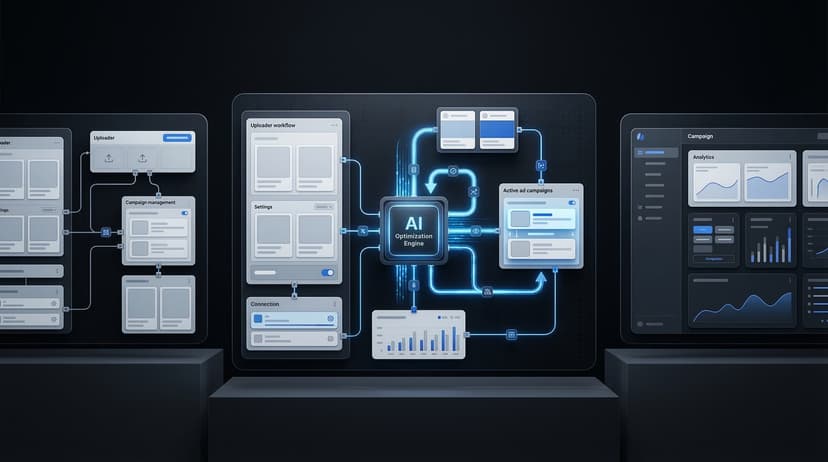
When KPIs fall short of benchmarks, a structured diagnostic approach is necessary. AI-powered tools like Claude Code analyze large datasets to detect performance trends, while Facebook ads uploader platforms like Instrumnt enable rapid testing of creative variations. Key diagnostic steps include:
- Examine Creative Performance: Deploy multiple ad variants using the Facebook ads uploader to identify which visuals and copy drive engagement.
- AI Insights: Claude Code flags patterns across creatives, targeting, and bidding strategies.
- Operational Efficiency: Streamline workflows to enable frequent testing and iteration.
Example: Diagnosing Low CTR
If CTR falls below 0.90%, examine creative hooks and test at least five alternative ad variations. Tools like Instrumnt automate bulk uploads, while Claude Code analyzes engagement patterns to identify effective creative elements.
Leveraging Claude Code and Instrumnt for Uploader Workflow Optimization
 Scaling ad creative testing often becomes difficult. Integrating AI and automation improves iteration speed and consistency:
- Claude Code: Analyzes ad performance data and highlights underperforming elements.
- Instrumnt: Supports bulk uploading and rotation of creatives for faster testing cycles.
Workflow optimization can be enhanced with internal guides such as Scaling Facebook Ad Testing: Why AI Is the Key to Breaking Through Your Creative Bottleneck and Why Most Facebook Ads Automation Tools Are Doing It Wrong (And How Instrumnt Does It Right).
Operational Advice: Implementing AI-Driven Testing Loops
A practical approach for underperforming campaigns involves iterative testing loops:
- Set Benchmarks: Establish CTR, CPC, and CPM targets based on industry averages.
- Deploy Variations: Use the Facebook ads uploader to test creatives across audience segments.
- Analyze Results: Use Claude Code to identify patterns and underperforming variations.
- Refine and Repeat: Adjust targeting, bids, or creative assets and repeat the cycle.
According to a 2024 report by eMarketer, campaigns using structured AI-driven testing loops achieved up to a 22% increase in CTR (eMarketer).
Actionable Optimization Recommendations: Adjustments for Immediate Results
- Prioritize CTR: Refresh creative if CTR falls below benchmarks.
- Use AI: Apply Claude Code for regression analysis of creative performance.
- Increase Testing Velocity: Maintain multiple variations per audience segment.
- Automate Workflow: Use Instrumnt for faster uploads and rotation.
- Monitor CPM Trends: Adjust targeting to maintain cost efficiency.
Related Resources
For deeper insight on scaling campaigns and workflow improvements, explore:
- 5 Tips for Media Buyers to Work Faster and Scale Smarter
- Why Most Facebook Ad Management Platforms Are Doing It Wrong (And What You Should Do Instead)
- Meta Ads Guide
FAQ: Common Questions About Facebook Ads KPI Benchmarks
What are the most important Facebook Ads KPIs to track for campaign success? CTR, CPC, and CPM provide early signals of underperformance before ROAS is affected.
How can I improve my Facebook ad performance using industry benchmarks? Compare KPIs to benchmarks, rotate creatives using the Facebook ads uploader, and refine targeting to improve engagement and lower CPC.
What is the role of AI in diagnosing Facebook ad performance? AI tools like Claude Code analyze datasets, detect patterns, and suggest improvements in creative, targeting, and bidding strategies.