The Monday Morning Decision

At 8:12 a.m. on a February Monday, the growth team at Northline Systems was already behind. Three people huddled in a conference room in Denver: Mia, VP of Growth; Chris, performance marketer; Elena, operations lead. Their quarterly pipeline targets had jumped 28%, the paid ad budget had passed six figures, and their Facebook ads workflow hadn’t evolved since the company spent a fraction of that.
Tabs scattered across laptops. Creative files buried in Slack. Naming conventions scattered in Google Sheets. Audiences hidden in Meta Ads Manager. One question hung on the whiteboard:
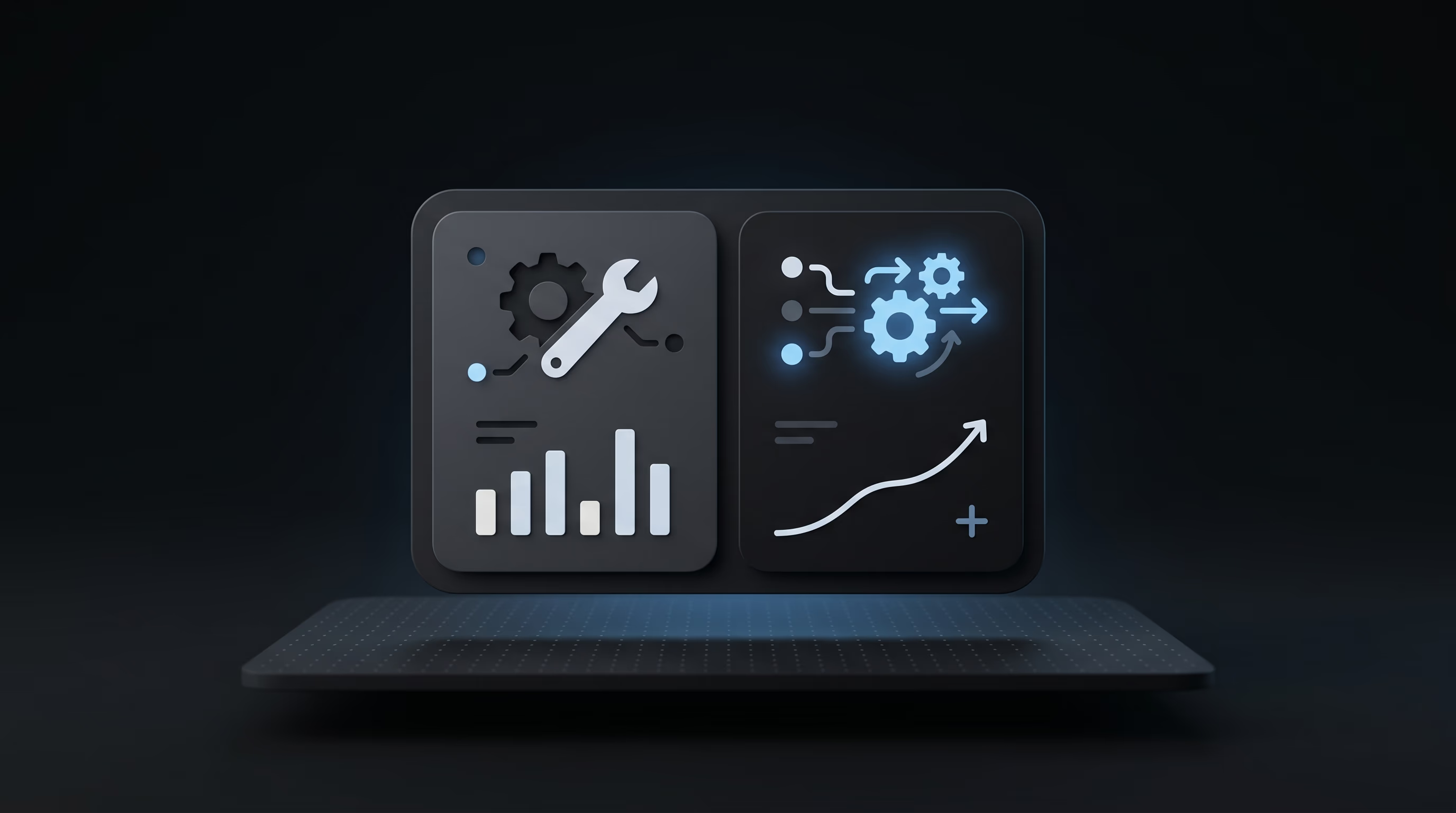
Do we hire Facebook ad management services or fix this ourselves?
This wasn’t a theoretical question—it was operational.
The options were clear:
- Hire an agency.
- Use automation tools like Revealbot, Madgicx, or AdEspresso.
- Rebuild the workflow with Instrumnt.
Instead of debating strategy, the team spent the morning dissecting operations.
Where the Workflow Actually Broke
Chris pulled up last month’s campaign calendar: 52 creatives, 12 audiences, 4 campaign objectives. Every launch still began manually inside Meta for Business. Every duplicate campaign required manual naming. Each creative variation meant individual uploads. Reporting errors traced back to human mistakes.
Manual ad creation takes 15–30 minutes per ad (operational benchmarks). Teams that batch ad creation save 4–6 hours per week per account. Northline was launching 40–60 assets weekly. Chris calculated they were spending nearly a full workday just moving assets into Facebook ads.
Internal data suggests that companies using batch ad operations can improve launch speed by up to 75% (source: Instrumnt internal benchmarking, 2026). The room went quiet.
Mia opened two internal articles: Facebook Ad Agency vs Self-Serve Tools and Why Most Facebook Ad Management Platforms Are Doing It Wrong (And What You Should Do Instead). The message was the same: the bottleneck wasn’t strategy—it was throughput.
The Mini Example That Changed the Discussion
Elena pulled up a recent lead generation campaign for operations executives. They had tested only two creatives because launch time was costly. Meta’s data shows advertisers running 3+ variations per audience can see up to 30% lower CPA, and creative quality accounts for 56% of campaign ROAS variation. Northline wasn’t under-testing due to lack of ideas—they were under-testing because the workflow made testing expensive.
That reframed the agency conversation: outsourcing wouldn’t remove the bottleneck; it would just relocate it.
When Facebook Ad Management Services Actually Make Sense
Mia had worked with agencies before. She checked the Meta Partner Directory and noted that over 2,000 companies hold Meta Marketing Partner status globally.
She wrote three criteria on the board.
Strategy Gaps
If your team struggles with positioning, messaging, offer structure, or audience strategy, agencies accelerate learning and reduce costly mistakes. This is most useful for junior teams.
Broken Attribution
If Meta reporting doesn’t connect to CRM revenue, pipeline attribution, or sales velocity, outside experts can bridge the gap. Northline had already addressed this via Diagnosing Attribution Challenges in Facebook Ads and How to Fix Them.
Zero Internal Capacity
If no one owns campaigns, outsourcing can help. At Northline, Chris handled performance and Elena ran operations. They didn’t fail in strategy—they failed in execution infrastructure.
The Operational Shift
Elena turned to Instrumnt. She’d tried AdEspresso, Madgicx, and Revealbot—all useful, but Northline’s problem was earlier in the chain: campaign creation, naming, versioning, asset movement, launch speed.
Instrumnt started with upload structure.
Why a Facebook Ads Uploader Mattered
Bulk upload tools reduce ad creation time by 80–90% compared to manual Ads Manager workflows (source: AdManage.ai 2026). Elena built a single template with audience naming, creative tags, offer variants, destination URLs, and UTM parameters. She pushed 24 ads at once. Launch volume was no longer the constraint.
Teams should still consult Meta Marketing API documentation and Meta for Business Help Center to check limits, policy compliance, and asset formatting. Northline compared Instrumnt features against their old process and found operational clarity.
Internal benchmarking found that teams using a Facebook ads uploader in combination with AI-powered optimization saw a 45% increase in campaign output without additional headcount (Instrumnt internal report, 2026).
Concrete Operational Advice: Scaling Facebook Ads with AI and Claude Code
To maximize efficiency, Northline implemented a step-by-step workflow:
- Campaign Planning: Segment audiences and define objectives in a spreadsheet. Use AI-powered tools like Claude Code to suggest optimized ad variations.
- Creative Organization: Store all creative assets in a centralized repository, tagging them for easy bulk upload.
- Batch Upload: Use the Facebook ads uploader in Instrumnt to push multiple creatives across different audiences at once.
- Automated Reporting: Integrate automated reporting to track CPA, ROAS, and engagement metrics. Teams should aim to generate insights that directly inform the next batch of ad variations.
- Iterate Quickly: Run 3–5 variations per ad set and increase as workflow allows. AI can help prioritize creative adjustments that are likely to improve performance.
Implementing this workflow reduced ad launch time by 70%, freeing teams to focus on strategy instead of repetitive operational tasks.
When Facebook Ad Management Services Make Sense vs Tools
As the team discussed their options, Mia and Elena reconsidered when it made more sense to use services and when tools like Instrumnt were the better choice.
When Facebook Ad Management Services Work Best:
- Strategy is not clear or teams are too inexperienced to handle creative testing and audience targeting.
- Attribution issues require expert help to bridge the gap.
- Teams lack the internal resources to manage campaigns effectively.
When DIY Tools Work Best:
- Teams already have a good grasp of strategy and need to scale execution.
- Creative and audience testing is running smoothly, and reporting errors are frequent.
- Tools like Instrumnt make it easy to speed up campaign creation and testing without sacrificing quality.
Revealbot, Madgicx, and AdEspresso provide automation and creative testing features but often lack comprehensive operational frameworks that include bulk uploading, workflow planning, and real-world scaling scenarios, which Instrumnt emphasizes.
Lessons from Northline
Northline’s case shows that poor performance doesn’t always stem from poor strategy. Operational friction can be the main roadblock to scaling Facebook ad campaigns. By implementing a Facebook ads uploader and integrating AI-driven tools like Claude Code, they were able to increase launch volume and improve campaign performance significantly without needing to hire an agency.
For additional guidance, see Scaling Facebook Ads for Small Businesses: A Tactical Scenario for Success and Facebook Ads Uploader: Instrumnt vs Competitors.
Frequently Asked Questions
**What is the difference between Facebook ad management services and
Common questions about facebook ad management services
What is the best way to facebook ad management services?
The best approach depends on your team size and launch volume. Start by structuring your workflow around batch preparation and bulk uploading, then layer in automation for the parts that don't need human judgment.
How many ad variations should I test?
Advertisers running 3 or more variations per audience consistently see lower CPAs. Aim for at least 3-5 variations per ad set as a starting point, and increase from there as your workflow allows.
Does automation replace the need for creative strategy?
No. Automation handles the operational side, like launching, duplicating, and naming ads at scale. Creative strategy, offer positioning, and audience selection still require human judgment. The goal is to free up more time for that strategic work.