The Illusion of DIY Efficiency
Many teams believe running Facebook ads in-house is the way to go: cheaper, faster, and more controlled.
It feels that way because tools give the illusion of control. Dashboards update in real time. Automation rules fire on cue. Reports look clean.
But visibility doesn’t equate to performance. Performance comes from throughput.
That’s where DIY breaks down.
A typical in-house team might launch a handful of ads each week. They tweak budgets, pause the underperformers, and iterate slowly. On paper, it looks like optimization. In reality, it’s constrained experimentation.
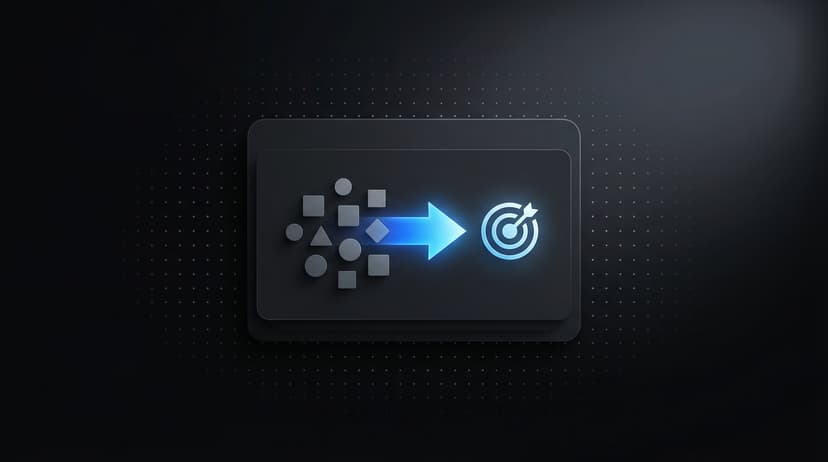
Meanwhile, the system has evolved. Meta’s algorithm now tests dozens—or even hundreds—of creative combinations at once. Advantage+ campaigns alone can process up to 150 variations at a time. Studies show that campaigns with over 100 variations see up to 30% more effective performance (Meta internal data).
If you’re not feeding the system enough inputs, you’re not competing. You’re just observing.
This is why a modern facebook ad agency consistently outperforms teams using self-serve tools. They don’t “optimize better.” They simply generate more inputs for the algorithm to work with.
The Real Constraint in 2026: Creative Throughput
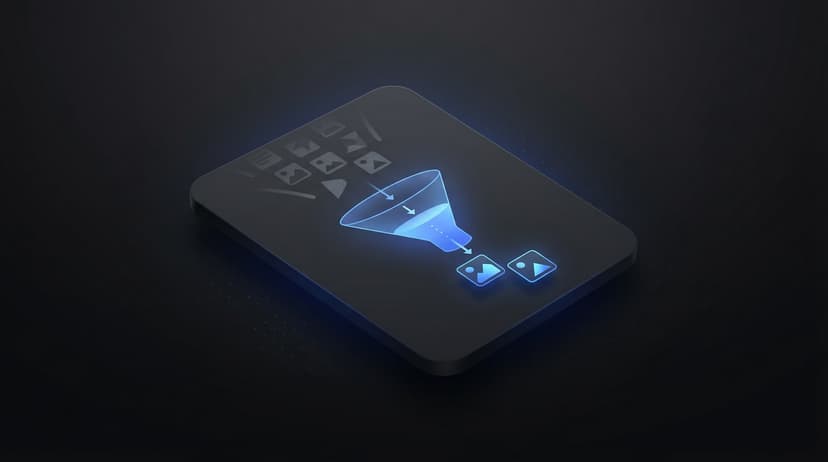
Here’s a stat most teams ignore: only about 5–10% of creatives truly win.
That number changes everything.
If you launch 10 ads, you might get one winner. If you launch 100, you might get 10.
The issue isn’t talent. It’s volume.
Research from Nielsen and Meta shows that creative quality drives up to 56% of campaign performance (Nielsen Catalina Solutions). Meanwhile, advertisers running 3+ variations per audience see up to 30% lower CPA (Meta).
The game is simple: produce, test, and iterate creative—faster.
But most internal teams can’t.
Manual workflows in Ads Manager still take 15–30 minutes per ad. Even with bulk tools, the bottleneck is in idea generation, asset preparation, and test structuring.
Creative throughput—not targeting, not bidding—is the real constraint in 2026.
If this resonates, it’s worth reviewing why most workflows fail in the first place in Why Your Creative Testing Is Failing (And How to Automate the Solution).
AI + Bulk Testing: What Agencies Actually Do Differently
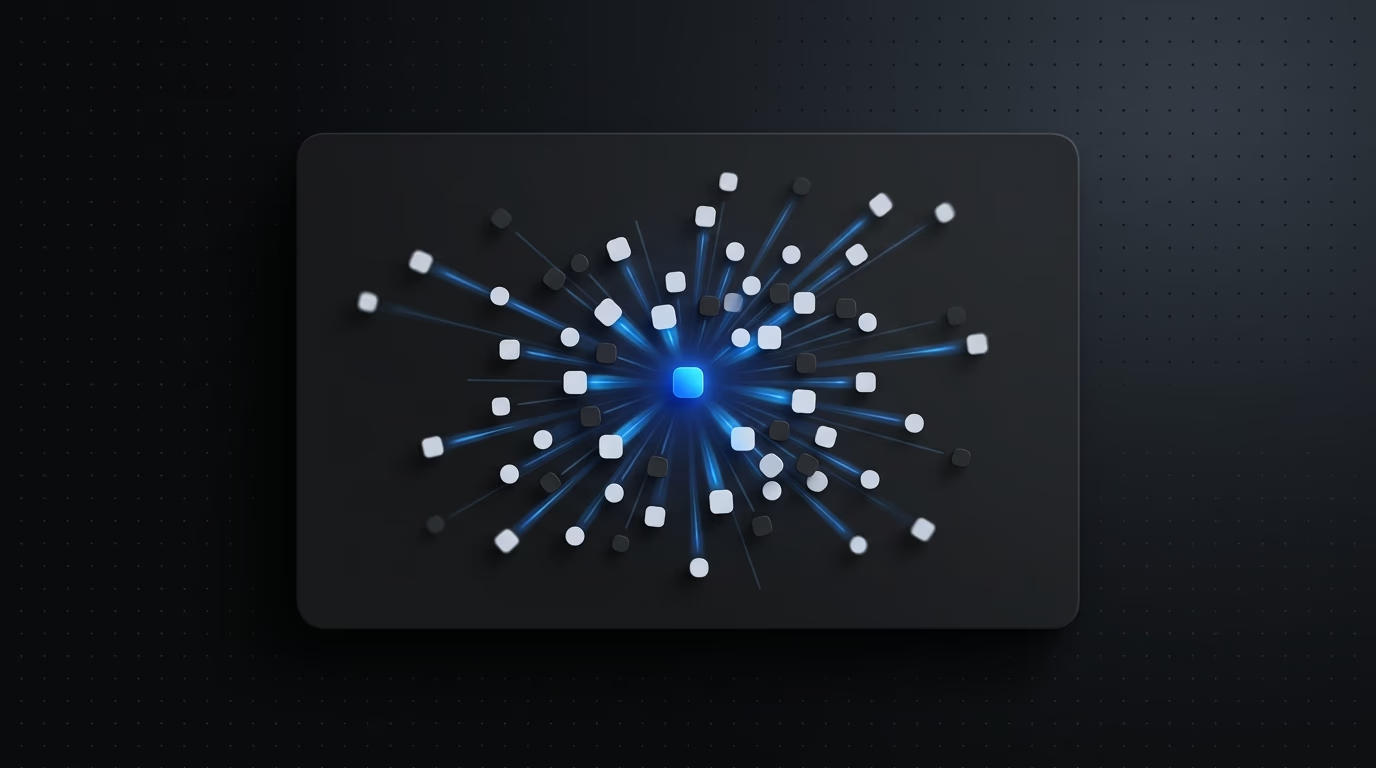
This is what separates high-performing agencies from self-serve tools.
Agencies don’t treat Facebook ads like campaigns.
They treat them as pipelines.
A modern agency workflow looks like this:
- One core idea becomes 10–20 creative angles
- Each angle becomes multiple hooks, formats, and variants
- AI expands and rewrites variations at scale
- Bulk systems push dozens of ads live in minutes
- Performance data feeds automatically into the next batch
This isn’t hypothetical. It’s how agencies operate.
Teams using systems like Instrumnt and Claude Code turn a single concept into dozens of live experiments using a Facebook ads uploader instead of manual setup.
And the compounding effect is brutal.
Instead of waiting weeks to find a winner, they spot signals in days. Instead of protecting “good ads,” they replace them before fatigue sets in. Meta itself recommends frequent refresh cycles via its creative fatigue guidelines.
AI plays a key role here. It doesn’t replace strategy—it accelerates variation.
Meta reports that advertisers using AI-generated creatives see up to 11% higher CTR compared to traditional ads (Meta).
But that edge matters only if you’re generating enough variations to begin with.
Tools alone don’t give you that system.
Agencies do.
For a deeper breakdown of how these systems are built, see How to Build a Facebook Ads Bulk Testing System with Instrumnt and Claude Code.
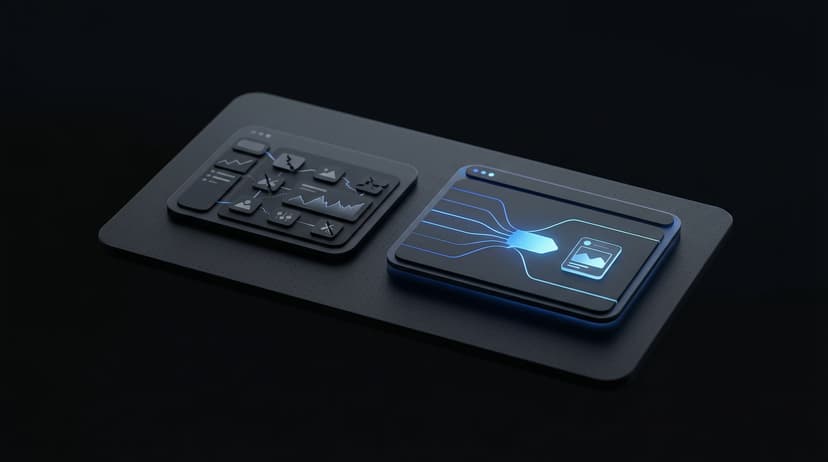
Side-by-Side: Self-Serve Tools vs Agency Execution Speed
Let’s make this concrete.
An in-house team using Facebook ads tools typically operates like this:
- Brainstorm a few ideas
- Design creatives manually
- Upload one by one
- Monitor results
- Iterate weekly
A facebook ad agency using AI and bulk workflows operates differently:
- Generate dozens of variations with AI
- Structure tests before launch
- Use a Facebook ads uploader to push everything live at once
- Analyze performance daily
- Replace losing creatives immediately
The difference isn’t incremental—it’s exponential.
This is why execution speed becomes the defining advantage. If you want a real-world breakdown, A Real Facebook Ads Testing Workflow: How One Team Scaled Creative Experiments Without Slowing Down shows exactly how this plays out.
Where Tools Cap Out: Revealbot vs Madgicx vs AdEspresso
Let’s be clear: Revealbot, Madgicx, and AdEspresso are not useless.
They’re just solving a narrower problem than you think.
Revealbot excels at rule-based automation. You can pause ads, adjust budgets, and trigger actions based on performance thresholds. But it works only after ads are live. It doesn’t help you generate more or better inputs.
Madgicx brings AI-driven insights and creative analytics into the picture. It helps identify patterns and suggest improvements. But it still relies heavily on manual creative production. The ceiling is determined by how much your team can generate.
AdEspresso is structured and easy for beginners. It simplifies testing and campaign setup. But that structure becomes a bottleneck when you scale. High-volume testing slows down because the interface wasn’t built for bulk experimentation.
Even when you stack these tools together, you’re missing the core system: rapid idea expansion plus bulk execution.
That’s why newer workflows like Instrumnt outperform traditional stacks. Not because they’re “better tools,” but because they enable a different operating model.
The difference is simple:
Tools optimize ads.
Agencies optimize the rate at which new ads are created.
The Hidden Costs of Self-Serve Facebook Ads
The biggest mistake teams make is comparing agency fees to tool subscriptions.
That’s the wrong comparison.
The real cost of self-serve Facebook ads is missed iteration cycles.
If your team launches 10 ads per week and an agency launches 50, the agency isn’t just 5x faster. It’s exponentially more likely to find outliers.
Now, layer in platform scale.
- Meta’s ecosystem reaches over 3.29 billion daily users (Meta earnings report)
- Median ROAS for DTC brands is 1.93 (Triple Whale 2025 benchmarks)
At that scale, small creative improvements compound quickly—but only if you surface them fast enough.
A slow testing loop doesn’t just delay results. It locks you into average performance.
The Counterargument: "We Can Just Use Better Tools"
This is the strongest argument for staying in-house.
Buy better tools. Train the team. Build internal systems.
In theory, it works.
In practice, almost no team executes it well.
Because the challenge isn’t just access to tools—it’s coordination.
You need:
- A constant stream of new creative ideas
- Fast production cycles
- Structured testing frameworks
- Clean data feedback loops
- Discipline to kill and replace ads aggressively
Most teams get two or three of these right. Agencies build their entire business around all of them.
There’s also a hidden organizational issue: internal teams protect their work. Agencies replace it.
That bias alone slows down iteration.
Decision Framework: When to Hire an Agency vs Stay In-House
So when does hiring a facebook ad agency actually make sense?
Stay in-house if:
- You launch fewer than 20 ads per month
- Your team has strong creative and operational bandwidth
- You’re still validating product-market fit
Hire an agency if:
- You need to scale testing beyond 50+ ads per month
- Your team is bottlenecked on creative production
- You want faster iteration cycles without hiring multiple roles
The key threshold is simple: if you cannot reliably turn one idea into 20+ live tests within a few days, your system is too slow.
Why a Facebook Ad Agency Still Wins
At a certain level of spend, the question stops being “can we run ads?”
It becomes “how fast can we learn?”
And learning speed is driven by execution speed.
A strong facebook ad agency in 2026 is not just a service provider. It’s an execution engine built around AI, bulk testing, and creative iteration.
That’s why the best ones combine human strategy with systems powered by tools like Instrumnt, Claude Code, and advanced Facebook ads uploader workflows.
They don’t just manage campaigns.
They manufacture insights.
Common questions about facebook ad agency
Is hiring a Facebook ad agency worth it in 2026?
Yes—if your growth depends on rapid experimentation. Agencies outperform when creative volume and testing speed directly impact ROI.
Can AI tools replace a Facebook ads agency?
No. AI enhances execution, but without a structured system and workflow, it doesn’t solve the throughput problem.
How do I know if my team should switch from in-house to an agency?
If your team struggles to launch and test creatives at scale, or your iteration cycles take weeks instead of days, it’s a strong signal that an agency model will outperform your current setup.