The campaign that missed launch day: a Facebook ads creative workflow failure
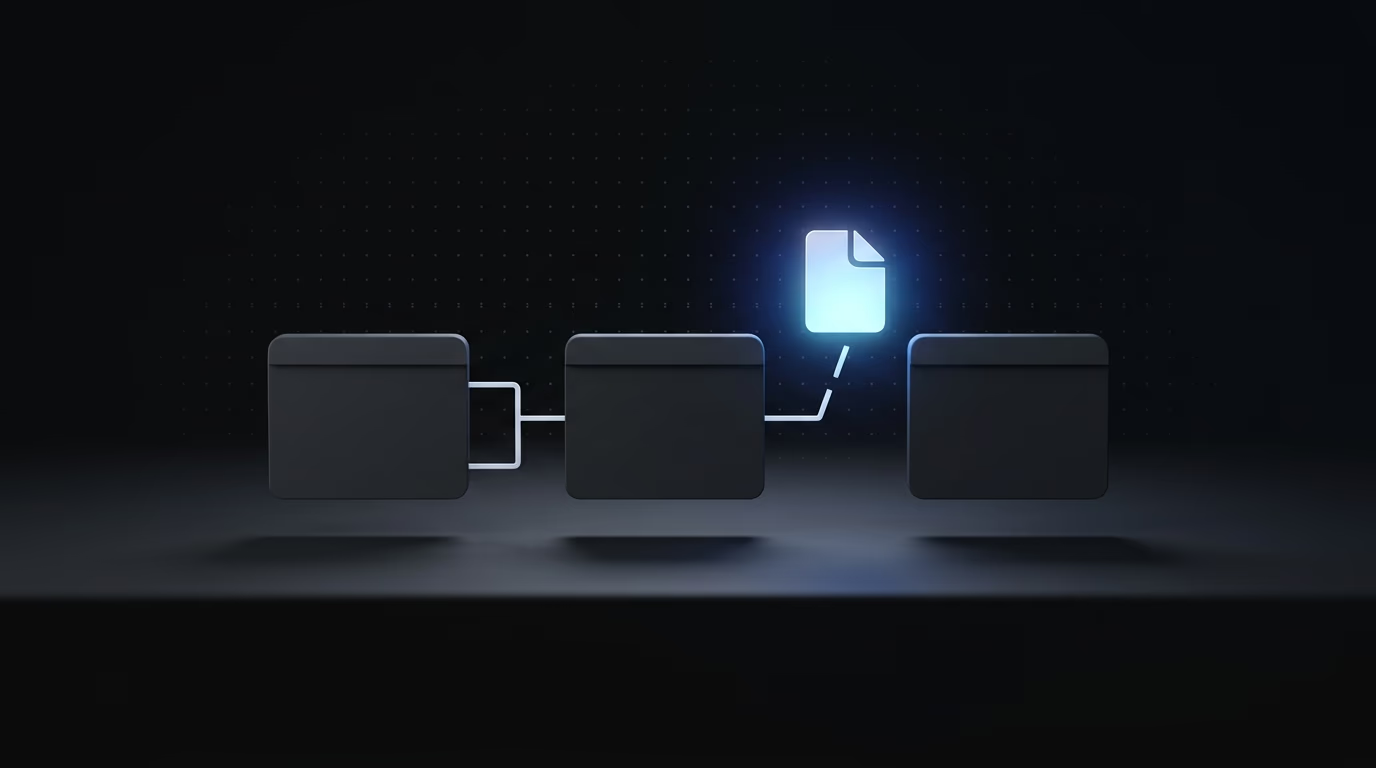
At 8:47 AM on launch day, a growth team at a mid-market ecommerce company opened its campaign tracker expecting the final creative package to be ready. The media buyer had approved budget, audiences, and campaign structure. The only missing piece was the final upload.
The designer had exported videos the previous evening. The copywriter had approved headlines. The performance lead had prepared the testing plan. Every strategic decision was complete, but the campaign could not go live.
One video used the wrong naming format. Two assets were stored in an outdated folder. The final thumbnail approval was buried in another conversation. Nobody knew whether the media buyer should upload the available files or wait for confirmation.
By noon, the team had lost half a testing day.
This type of delay is common for teams running Facebook ads. The creative idea is often not the problem. The failure happens between production, approval, asset organization, and deployment.
Creative operations matter because advertising success depends heavily on the quality and speed of execution. According to Nielsen Catalina Solutions research, creative quality was responsible for approximately 56% of sales impact in its analysis of advertising effectiveness. This shows why a strong idea can lose value when operational systems fail to deliver it efficiently.
Google and Kantar research has also reported that creative quality can contribute up to 70% of campaign performance in certain advertising contexts. These findings highlight an important lesson: teams need both strong creative strategy and reliable workflows.
The team learned that a facebook ad creative workflow is not just a checklist. It is the operating system that determines how quickly a business can move from an idea to a measurable experiment.
For a broader framework, see Facebook Ad Creative Workflow: An Operational Playbook for Faster Launches and Better Cross-Team Execution.
Where the creative process broke: approval gaps, missing assets, unclear ownership, and manual uploader delays
After the missed launch, the team mapped every step from creative request to campaign activation. They discovered that several small issues combined into one expensive delay.
The first problem was ownership. Designers created assets but did not always know which versions were approved. Media buyers understood campaign requirements but spent hours searching folders instead of analyzing performance.
The second problem was inconsistent asset management. File names looked like:
- final_video_v3.mp4
- final_video_REAL_final.mp4
- homepage_test_new.mp4
This system might survive for a small campaign. It breaks when teams manage dozens of Facebook ads variations every month.
The third problem was manual preparation. Uploading ads individually created repetitive work. Each small delay reduced the number of tests the team could launch and slowed campaign learning.
The team also discovered that their workflow ignored creative fatigue. New concepts were created only after existing ads declined instead of being prepared proactively.
A reliable creative system needed every asset to have a purpose, owner, approval status, and launch path.
The solution was not adding more meetings. It was creating visibility. Every person involved needed to know what was being created, who approved it, and when it was ready for deployment.
Mini example: rebuilding a delayed Meta campaign launch with a standardized creative intake and upload system
The team rebuilt the process around one rule: every creative needed a clear route from request to launch.
They created a shared intake system where every concept included:
- campaign goal
- target audience
- creative angle
- required format
- copy variations
- approval owner
- launch priority
Instead of moving files through random chats and folders, every asset entered the same workflow.
For the next product launch, the team prepared 24 creative variations across video, static images, and carousel formats. The previous process required the media buyer to collect files, confirm versions, and rebuild campaign settings manually.
The new workflow changed the handoff:
| Phase | Before | After |
|---|---|---|
| Creative delivery | Files spread across chats and folders | Centralized asset intake |
| Approval process | Unclear final versions | Named owner and status tracking |
| Campaign setup | Manual ad creation | Structured upload preparation |
| Testing speed | Delayed launches | Faster creative deployment |
The improvement did not come from simply uploading faster. It came from removing uncertainty. The team spent less time managing files and more time testing ideas.
Teams can also review How to Scale Meta Ads with Bulk Uploading when building repeatable campaign structures for larger creative volumes.
Facebook ads uploader workflow: creating a repeatable process for asset naming, approvals, bulk uploads, and testing cycles

The biggest operational change was introducing a structured facebook ad creative workflow at the uploader level.
A Facebook ads uploader is valuable when it turns campaign deployment into a repeatable process instead of a collection of manual tasks. The goal is not removing human judgment. The goal is reducing avoidable coordination work.
The team standardized five steps.
1. Asset naming before upload
Every file followed a consistent structure:
Brand_Product_Angle_Format_Version.
For example:
BrandX_Shoes_Comfort_Video_V4.
Anyone on the team could understand what the file represented without opening it.
2. Approval status before deployment
Creative moved through clear stages:
Draft → Review → Approved → Ready for Upload → Live.
This removed confusion about which version should enter a campaign.
3. Bulk campaign preparation
The team prepared groups of ads together instead of rebuilding similar campaigns repeatedly. AdEspresso focuses on simplifying campaign management, Smartly.io provides enterprise-level automation approaches, and Hootsuite Ads supports broader social advertising workflows.
The team focused specifically on creative operations: moving approved assets from production into testing faster.
4. Faster testing cycles
The goal was not creating random variations. Each creative existed to answer a question: does a different hook improve response, does a new visual reduce fatigue, or does another offer message improve conversion?
5. Clear feedback loops
Performance data returned to the creative team. Winning concepts became new briefs. Weak concepts were removed quickly.
A reliable uploader process gave the team more opportunities to learn because campaigns launched on schedule.
Using AI marketing workflows with Claude Code to prevent operational failures

After fixing the manual process, the team looked for repetitive tasks that AI could support.
The goal was not replacing the media buyer. It was reducing coordination work that consumed strategic time.
An AI workflow built with tools such as Claude Code could monitor creative pipelines and support tasks like:
- checking whether required assets exist before launch
- validating naming rules
- identifying missing approvals
- creating campaign preparation reports
- flagging delayed creative batches
For example, an AI agent could review a launch folder every morning and report that three videos are approved, two need thumbnails, and one still requires compliance review.
AI can also support a facebook ad creative workflow by checking campaign inputs before anything goes live. This creates an additional quality checkpoint without slowing down the team.
For teams exploring AI-driven execution systems, Automate Creative Testing for Meta Ads provides a complementary workflow approach.
The future opportunity is not fully automated advertising. It is better-connected operations where AI handles repetitive verification while humans focus on strategy, creative judgment, and analysis.
The operating habits that prevent future Facebook ad creative workflow delays
The team did not solve the problem by adding more meetings. They solved it by making every handoff visible.
Their new habits were simple:
- Every creative request had an owner.
- Every asset used a naming system.
- Every approval had a checkpoint.
- Every campaign followed the same uploader process.
- Every test created feedback for the next cycle.
Creative production was no longer separate from campaign execution. It became part of the advertising system.
A reliable facebook ad creative workflow gives teams consistency. When assets move smoothly from idea to launch, advertisers create more opportunities to test, learn, and improve campaigns.
The biggest lesson from the missed launch was that campaign performance is influenced before the ad ever reaches the platform. A broken workflow can limit learning speed just as much as a weak creative idea.
Common questions about Facebook ad creative workflow
What is the best workflow for creating and launching Facebook ad creatives?
The best workflow connects creative requests, production, approvals, uploads, and testing into one visible process. Start with clear ownership, consistent naming rules, and approval checkpoints before adding automation.
How can a Facebook ads uploader improve creative testing speed?
A Facebook ads uploader can reduce repetitive setup work by helping teams prepare assets consistently, organize campaign inputs, and launch approved variations faster. This allows media buyers to spend more time analyzing performance.
How can AI tools like Claude Code help automate Facebook ad creative workflows?
AI tools like Claude Code can help monitor asset pipelines, validate campaign preparation steps, and generate reports about missing requirements. The purpose is improving reliability while keeping creative strategy in human hands.
For teams comparing operational approaches, Instrumnt, AdEspresso, Smartly.io, and Hootsuite Ads represent different ways to think about campaign execution. The right workflow depends on team size, creative volume, and how much repetitive work needs to be removed.
For more context, see Madgicx.
For more context, see Meta Marketing API documentation.
For more context, see AdEspresso.