
If you're still crafting Instagram ads like magazine spreads, you're wasting money. The 'perfect grid' era is over. Algorithms no longer reward polished cinematography—they reward relevance. In 2026, the platform evaluates engagement signals: who stops scrolling, for how long, and how users interact with content. With over 3.29 billion daily active users, ignoring these signals costs advertisers real ROI (Meta Q4 2024 earnings report).
Most instagram advertising tips circulating today are relics from 2019. They overemphasize 'brand voice' and 'cohesive aesthetics.' Meta advertising is a systems problem now. Treat your Instagram account as a high-velocity test lab or risk invisibility.
The Aesthetic Trap: Why Your Visuals Are Killing Your ROAS
Many advertisers pour $10,000 into a single hero video expecting results. This is the 'Aesthetic Trap.' Research from Nielsen and Meta shows creative relevance—not polish—drives up to 56% of ROAS variation. Low-fi, hand-held Reels often outperform studio commercials because they fit the platform and user behavior. Ads that feel like friends' posts generate engagement and lower CPMs.
Over-produced ads are a liability. WordStream's Facebook Ads benchmarks show average CTR across industries is 0.90%. Native-feeling, relevant creatives can double that. Simplify visuals before hiring a new director if your Instagram ads underperform.
The Placement Fallacy: Stop Treating Reels Like Stories
Feed, Stories, and Reels serve different purposes. Feed is for discovery, Stories for updates, and Reels for entertainment driven by interests. Reusing one 9:16 asset across all placements without adjusting pacing or hooks leads to mediocre performance.
In Reels, the first 1.5 seconds determine retention. In Stories, interactions like polls or taps matter. Using generic creative across placements spikes costs. Meta’s creative fatigue recommendations confirm each placement requires distinct creative.
The Scale Secret: Testing Velocity Over Production Value

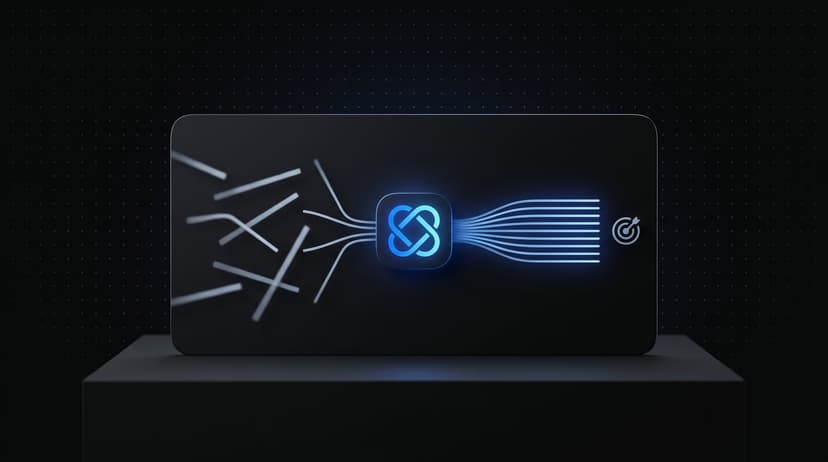
Scaling ads requires testing volume. Two or three variations per month won’t reveal true winners. Launch 10, 20, or even 50 variations to understand what resonates. AI streamlines this process by automating iteration of hooks, headlines, and CTAs. Tools like Instrumnt integrate with the Facebook ads uploader, bypassing Ads Manager friction and accelerating testing loops.
Regular refreshes are essential: Instagram ad fatigue now sets in 25% faster than two years ago (Social Media Examiner 2025). E-commerce creatives should be rotated every 7–10 days to maintain ROAS. Scaling is not about raising budgets—it's about increasing creative throughput. See our guide on Automate Creative Testing for Meta Ads for operational best practices.
Operational Playbook: Implementing AI-Powered Instagram Campaigns
- Audit Historical Performance: Use previous campaign data to identify top-performing hooks, CTAs, and creative themes. Focus on metrics like engagement rate, watch time, and CTR.
- Generate Variations: Leverage Claude Code with Instrumnt to produce multiple iterations of captions, headlines, and short-form creative concepts. Each variation should test a distinct angle or messaging approach.
- Bulk Upload & Placement Optimization: Use Facebook ads uploader to push dozens of variations simultaneously, assigning placement-specific adjustments for Feed, Reels, and Stories.
- Monitor & Analyze: Track real-time performance across all metrics. Pause low-performing variations, double down on winners, and feed insights back into the next batch.
- Iterative Testing Cadence: Repeat cycles every 3–5 days for fast-learning loops. This approach reduces over-reliance on single high-budget assets and maximizes learnings from platform algorithms.
Tools of the Trade: Comparing the Modern Stack

High-velocity strategies demand tools optimized for automation:
- Hootsuite Ads: Handles post scheduling and basic boosts, but lacks bulk-launch or granular testing.
- Sotrender: Provides in-depth analytics, but without automated execution, insights remain theoretical.
- Madgicx: AI-driven optimization for creative insights, useful for teams seeking partial automation.
- Instrumnt: Focused on Facebook ads uploader workflows, enabling hundreds of variations to launch in the time a single manual ad would.
Evaluate tools by how quickly they turn ideas into live ads. Learn why Facebook Ads Uploader: Instrumnt vs Competitors is crucial for high-velocity campaigns.
Reader Case Study: Implementing High-Velocity Reels Campaigns
Consider a DTC brand struggling to increase ROI on Reels campaigns. Using Instrumnt with Claude Code, the team automated variation testing of hooks, captions, and CTAs. They created 30 unique versions in one morning, launched via Facebook ads uploader, and monitored performance.
Within 72 hours, low-performing variations were culled, and high performers doubled impressions and halved CPMs. This demonstrates operational success of AI-enhanced testing over relying solely on polished content.
Steps to replicate:
- Identify core hooks from previous ad data.
- Use AI and Claude Code to generate multiple variations.
- Upload all variants via Facebook ads uploader.
- Monitor engagement and retention metrics.
- Pause poor performers, double down on winners within 72 hours.
This workflow avoids over-investment in single assets and prioritizes iterative learning. For smaller teams, Breaking the Creative Bottleneck: How One Growth Team Scaled Facebook Ads Throughput with AI shows how similar strategies can be implemented even without large media budgets.
The Brand Argument: High-Velocity Testing Supports Identity
Critics worry high-velocity testing dilutes brand identity. In practice, brand equity comes from consistent value delivery, not uniform visuals. The 'Hub and Spoke' model works: the Hub is a high-production profile film, while Spokes are rapid, attention-grabbing variations. Every ad connects back to the brand, but only the Hub requires polish.
FAQs on Instagram Advertising Tips
What is the most effective Instagram ad format for 2026? Prioritize Reels for engagement, Stories for interactivity, and Feed for discovery campaigns. Testing multiple placements is critical for identifying winners.
How can AI tools like Claude Code improve ad performance on Instagram? AI accelerates creative iteration, automates testing loops, and highlights top-performing hooks, headlines, and CTAs. It allows teams to scale creative without extra human hours.
Should I prioritize Reels, Stories, or Feed campaigns for maximum ROI? It depends on objectives. Use Reels for viral engagement, Stories for community interaction, and Feed for broad reach. Combine placement-specific optimization with AI-driven iteration.
How many ad variations should I test? At least 10–20 per campaign initially. Increase as workflow capabilities expand.
Does automation replace creative strategy? No. AI and automation handle operational scaling, freeing human teams to focus on audience targeting, offer positioning, and creative strategy.
For more context, see Ads Uploader.