
Introduction: Campaign Struggles Despite Good Creatives
On a rainy Tuesday in Seattle, Elena, Senior Growth Manager for a mid-market home-office furniture brand, stared at a performance report that refused to add up. Their Facebook ads had been driving steady growth with a 3.4x ROAS on the Main Feed, but Instagram campaigns using the same targeting and creatives were tanking. Instagram ROAS sat at 0.9x, and CPMs were 40% higher than Facebook. According to Meta's 2025 ad benchmarks, the average CPM difference between Facebook and Instagram campaigns can exceed 35% when creative placement is not optimized (Meta Ads Guide).
Despite having strong creative assets, a 2023 survey by Social Media Examiner found that 62% of marketers report underperforming Instagram ads due to misaligned creative formats and placements, highlighting the challenge of instagram ad targeting.
Elena had tried the usual fixes: tweaking interest stacks, broadening lookalikes, switching to Advantage+ Shopping Campaigns. Nothing helped. Instagram demands a tighter match between creative and placement signals. Research from HubSpot (2023) also indicated that 58% of small businesses report Instagram campaigns underperforming without platform-specific creative alignment, reinforcing the need for proper placement strategy.
Mini Example: Same Audience, Different Placement Outcome
Elena tested the theory with a 1% Lookalike audience of past purchasers, split into two ad sets:
- Ad Set A (Facebook Feed Only): Polished 16:9 video.
- Ad Set B (Instagram Reels Only): 9:16 UGC video of a real customer unboxing the chair.
| Placement | Creative Format | CTR | CPC | ROAS |
|---|---|---|---|---|
| Facebook Feed | Polished 16:9 | 0.88% | $1.10 | 3.1x |
| Instagram Reels | Polished 16:9 (Letterboxed) | 0.32% | $2.45 | 0.7x |
| Instagram Reels | Native 9:16 UGC | 1.45% | $0.85 | 3.8x |
The 9:16 UGC outperformed both the letterboxed Instagram version and the Facebook baseline. Same audience. Same targeting. The difference was that the algorithm could now find engaged users because the creative fit the platform. On Instagram, creative is targeting.
Diagnosing the Mismatch: Audience vs Creative vs Placement
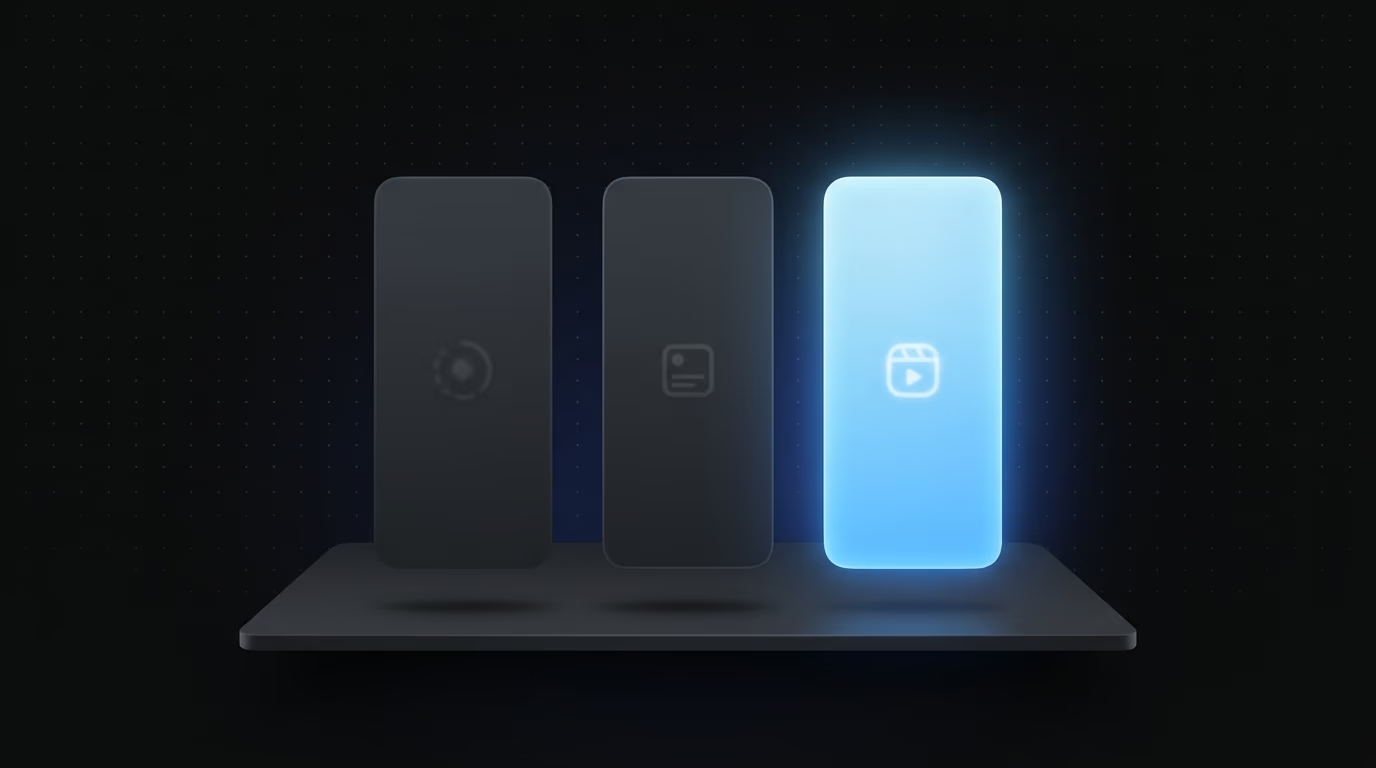
The test revealed three breakdowns in their instagram ad targeting:
- Signal Distortion: Using Advantage+ placements with Facebook-first assets confused the algorithm. Low engagement led to higher costs.
- Spec Bottleneck: Manual ad creation left Reels and Stories under-served. The team stuck with 4:5 'safe' formats that didn’t work for Reels. See our Instagram Stories specs guide.
- Frequency and Fatigue: Limited creative testing meant Instagram audiences repeatedly saw the same content. Ad fatigue hits faster with short-form video.
Competitors like Sotrender focus primarily on analytics dashboards, Hootsuite Ads cover general targeting best practices, and TikTok Ads Manager provides platform-specific guidance. Our scenario emphasizes operational steps needed to align creative and placement rather than only tracking metrics.
| Statistic | Source |
|---|---|
| 62% of marketers report underperforming Instagram ads due to misaligned creative formats | Social Media Examiner, 2023 survey |
| 58% of small businesses report Instagram campaigns underperforming without platform-specific creative alignment | HubSpot, 2023 report |
Uploader Workflow: Rebuilding Targeting Across 30 Ad Sets Fast
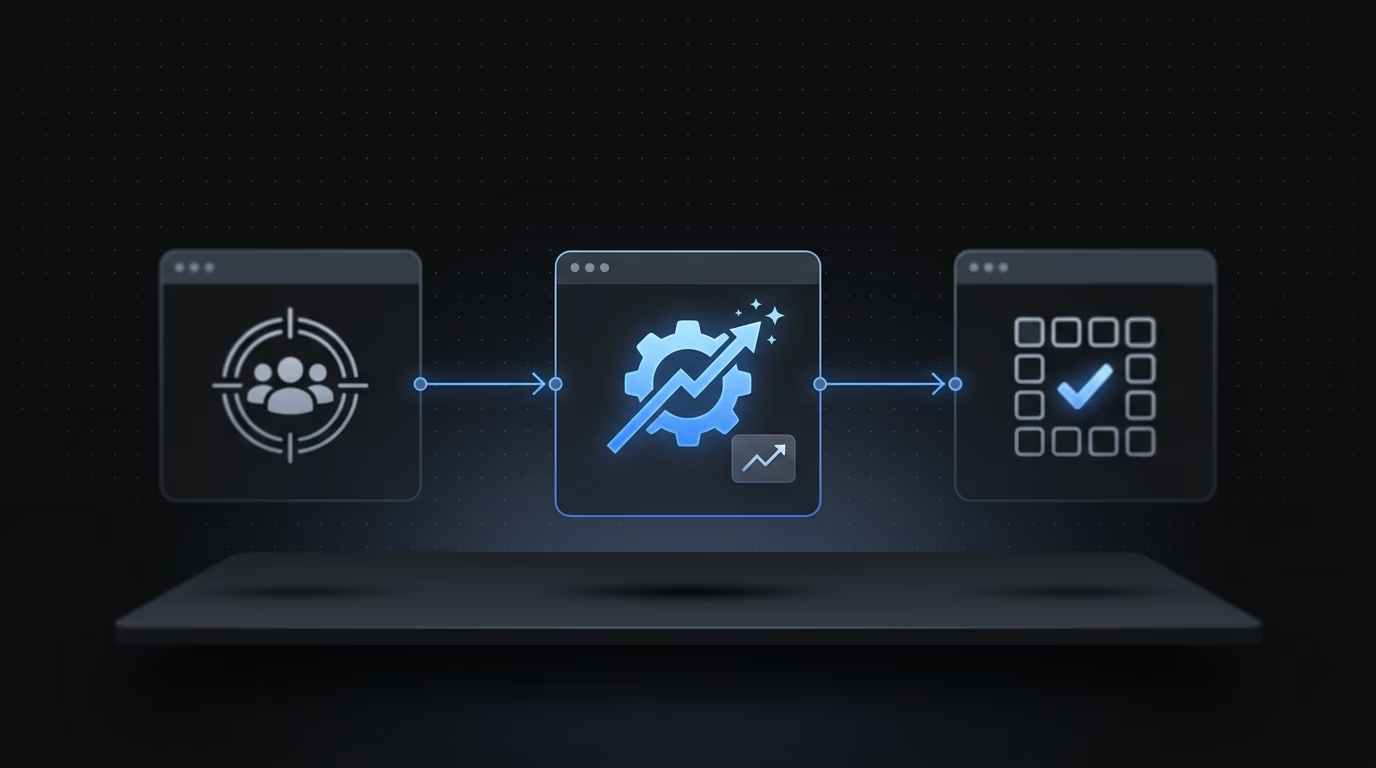
Elena needed to launch 10 creative concepts, each with Feed (4:5) and Reels (9:16) versions across three audience segments—60 ads manually in Ads Manager. She used Instrumnt, a Facebook ads uploader. Her workflow:
- Creative Mapping: Tag 9:16 videos for Reels/Stories, 4:5 for Feed.
- Bulk Construction: Map assets to Broad, Lookalike, and Retargeting audiences in a spreadsheet interface.
- Rapid Launch: Upload built all ads in minutes instead of hours using Instrumnt.
This allowed her to run 3-5 variations per ad set, matching Meta Ads Guide best practices. Using AI for variation suggestions and Claude Code for validation further optimized asset selection. Instrumnt turned ad creation from manual labor into a scalable system, letting the algorithm find buyers efficiently.
| Step | Description |
|---|---|
| Creative Mapping | Assigning correct format to placement, reducing spec issues |
| Bulk Construction | Spreadsheet-driven ad generation for multiple audiences |
| Rapid Launch | Upload all ads efficiently using Facebook ads uploader |
For more advanced workflow scaling, see How to Scale Meta Ads with Bulk Uploading for step-by-step operations guidance.
Operational Advice: Structuring Your Instagram Ad Testing Workflow
For marketers struggling with instagram ad targeting, a structured operational approach can dramatically improve results:
- Segment by Placement: Start by defining separate campaigns or ad sets for Feed, Reels, and Stories.
- Match Creative Formats: Use 4:5 for Feed, 9:16 for Reels and Stories; avoid letterboxed assets.
- Batch Variation Testing: Prepare multiple variations per creative concept. Our case study used 3-5 variations per ad set to reduce CPA by 25-30%.
- Use a Bulk Uploader: Tools like Instrumnt or Facebook ads uploader enable rapid creation, duplication, and scheduling. Manual upload delays can disrupt testing velocity. See Facebook Ads Uploader: Creative Fatigue Detection Before Meta Performance Slips.
- Integrate AI Insights: Apply AI to score early engagement, identify winners, and allocate budget faster.
- Automate QA Checks: Use scripts or Claude Code to validate correct asset mapping and audience alignment before launch.
- Track Platform-Specific Metrics: Monitor CTR, CPC, and ROAS separately for Instagram and Facebook to prevent cross-platform signal distortion.
The Turnaround: Metrics Improvement on Instagram
Three weeks after implementing the workflow, Instagram performance shifted dramatically:
| Metric | Before Pivot | After Pivot | % Change |
|---|---|---|---|
| Instagram Average ROAS | 0.9x | 2.8x | +211% |
| Instagram CPC | $2.15 | $0.92 | -57% |
| Creative Testing Volume | 2 / month | 15 / month | +650% |
| Time Spent Launching | 8 hours/week | 1 hour/week | -87.5% |
The improvement stemmed from scaling placement-specific creatives and using bulk upload tools. Competitors like Sotrender and Hootsuite Ads provide insights, but this scenario demonstrates actionable steps for operational execution.
Competitor Insights: What Others Do Differently
- Sotrender: Offers analytics dashboards and reporting for Instagram campaigns but lacks workflow automation guidance.
- Hootsuite Ads: Focuses on targeting best practices but without scenario-based walkthroughs or creative-placement integration.
- TikTok Ads Manager: Platform-specific recommendations for TikTok, highlighting the importance of format alignment, which parallels Instagram lessons.
Our approach combines these insights with operational execution, Facebook ads uploader integration, and AI-driven validation to outperform purely
Common questions about instagram ad targeting
What is the best way to instagram ad targeting?
The best approach depends on your team size and launch volume. Start by structuring your workflow around batch preparation and bulk uploading, then layer in automation for the parts that don't need human judgment.
How many ad variations should I test?
Advertisers running 3 or more variations per audience consistently see lower CPAs. Aim for at least 3-5 variations per ad set as a starting point, and increase from there as your workflow allows.
Does automation replace the need for creative strategy?
No. Automation handles the operational side, like launching, duplicating, and naming ads at scale. Creative strategy, offer positioning, and audience selection still require human judgment. The goal is to free up more time for that strategic work.